



What does it mean to be an educator in the age of AI?
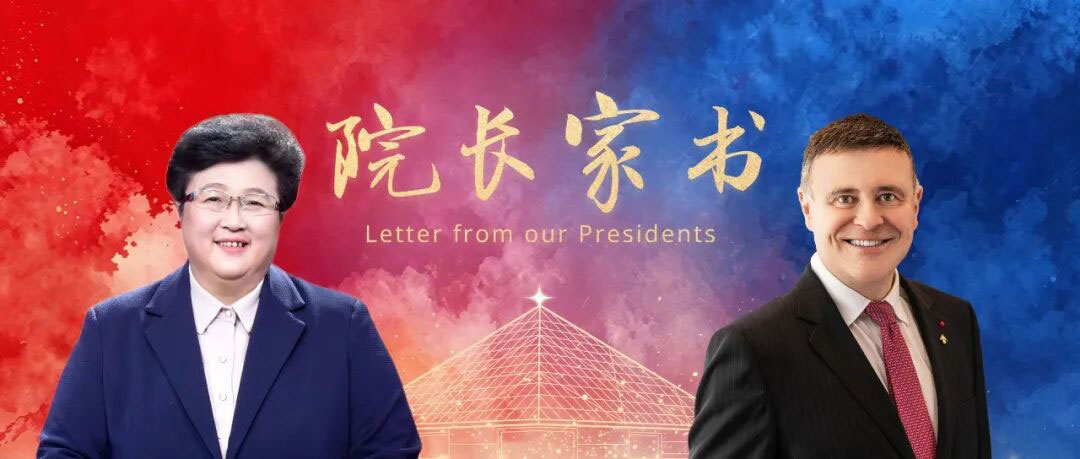
Dear CEIBS Faculty Members and Fellow Educators,
Warm greetings to you all.
Today marks China’s 42nd Teachers’ Day, a day to celebrate and honour educators everywhere. At this very moment, you may be in the classroom, engaging students from diverse countries and industries in conversations about the forces reshaping the business world. You may be working closely with companies and communities, exploring answers to the defining questions of our time through real-world practice. From generating knowledge to sharing ideas, from nurturing the next generation of leaders to contributing to the advancement of society, educators have always played a profound and enduring role in shaping our shared future. On this special occasion, we would like to extend our deepest respect and warmest wishes to all CEIBS faculty members, as well as to educators across China and around the world.
Over the past year, we have visited many alumni companies to gain first-hand insight into how business is evolving, while also engaging in in-depth conversations on campus with leading thinkers and entrepreneurs. Through these exchanges, one thing has become increasingly clear: in just the past few years, technology has advanced at remarkable speed, from generative AI to AI agents. AI is moving beyond searching for and organising information to supporting research, analysis, and decision-making, and is becoming increasingly embedded in the day-to-day workflows of businesses. At an unprecedented pace, it is reshaping both society and the business world.
An EFMD report found that 93% of surveyed companies are already making extensive use of AI tools in their daily work. GMAC’s Corporate Recruiters Survey likewise suggests that the ability to use AI tools is expected to become the most sought-after skill among employers worldwide within the next five years. McKinsey estimates that AI could deliver broad-based productivity gains over the next 15 to 25 years. By comparison, it took 75 years for electricity, 65 years for the steam engine, and 50 years for computers to achieve a comparable impact.
In other words, within our own lifetimes, we are likely to witness a transformation on an industrial scale. One that, in the past, might have taken two or three generations to unfold.
As educators and leaders of a global management education institution, we believe AI is driving three profound shifts.
First, knowledge is being redefined. As the cost of obtaining answers continues to fall, the ability to ask the right questions and exercise sound judgement is becoming increasingly valuable.
Second, organisations are being redesigned. More companies are beginning to explore new ways of working in which people and AI agents operate side by side. For managers, this means shifting from assigning tasks to defining problems, and from supervising execution to setting and continually recalibrating direction.
Third, responsibility is being reshaped. Algorithms may play an increasingly important role in decision-making, but they cannot bear the consequences of those decisions on our behalf.

These shifts are placing new demands on leadership development in the age of AI. How can we help entrepreneurs and business leaders navigate rapid technological change and chart the right strategic course? How can organisations turn the potential of AI into lasting competitive advantage through meaningful transformation? And how can they seize the opportunities created by innovation while effectively managing the risks?
These are now fundamental questions for management education. They will shape not only whether companies can thrive in the years ahead, but also how business schools themselves must evolve. If we fail to respond in time, if our knowledge creation and talent development do not keep pace with a rapidly changing business environment, we risk missing a defining opportunity to shape the future of our institutions.
Around the world, leading business schools are moving beyond isolated experiments with AI in the classroom towards institution-wide strategies spanning teaching, research and operations. CEIBS is no exception.
In April this year, the school launched the CEIBS Strategic Plan (2026–2030), which identifies Accelerating Full-scale AI Integration as one of its Eight Strategic Priorities. The plan sets out a development model that harnesses both AI (Artificial Intelligence) and HI (Human Intelligence), and the school has established an AI Steering Committee to coordinate strategic planning, teaching innovation, research advancement, resource integration and capability building.
This strategy is already beginning to take shape. CEIBS now offers more than 60 AI-related courses across its degree programmes and executive education offerings. Faculty members are also increasingly using AI to enhance research efficiency and deepen collaboration between academia and industry.
At the same time, the development of a smart campus management hub, AI-powered support services and a more digital and intelligent governance system is helping to optimise resource allocation, improve responsiveness and streamline day-to-day operations. Together, these initiatives are reducing operating costs while enhancing the school’s overall management effectiveness.
Yet we are fully aware that this progress is only the beginning. The success of our AI strategy cannot be measured simply by the number of courses we offer or tools we deploy. More importantly, it must be judged by whether we can generate new management knowledge, develop the capabilities leaders will need for the future, address the real-world challenges facing business and society, and ultimately contribute new models and insights that can inform management education around the world.
To achieve this, the next phase of our journey will require transformation on three levels.
First, we need to reimagine how management knowledge is created. Our task is not only to explore how AI can enhance management, but also to understand how it is transforming management itself: reshaping corporate strategy, organisational structures, business models and decision-making. Drawing on China’s rich and diverse business landscape, we should turn the new business phenomena and emerging questions arising from technological change into original and impactful management knowledge.
Second, we need to rethink how we develop talent. AI should be integrated throughout the learning journey, from curriculum design and classroom learning to case development and assessment. As access to knowledge and the ability to create content become increasingly effortless, it is more important than ever to strengthen students’ ability to define problems, reason logically, think critically and take responsibility for their decisions. We must help them learn to work effectively with AI while retaining independent judgement, ultimately developing future leaders who understand both the logic of technology and the art of management.
Third, we need to strengthen the school’s organisational capabilities for the AI era. AI transformation is a system-wide undertaking spanning teaching, research, administration and services. We therefore need to further connect data, platforms and resources, strengthen interdisciplinary and cross-functional collaboration, and establish mechanisms that enable promising initiatives to be tested, replicated and scaled rapidly across the school.

There is an old Chinese saying that says: “How can the stream remain clear? Because fresh water is constantly flowing from its source.” Ultimately, all three areas of transformation depend on the creativity and leadership of our faculty.
AI can support research and enrich the classroom, but it cannot, on its own, identify the questions that truly matter, nor can it give knowledge meaning, value or direction. As new phenomena emerge from technological change, our faculty must engage deeply with business practice to identify important questions, develop new theories and generate new knowledge. As the way people learn continues to evolve, faculty must also continually renew curricula and cases, test ideas through classroom dialogue, and help students sharpen their judgement.
It is through this process that new management thinking takes shape, new approaches to teaching emerge, and a business school develops the capacity not only to respond to the challenges of its time, but also to help shape the future.
Perhaps this is what it means to be an educator in the age of AI: to explore the unknown in pursuit of truth, to respond to the challenges of our time through academic creativity, and to remain steadfast in our commitment to nurturing human growth.
The impact of education is not always visible in the moment. Yet it endures—in the judgement a student exercises years later, in the decisions they make, and in the responsibilities they choose to shoulder.
On this Teachers’ Day, we extend our heartfelt gratitude to every educator dedicated to the pursuit of knowledge and the development of future generations. May you continue to find joy in discovering new ideas, and deep fulfilment in seeing your students grow and flourish.
Let us continue to work together to contribute more ideas, wisdom and positive impact to China and the world.
Happy Teachers’ Day!
China Europe International Business School
President Co-President (European)
Wang Hong Frank Bournois