



CEIBS Faculty Predictions 2026
January 8, 2026. Shanghai – From workplace leadership and an evolving job market to tax enforcement and China’s development as a hub for healthcare innovation, 2026 is shaping up to be a year of change. To explore where the world might be heading, we asked some of our faculty members to offer their predictions for the year ahead. Read on to find out what they think the next 12 months could hold.
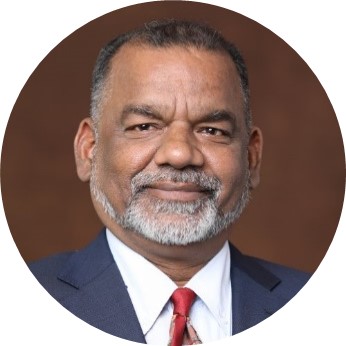
Bala Ramasamy
Professor of Economics,
Associate Dean,
and Director of GEMBA Programme
“2026 will be more about US-EU relationships and less about US-China relations. President Trump probably realises that picking a fight with China was a mistake, at least in the short term; when it comes to the EU, 2026 will determine whether the group becomes weaker or emerges as a strong, independent entity.”

Gordon Adomdza
Associate Professor of Management Practice
and Director of CEIBS Africa
“The year 2026 will put jobs on the front burner for most countries. In Africa, the situation is becoming increasingly dire due to growing unemployment. On one hand, managers will increasingly explore digitalisation and automation to create efficient processes to save costs. On the other, due to rising unemployment, governments will increasingly look to private companies and investors to create jobs in exchange for access to subsidies and tax breaks.
Hence, there will be a need to start sensitising managers on developing frameworks and models for balancing automation with manned jobs in achieving efficiency. How should these issues be framed when intentional manned employment may come at the cost of efficiency in running a business? These are some of the issues that I believe will come to the fore when considering the training needs of managers in 2026.”

Wang Yajin
Professor of Marketing
and Associate Dean (Research)
“In 2026, consumption will be driven by context-based experiential value. Value for money is no longer a universal answer. Products can be cheap and ignored, or expensive and still perceived as worth it. The shift is not about price, but about how value is evaluated. Consumers are no longer paying for products alone. They pay for value as it is experienced in specific contexts, where functionality, emotion, and social or identity meaning come together.
Therefore, experience is no longer an add-on, but the condition for value to exist. Context no longer sits in the background, it shapes how value is perceived, amplified, and priced. That is also why offline matters again, not as a transaction channel, but as a space for creating experiences that are remembered, shared, and built into brand memory and social value.”

Michelle Zheng
Associate Professor of Organisational Behaviour
“In 2026, I expect a quiet but profound shift from “heroic” managers to leaders who design psychologically safe, AI-augmented workplaces where human judgment and artificial intelligence genuinely complement each other. Rather than asking, “How do I get my people to perform more?”, managers will increasingly ask, “How do I help my people learn faster, feel safer, and find meaning?” In this context, the organisations that thrive will be led by people who use AI not to squeeze out more short-term output, but to free up time and psychological space for employees to experiment, reflect, and grow—treating high performance as a natural consequence of that self-growth.”

Mattia Landoni
Associate Professor of Finance
“In 2026, tax collection and compliance pressure will continue to increase, driven by advances in data and systems. At the same time, tax enforcement will become less discretionary and more predictable in form, as policymakers balance revenue needs against the impact of uncertainty on investment and business decisions.”
Eric Bouteiller
Adjunct Professor of Management
“Using the framework developed in my latest book The Fundamentals of Market Access for Pharmaceuticals, co-authored with Annie Chicoye, I expect several major trends are to shape China’s healthcare landscape in 2026. First, accelerated support for innovation; innovative drugs and medical devices will benefit from stronger strategic backing from both the state and the investment community, as China moves decisively from a fast-follower model toward becoming a first-in-class innovator. Second, expansion of commercial health insurance; commercial insurance is entering a new phase of development and will increasingly complement the basic medical insurance system, a positive trend for improving patient access. Third, population aging as a growth engine; demographic aging will remain a powerful driver of economic and healthcare-sector growth, with investment in elderly-care facilities and age-related health services is set to rise significantly. Fourth, broad acceptance of AI in daily life; Chinese consumers appear increasingly open to integrating AI into everyday activities, and a result, AI technologies will see substantial opportunities across the healthcare value chain, from drug discovery to clinical practice and patient care.”

Yang Wei
Associate Professor of Management
“In 2026, our economy continues to face significant challenges. However, the rapid advancement of technology will nurture new hope amidst this winter of uncertainty. We are poised to experience and witness an unprecedented transformation in economic models and social structures driven by artificial intelligence.”

Nana Yaa A. Gyamfi
Assistant Professor of Management
“In 2026, psychological wellness will become increasingly important in workplaces globally. As AI-driven productivity reaches a fever pitch, the leading competitive advantage (with respect to human capital) will belong to firms that successfully mitigate cognitive burnout and treat employee mental health as a finite, depreciable asset that requires active reinvestment.”

Robert Straw
CEIBS Zurich CEO
“2026 is the Year of the Fire Horse, a year of bold energy and rebellion against control. Institutions, including corporations and governments, that cling to fear, pressure, and Machiavellian tactics will face a collapse in trust, resilience and productivity. The winners will be leaders who choose to embody love at work, who lead through care, compassion, and connection, and who keep their people strong and performance high despite pressures from all over.”