


Transcending boundaries, creating synergies: New opportunities for France-China industries in the age of AI
June 22, 2026. Paris – Against a backdrop of global turbulence and a rapid restructuring of the economic order, artificial intelligence is reshaping the foundations of the global economy, establishing itself as a central lever of national competitiveness. Both China and France have placed AI at the heart of their national development strategies; in facing this shared challenge, the time is right for business leaders from both countries to deepen dialogue, build consensus and cooperation, and work to jointly seize the new opportunities arising from the industrial application of AI.
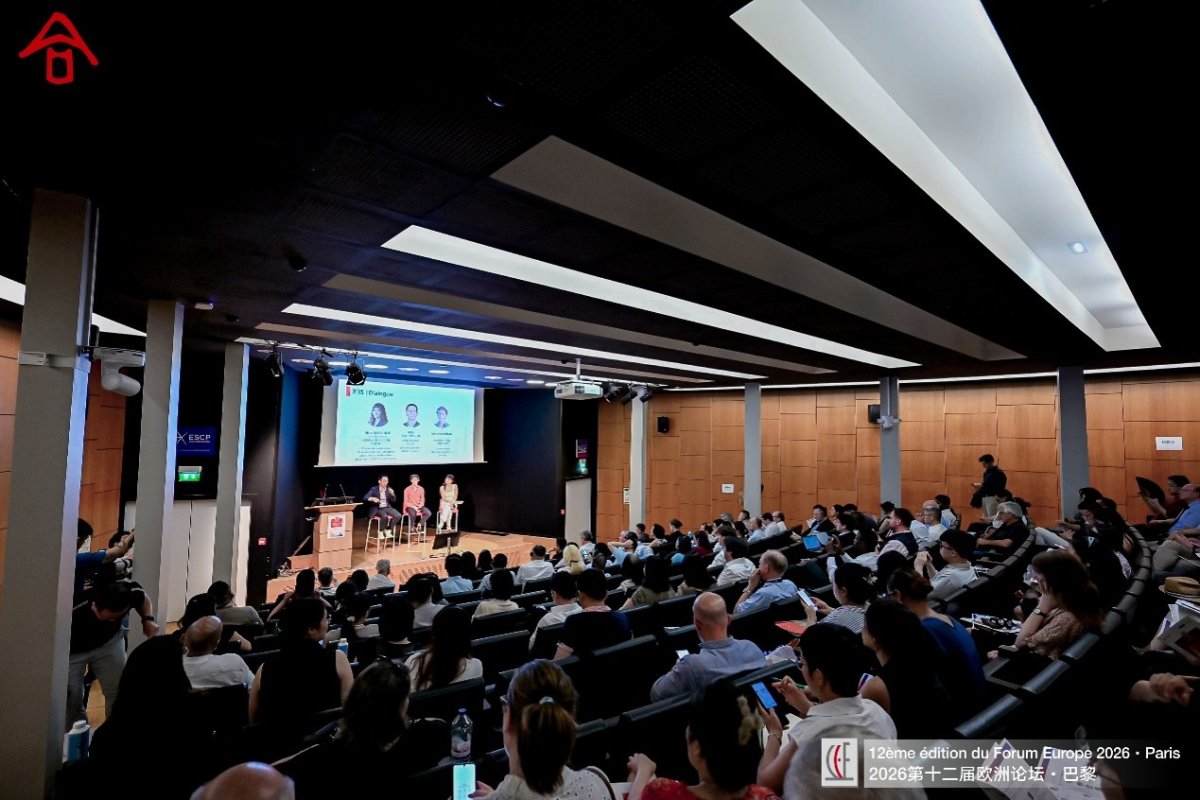
The 12th CEIBS Europe Forum was held in Paris today to facilitate these vital conversations. Held under the theme "Opportunities in AI: A France-China Business Dialogue on Industrial Transformation," the forum was organised by China Europe International Business School (CEIBS) alongside co-organisers the Paris Île-de-France Regional Chamber of Commerce and Industry (CCI Paris Île-de-France) and ESCP Business School, with the support of the CEIBS DBA programme and the CEIBS Institute of European Economics. The event brought together nearly 300 decision-makers, entrepreneurs, and leading academics from the political, business, and academic communities of China and France for an in-depth exploration of how AI can drive effective industrial collaboration and mutual productivity upgrades.
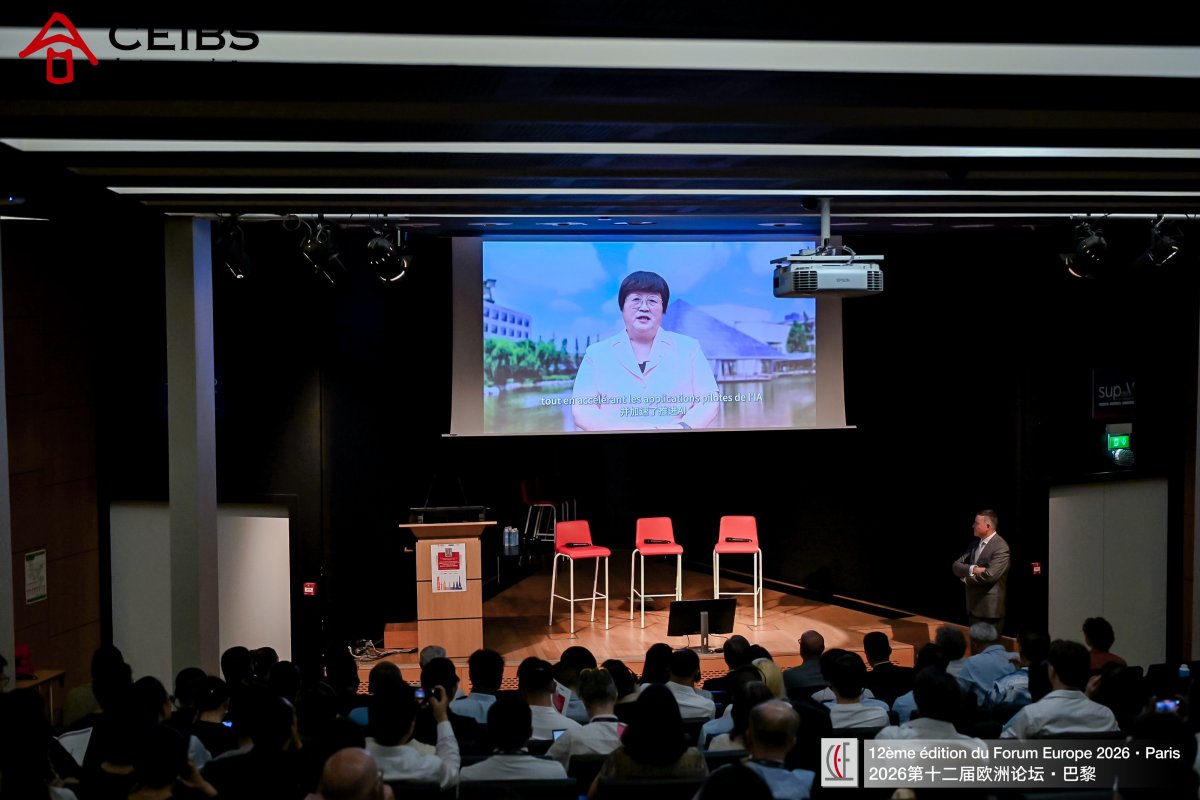
The forum opened with a welcome address by CEIBS President Wang Hong. She observed that global AI is rapidly moving from technological breakthrough to industrial application, becoming a crucial force in reshaping production models. At this pivotal moment, she said, China and France—two major centres of innovation—share strategic alignment and possess complementary strengths in their innovation systems, industrial bases, and application scenarios. China's core AI industry is expected to surpass RMB 1.2 trillion this year, encompassing over 6,000 enterprises, while its generative AI user base has reached 600 million, with a penetration rate of 42.8%—making AI an essential driver of the country's continued technological development. France, she added, draws on a deep mathematical heritage and strong scientific tradition to advance open-source large language models, foundational technologies for responsible and sustainable AI, and specialised applications in sectors such as healthcare and low-carbon energy, positioning itself as a leader in the field within the European Union. Deep Sino-French collaboration, she stressed, can create a powerful complementarity between original innovation and large-scale application, offering a new paradigm for the commercialisation of scientific achievements and industrial upgrading.
President Wang then highlighted the role CEIBS can play in this important bilateral relationship. Jointly founded by the Chinese government and the European Union, the school has, over more than three decades, become a benchmark for open cooperation in China-EU education, she said, with its Global EMBA programme ranking among the world's top two for six consecutive years and its MBA programme ranking first in Asia for a decade in the Financial Times. Through its Institute for European Economics, she added, CEIBS conducts sustained, cutting-edge research on the European economy, digital governance, and AI. She drew particular attention to the Institute's recent report, “Navigating a Paradigm Shift: The EU’s AI Strategy”, which explores a new European landscape where regulation, computing power, and vertical industry applications reinforce one another, seeking to transform "trustworthiness" into a competitive advantage. The school's newly established European Policy Unit, she added, will produce ongoing research on topics including AI, ESG regulation, industrial competitiveness, and China-EU relations, further reinforcing CEIBS' role as a leading bridge between China and Europe.
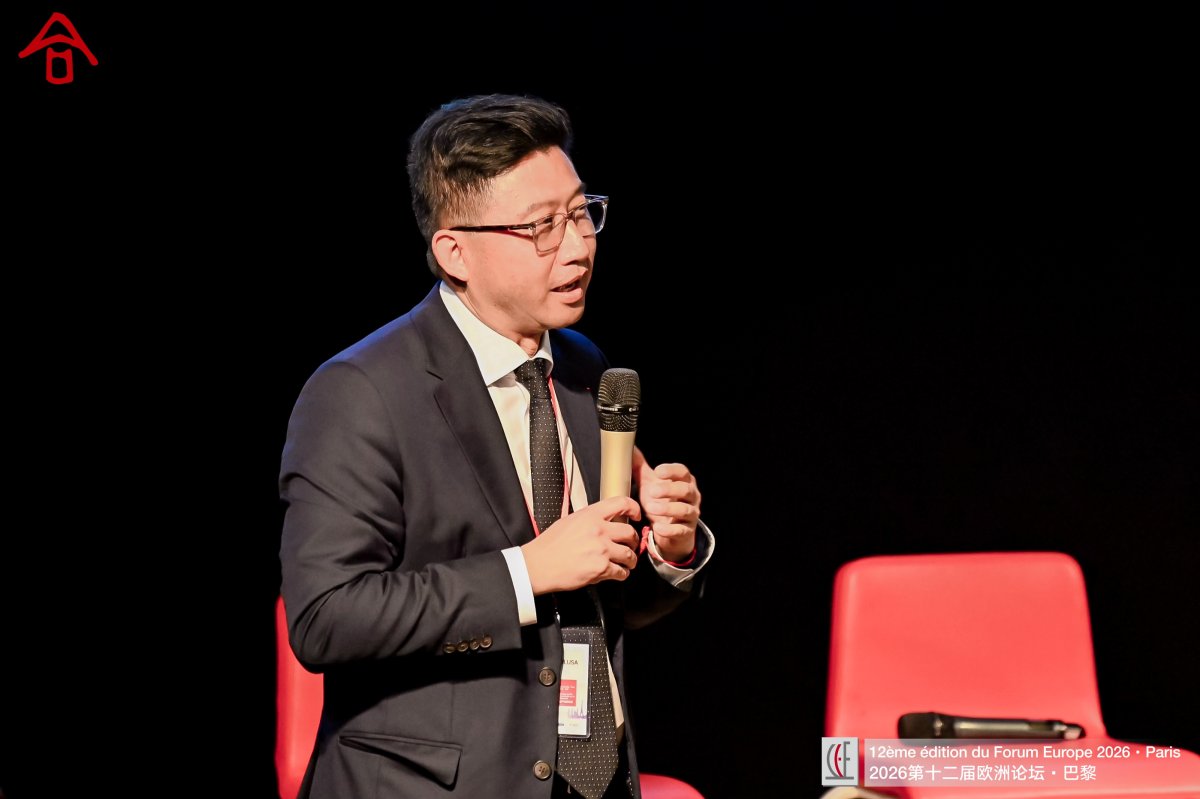
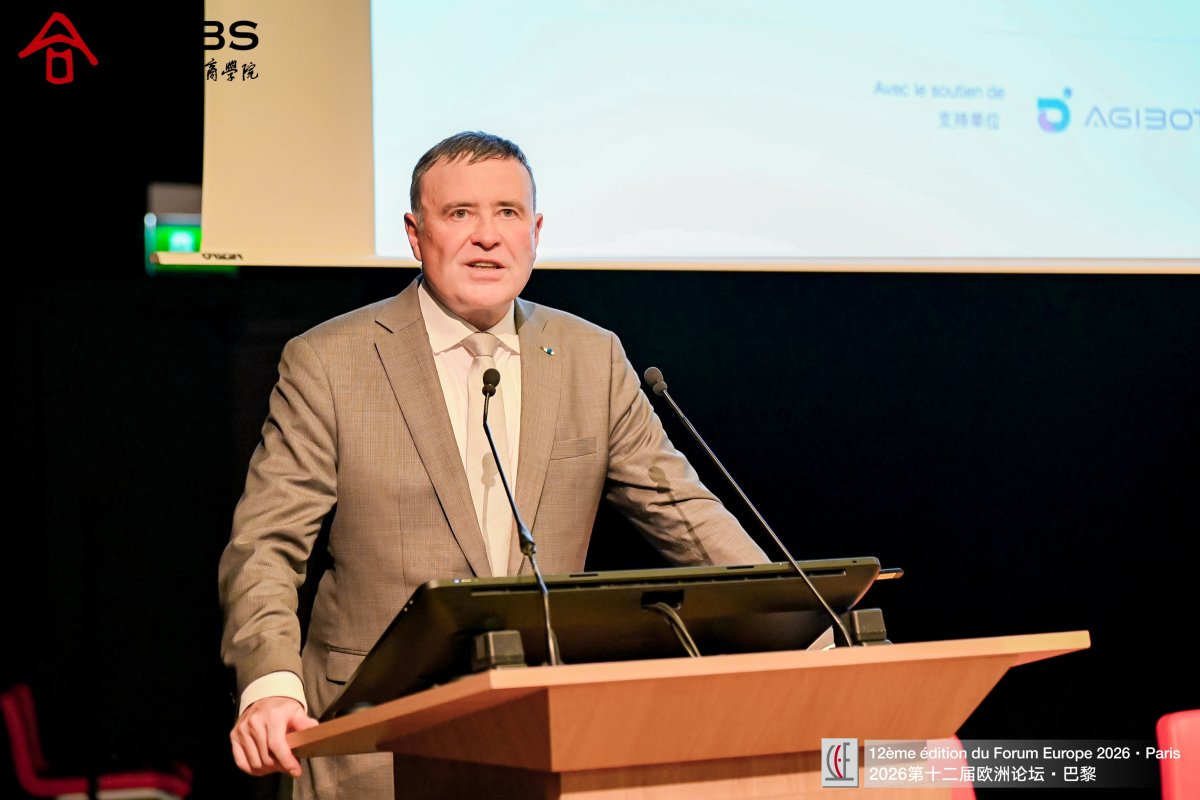
In his own welcome address, ESCP Executive President and Dean Léon Laulusa described CEIBS and ESCP not merely as strategic partners but as "sister schools," citing their long-standing collaboration across numerous degree programmes which, together, meaningfully deepen educational ties between China, France, and Europe. As an example, he pointed to the recently launched Global Master in Management (Global MiM) CEIBS (Switzerland)-ESCP Double Degree Programme, which integrates the teaching resources of two of the world's leading business schools. Delivered across Shanghai, Paris, London, and Zurich, the programme is designed around the vision of "China Edge, Global Experience," offering students a deeply international learning platform.
The forum's focus on Sino-French cooperation in the AI era, he noted, highlights the clear complementarity between the two nations: China dominates in AI application, he said, while France is committed to leading Europe in AI innovation. As the first business school in Europe to combine partnerships with OpenAI and Hugging Face, ESCP is actively embedding AI into both teaching and research; Prof. Laulusa said this empowers students and staff to use AI tools effectively and ethically while also co-creating and guiding the technology's future development. During a recent CEIBS DBA module held at ESCP, he shared that participants used AI to dramatically accelerate their literature reviews and experimental research, all while sharpening their critical thinking. He also highlighted ESCP's plan to launch a dedicated School of Technology in 2027, a “European MIT” (Management Institute of Technology), designed to foster a cutting-edge innovation ecosystem that will further deepen international and, particularly, Europe-China economic and cultural ties in the digital age for a shared future.
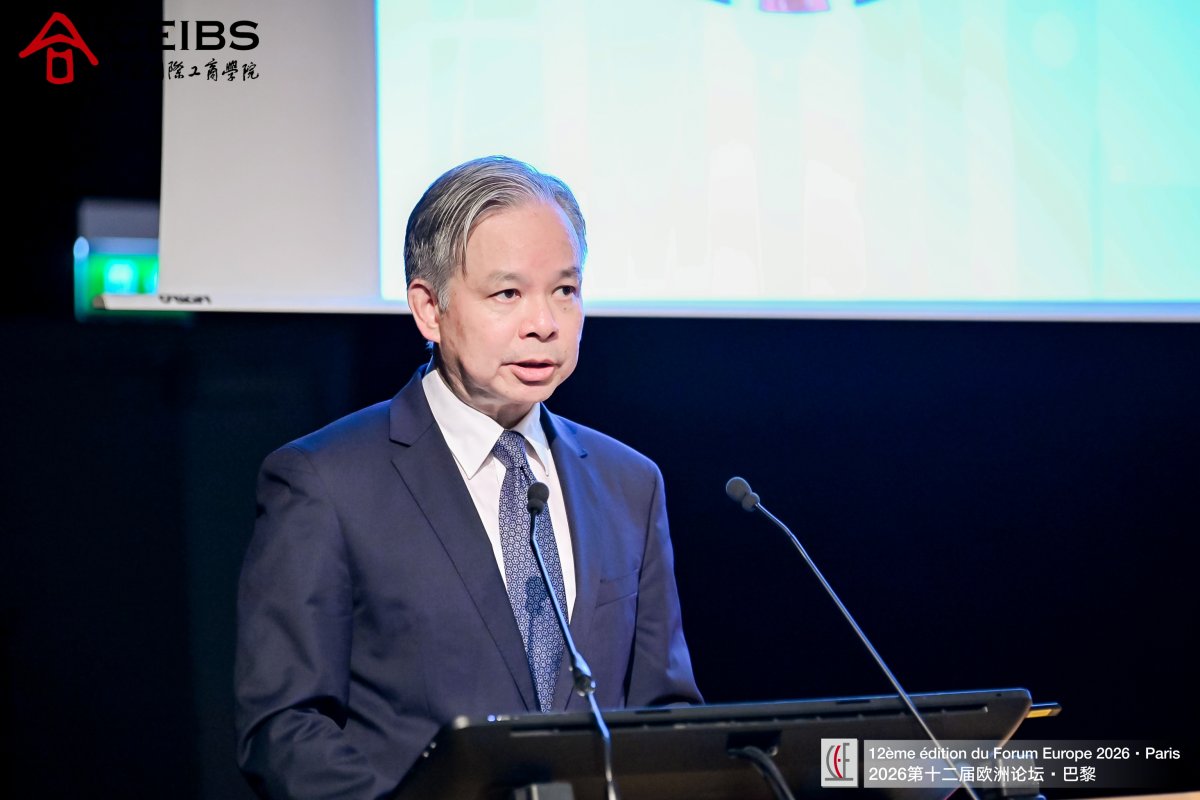
Mr. Li Chen, Minister of the Chinese Embassy in France, then delivered an opening address. AI technology, he said, is evolving at an accelerating pace, profoundly reshaping how we live and work and reconfiguring the global industrial landscape—making the forum theme both timely and significant. He noted that in 2025, China accounted for 60% of global AI patents, its core AI industry exceeded $168 billion, and its open-source large language models ranked first worldwide in downloads. From January to April this year, he added, bilateral goods trade between China and France had reached $29.2 billion, with French exports to China up 20% year-on-year—clear evidence, he said, of the vitality and resilience of the economic partnership.
Minister Chen also observed that this year marks the start of China's 15th Five-Year Plan, a government economic roadmap which explicitly calls for the comprehensive implementation of an "AI+" strategy to empower industrial sectors and which offers the world what he termed a "catalogue of opportunities." Looking ahead, he offered three suggestions for seizing the AI moment: first, uphold open cooperation for mutual benefit, resolving differences through dialogue to prevent technological fragmentation and market division, and strengthening the interconnectivity of the two major digital markets; second, energise markets by providing a fair, transparent, and predictable environment for enterprises from both China and France; and third, strengthen dialogue to share the responsibility for global governance and guide AI towards being people-centred and beneficial for all. As two major powers, two markets, and two civilisations, he concluded, China and Europe should deepen their alignment in innovation, talent development, and standard-setting, jointly contributing to global prosperity and a community with a shared future.
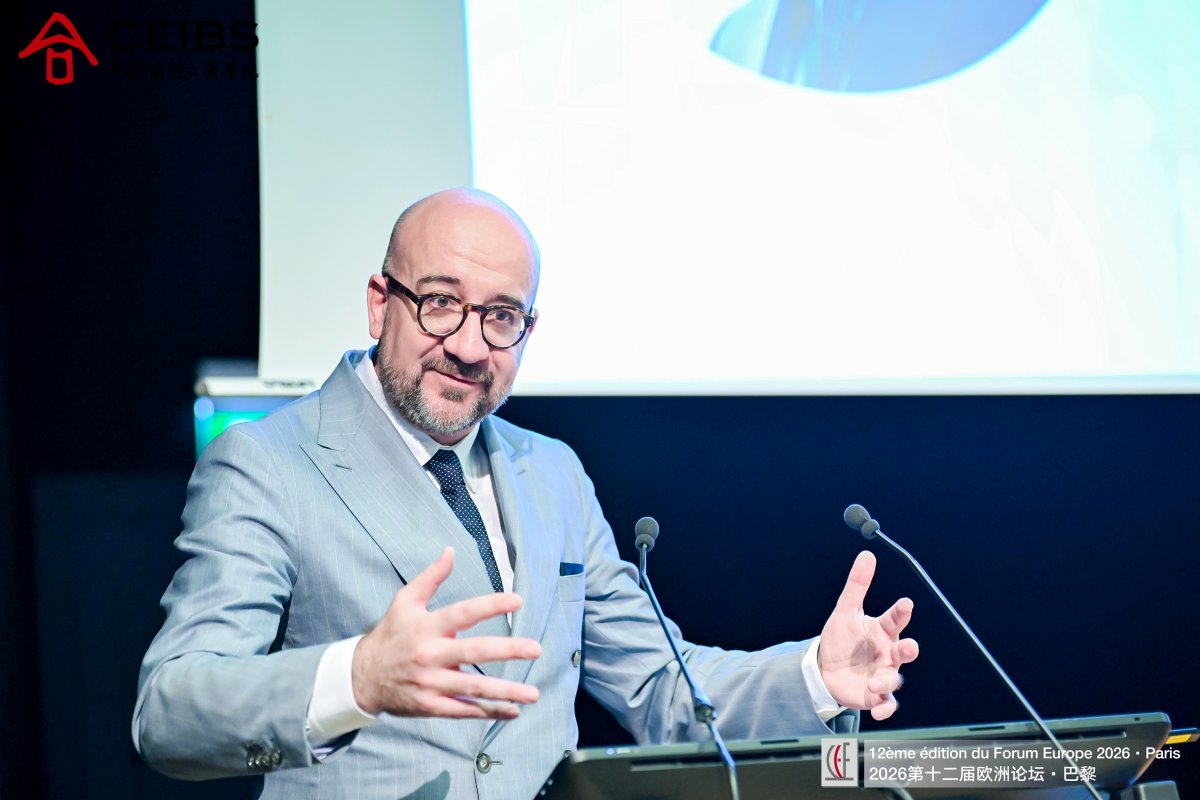
A keynote address was then delivered by Charles Michel, former President of the European Council, former Prime Minister of Belgium, and Distinguished Professor at CEIBS, who delivered remarks on “The European Economy and EU-China Cooperation in the Age of AI”. He described the current moment as a historic transition between old and new orders, with intensifying geopolitical competition and the reshaping of rules around supply chains, data, and AI profoundly influencing global dynamics. In response, he said, the EU is actively adjusting its strategic framework—working to strengthen its strategic autonomy and economic sovereignty by boosting internal market competitiveness, harmonising capital markets, and deepening its defence and security architecture. The EU, he stressed, remains committed to openness and multilateralism, actively seeking reliable trading partners to enhance its resilience.
China-EU cooperation, Prof. Michel emphasised, contributes to global prosperity and stability. He set out three key principles for deepening the relationship: first, respectfully acknowledge the historical, cultural, and systemic differences between the two sides; second, ensure the relationship is managed by the two parties themselves, free from third-party interference; and third, work together to promote more balanced and equitable trade and investment rules. He noted a readiness to engage on global issues such as climate change and called on both sides to act as a stabilising force amid international uncertainty.
On the critical issue of AI, he identified chips and critical minerals, data infrastructure, and regulatory policy as the three core variables that will shape international relations in the future. China, he noted, holds advantages in critical resources such as rare earths, while Europe retains a competitive edge in high-end chip manufacturing. Investment in data centres and energy infrastructure, he argued, will determine the future of digital sovereignty. Meanwhile, the EU's regulatory approach consistently seeks to balance innovation with the protection of individual rights. While the EU may trail China and the US in the speed of AI development in the short term, he suggested, its growing maturity in corporate governance and data security will confer a distinct institutional advantage and long-term resilience—provided it can strike the right balance between managing risk and unlocking industrial potential.
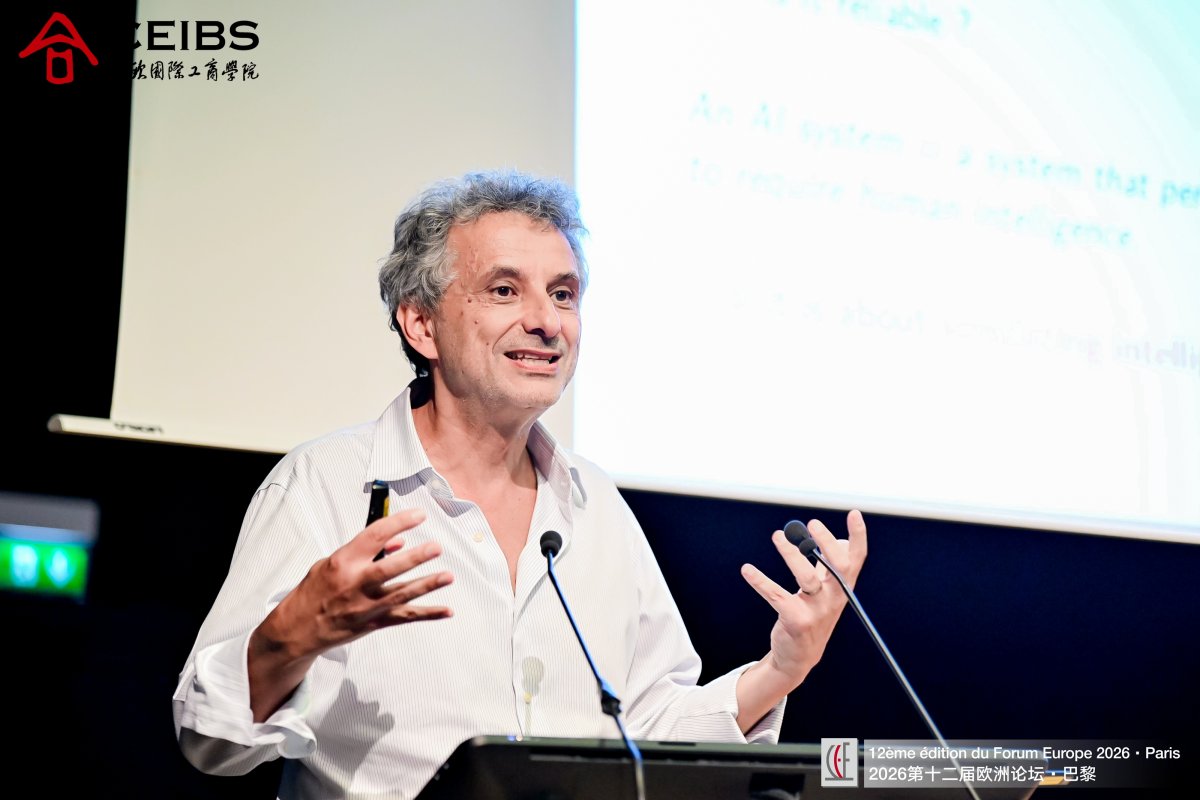
This was followed by a second keynote speech delivered by Emmanuel Bacry, Research Director at the French National Centre for Scientific Research (CNRS) and Scientific Director of Health Data Hub, on the theme "The Impact of the AI Revolution and the Future of Industry". To understand where AI is heading, he argued, one must first be clear about what it can and cannot do today, avoiding the illusion of true "intelligence"—large language models are highly capable with language but lack genuine judgement of truth and logic, he said, and their reasoning processes remain fundamentally a "black box." He noted that, in terms of industrial application, a more important trend lies in smaller, specialised models that are more reliable, easier to evaluate, and cheaper than their general-purpose counterparts, while agentic AI with autonomous capabilities still faces unresolved challenges of safety and control.
Using healthcare as a case study, he went on to examine the value chain transformations and risks introduced by AI. The technology has shown clear promise in drug discovery—generative AI can now help identify new protein structures, for example—and holds the potential to reshape clinical workflows in disease prevention and treatment, he said. Yet the "black box" nature of AI-driven decisions and the lack of robust evaluation systems in real clinical settings pose serious risks to patient safety. He cited studies showing that models that perform well in a lab can produce markedly different, and sometimes inferior, results once embedded in actual clinical decision-making.
Moving on to the effects of AI on employment, Mr. Bacry foresaw simultaneous forces of job creation and displacement but was adamant that skilled professionals will not be replaced. The key, he said, lies in integrating AI with high-quality data to better serve experts. At its core, he stressed, the AI revolution is a data revolution: fragmented data, insufficient interoperability, and governance complexity are challenges shared by countries and institutions worldwide. The EU is pioneering a unified health data space through its Health Data Act, for example—an immense challenge, but one whose success, along with similar collective efforts, will determine whether AI can truly advance. AI, he concluded, is far more than a collection of algorithms; its essence lies in a confluence of data, workflow, and governance, and the most decisive factor remains human.
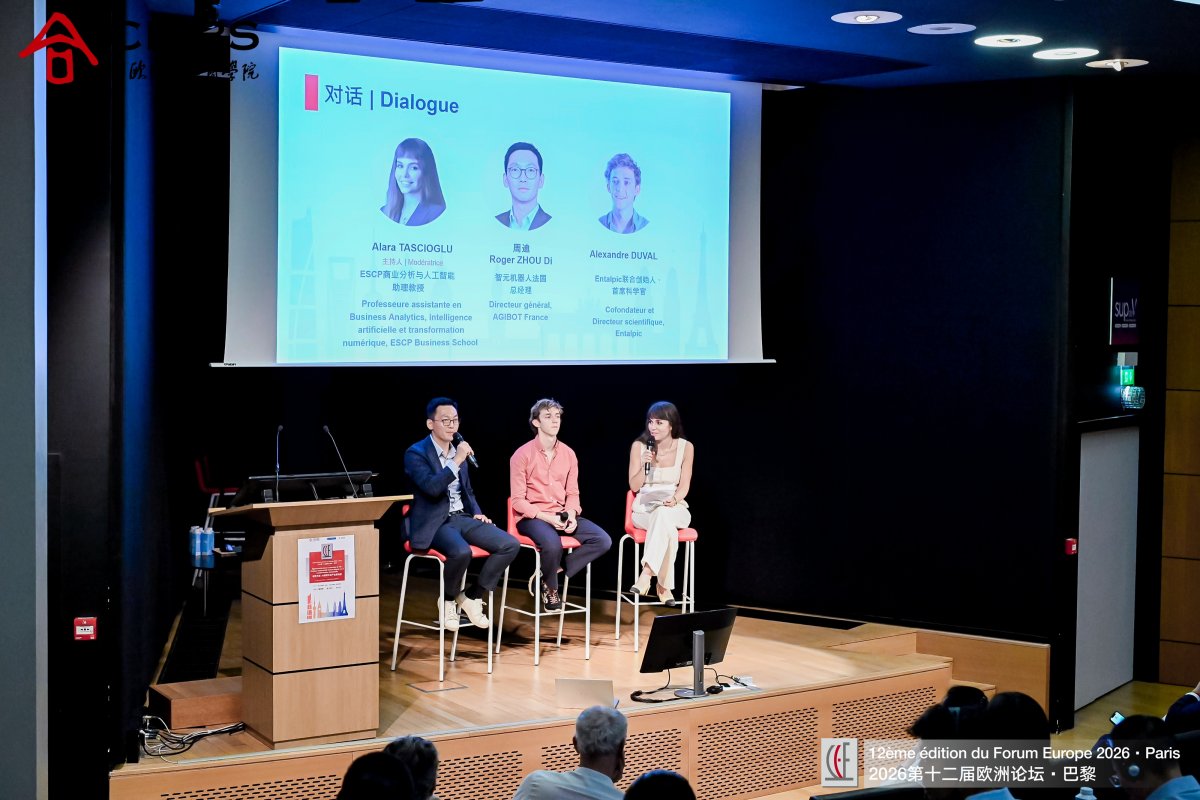
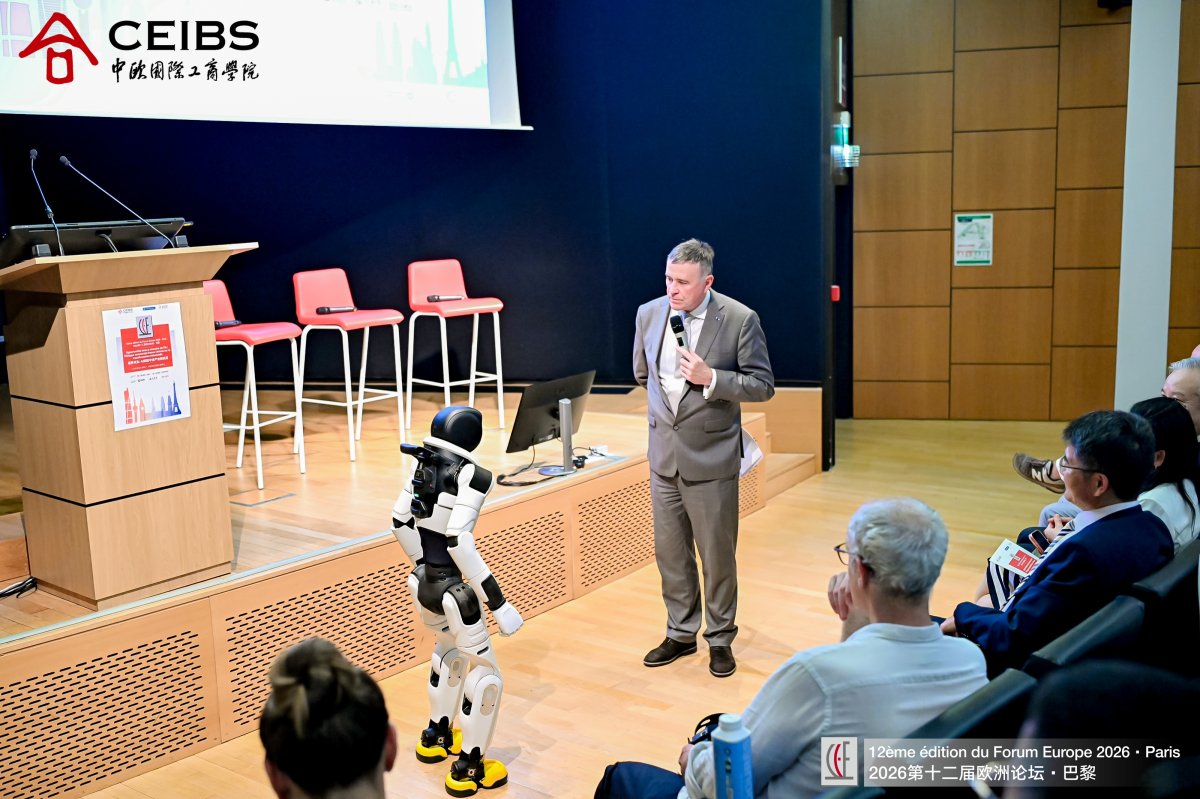
The keynote speeches were followed by a high-level dialogue on "The Evolution of Large Models", which was moderated by Alara Tascioglu, Assistant Professor of Business Analytics and AI at ESCP Business School, with participants Zhou Di, General Manager of Agibot France, and Alexandre Duval, Co-founder and CEO of Entalpic. Prof. Tascioglu opened the conversation by observing that in just three years, AI has evolved from offering simple conversational interaction into a transformative force penetrating fields such as physics, chemistry, and industry. Expanding on this, Mr. Zhou explained that the vast data continuously generated by robots in industrial settings constantly refines their decision-making and performance; robotics also offers the distinct value of replacing humans in hazardous environments, he said, freeing people to focus on work requiring greater judgement. Mr. Duval shared insights into AI application in material science, noting that AI is dramatically accelerating the discovery and validation of new materials, with the combination of AI simulation and laboratory experimentation emerging as a new paradigm for scientific innovation. Looking ahead, all speakers agreed that translating breakthroughs from lab to industry remains a long-term endeavour, complicated by the realities of industrial transformation and regulatory adaptation.
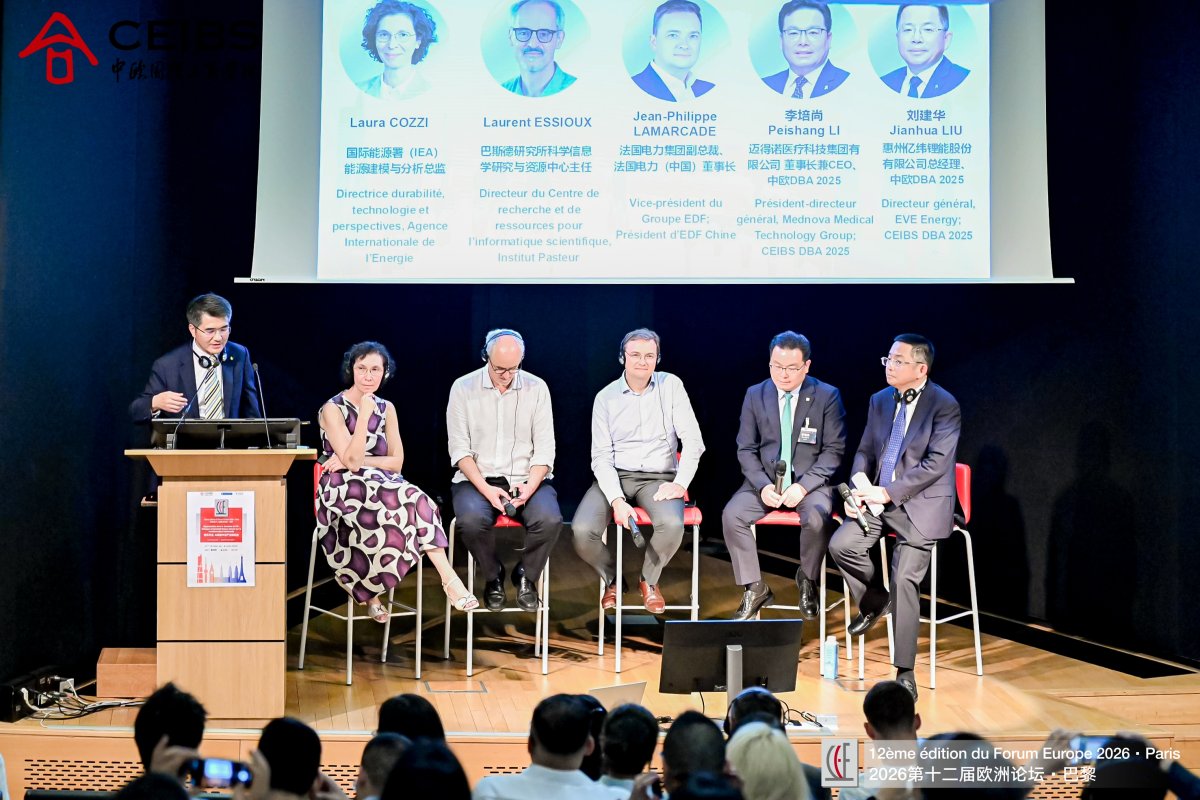
A roundtable discussion was then held, moderated by Wang Taiyuan, Professor of Entrepreneurship and Deputy Director of DBA Programme at CEIBS. The discussion brought together Mr. Jean-Philippe Lamarcade, Vice President of EDF Group and Chairman of EDF China; Ms. Laura Cozzi, Director of Sustainability, Technology and Outlooks at the International Energy Agency; Mr. Laurent Essioux, Director of the Research and Resource Centre for Scientific Informatics at Institut Pasteur; Mr. Peishang Li, Chairman & CEO of Mednova Medical Technology Group and CEIBS DBA 2025 participant; and Mr. Jianhua Liu, General Manager of EVE Energy and CEIBS DBA 2025 participant. The discussion centred on two core themes: whether AI substitutes or empowers, and whether or not the ultimate constraint on AI is energy. Mr. Liu highlighted his company's dedicated AI manufacturing and operations team, which he claimed boosts efficiency through human-machine collaboration. Mr. Li, citing the medical principle that safety must precede efficacy, stressed that critical decisions must remain in human hands. Mr. Lamarcade shared how France's power grid uses AI for fault prediction and renewable energy forecasting, while maintaining that core operational decisions require human oversight. Mr. Essioux noted that AI has greatly improved the efficiency of molecular and protein structure analysis but insisted that the creative dimension of scientific research remains inseparable from the scientist. Ms. Cozzi asserted that AI has not reduced employment demand in the energy sector; rather, it has created greater need for professionals with AI skills.
Ultimately, the panellists unanimously agreed that in each of their respective fields, AI serves far more as an enabler than a replacement—human judgement, accountability, and creativity remain indispensable. At the same time, they noted that AI's rapid growth is placing unprecedented demands on energy supply, with electricity demand from data centres far outpacing overall consumption growth. Amid the deepening integration of new energy and AI, they concluded, significant opportunities for Sino-French cooperation remain.
The event was hosted by CEIBS Co-President (European) Frank Bournois, who delivered introductory and closing remarks. The forum, he said, reaffirmed the vital importance of mutual understanding between China and Europe—Chinese business leaders need a more nuanced grasp of how the EU functions, he said, just as European society must equally deepen its knowledge of China. On the subject of AI, he cautioned against simplistic, all-or-nothing expectations. Technology will not replace all work, he asserted; rather, our critical task is to manage the boundaries of its application through thoughtful governance, coordination, and organisational design.
CEIBS remains committed to building platforms for international exchange. Since the CEIBS Europe Forum was launched in 2012, it has held 32 events across seven European countries, including events through a decade-long partnership with CCI Paris Ile-de-France in Paris. Over 200 speakers from political, business, and academic circles worldwide have taken part, alongside more than 8,000 international attendees, engaging in discussions on pressing topics facing China, Europe and the world and contributing to deeper economic and cultural ties. As the AI era continues to present structural opportunities for business, CEIBS will continue to provide a high-level platform for global dialogue, transforming the collision of ideas into cooperative consensus and unlocking the potential for synergy through cross-border and cross-discipline connection.
On June 24, 2026, the school will take the Europe forum to Brussels to discuss the theme "Competition or Complementarity? Strategic Opportunities in EU–China AI Development". The event will feature in-depth discussions on global AI trends, strategic pathway choices for China and the European Union, and practical cases of industrial empowerment, helping enterprises on both sides seize the emerging opportunities of the AI era.
The CEIBS Europe Forum Paris also formed part of an overseas module for the CEIBS DBA programme. Over the course of a week, the cohort of DBA participants will visit leading enterprises across several cities in France and Switzerland, complemented by a programme of high-level academic lectures and seminars.
About CEIBS
China Europe International Business School (CEIBS) was jointly established in 1994 by the European Union and the Chinese government and remains the only business school in China founded through government-to-government collaboration. Guided by its motto of “Conscientiousness, Innovation, and Excellence,” CEIBS is committed to developing responsible leaders equipped with “China Depth, Global Breadth”. The school has established a global footprint across five locations on three continents - Shanghai, Beijing, and Shenzhen in China; Zurich in Switzerland; and Accra in Ghana - becoming a top-tier business school in Asia and a globally recognised institution.
CEIBS also serves as a bridge for economic and cultural exchange between China, Europe, and the wider world. The school offers a wide range of programmes, including a full-time English-language MBA, Finance MBA (FMBA), Global Master in Management (Global MiM), EMBA, Global EMBA (GEMBA), Hospitality EMBA (HEMBA), Doctor of Business Administration (DBA), PhD, and Executive Education (EE) courses. CEIBS was the first business school on the Chinese mainland to earn accreditation from both the European Quality Improvement System (EQUIS) and the Association to Advance Collegiate Schools of Business (AACSB). For ten consecutive years, CEIBS has been ranked the No.1 MBA programme in Asia in the Financial Times Global MBA Ranking, while its Global EMBA programme has been ranked in the global top two worldwide in the Financial Times EMBA Ranking for six consecutive years.