


Shaping a new paradigm in global management education: CEIBS unveils Strategic Plan (2026–2030)
April 9, 2026. Shanghai – Amid a rapidly evolving global landscape, China Europe International Business School (CEIBS) stands at a pivotal crossroads, facing key strategic decisions that will shape its development over the next five years.
Drawing on its international character and extensive institutional experience—as a school co-founded by the Chinese government and the European Union (EU)—alongside in-depth analysis of global trends, technological transformation, and the evolving demands of future business talent, CEIBS has developed a forward-looking blueprint for the years ahead.
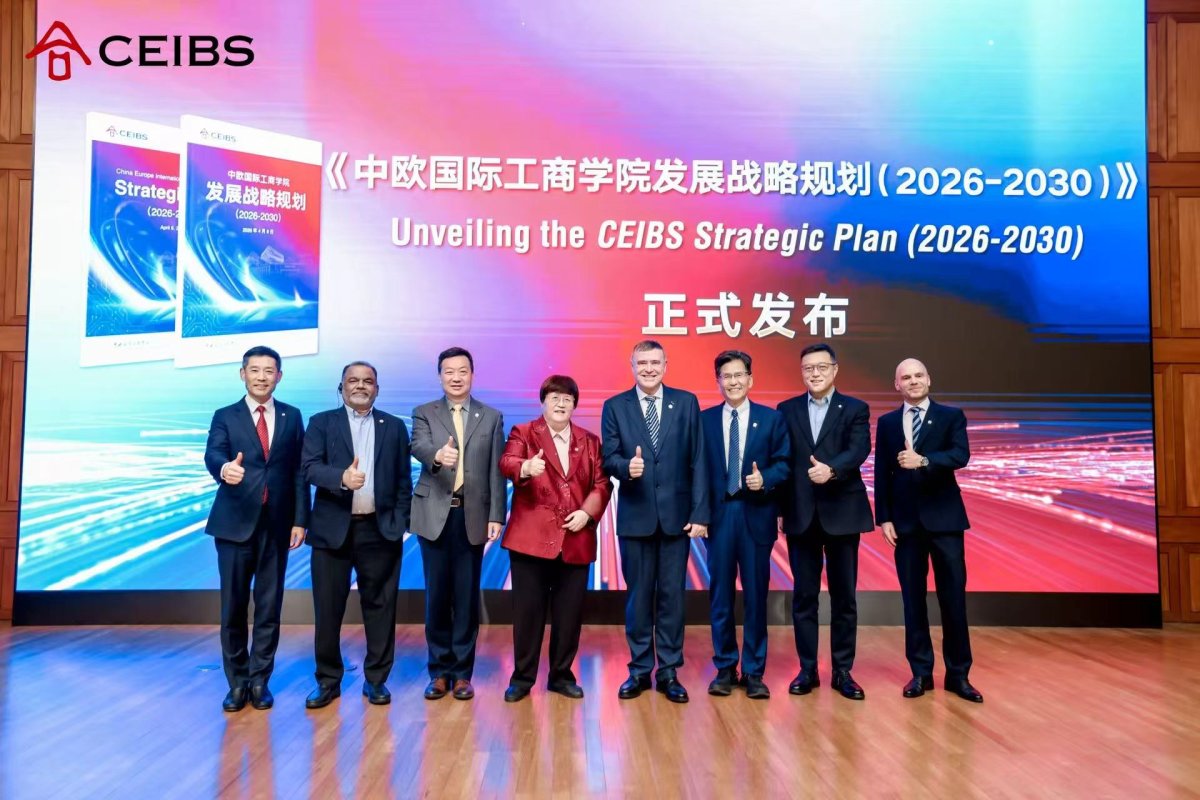
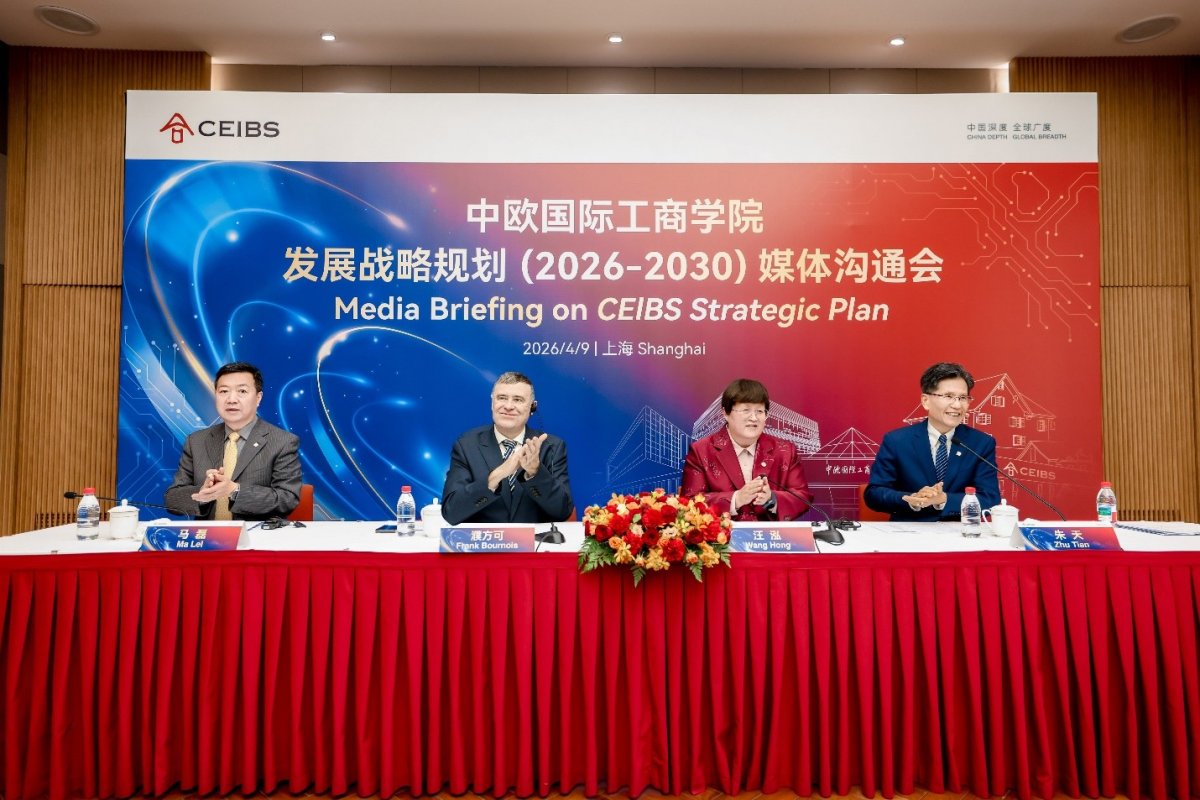
On April 9, the school officially launched its Strategic Plan (2026–2030) with a conference and media briefing held on its Shanghai campus. The event brought together school leadership, faculty, staff, alumni representatives, and over 30 major media outlets.
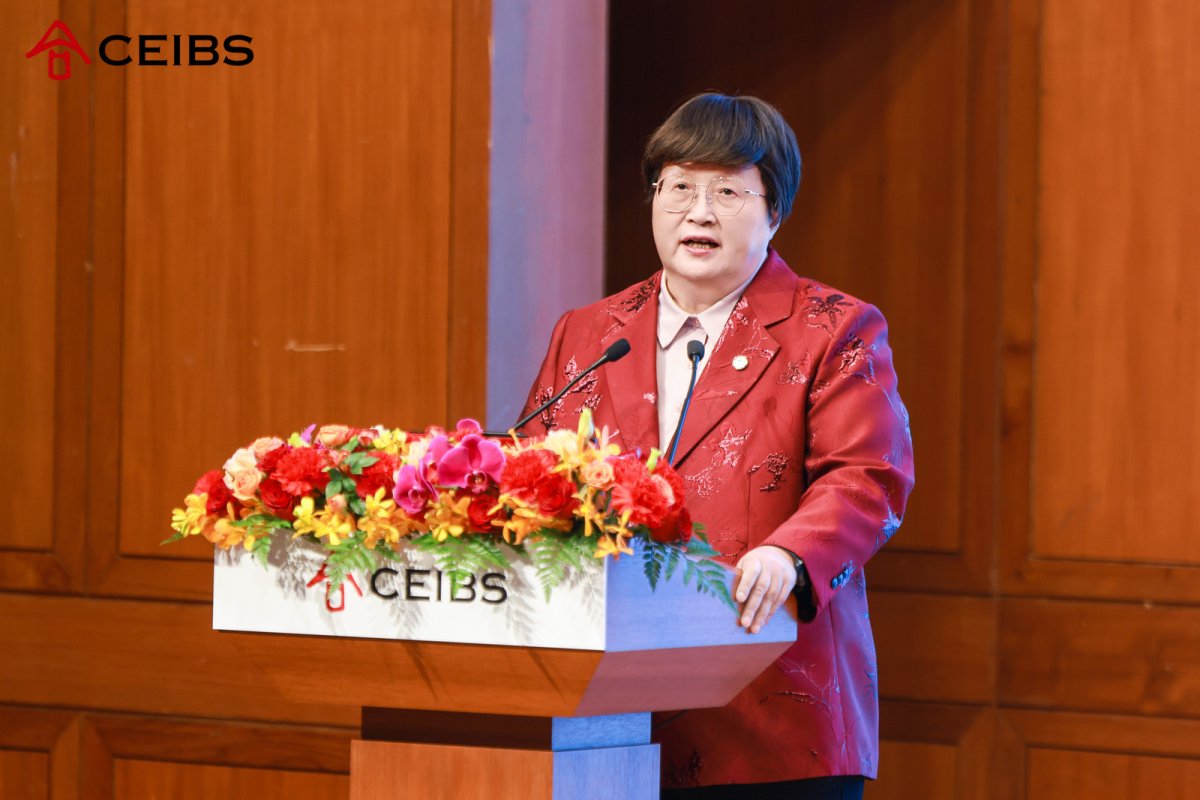
In her address, CEIBS President Wang Hong outlined the school’s major achievements from 2021 to 2025, and highlighted the opportunities, challenges, and strategic priorities for the next five years.
Over the past five years, CEIBS has made significant progress across eight key areas, she said, noting that the school has: strengthened its position as a globally recognised brand in management education, with its Global EMBA ranking among the top two worldwide in the Financial Times for six consecutive years and its MBA ranked No. 1 in Asia for ten consecutive years; enhanced institutional governance through deeper strategic trust between Chinese and European stakeholders and stronger guidance from its International Advisory Board and Corporate Advisory Board; expanded global engagement by establishing partnerships with more than 100 international institutions and delivering over 80 overseas modules annually across more than 20 countries and regions; built a world-class faculty and research team of 120 professors from over 20 countries and regions, with CEIBS case studies used more than two million times in over 1,100 institutions across more than 80 countries; developed a comprehensive talent system spanning MBA, Finance MBA, Global MiM, EMBA, Global EMBA, HEMBA, DBA, PhD, and Executive Education programmes; strengthened its think tank role by submitting more than 1,400 policy advisory reports and completing over 170 commissioned research projects; advanced digital transformation through its “Smart Campus” initiative and the integration of AI into teaching, research, and governance; and continued to empower a global alumni network of over 34,000 members across more than 90 countries and regions, with 85% in senior management roles and 480 serving as Chairman, President, or CEO of 437 listed companies in China.
Over the next five years, she continued, CEIBS will reinforce its top-tier position, exemplify social responsibility, expand its world-class faculty, develop signature research areas, optimise its programme portfolio, deepen China–Europe engagement, accelerate full-scale AI integration, and further empower its alumni network. It will do so by enhancing global competitiveness and maintaining its leadership in top-tier management education; integrating ESG and sustainability across its operations, curriculum, and research to cultivate purpose-driven leaders; building a world-class faculty through innovative talent development; deepening its interdisciplinary “2+4+X” research framework, building the world’s most influential China-focused case library, and establishing a high-calibre international think tank; accelerating curriculum innovation, refining its programme portfolio, and strengthening its signature Real Situation Learning Method (RSLM™), while fostering an integrated industry–academia–research ecosystem; expanding global partnerships and exchanges to serve as a platform for China–Europe and broader international dialogue; advancing its “AI + HI (Human Intelligence)” dual-driven model to shape a new paradigm in business education; and further strengthening its global alumni network and lifelong learning ecosystem.
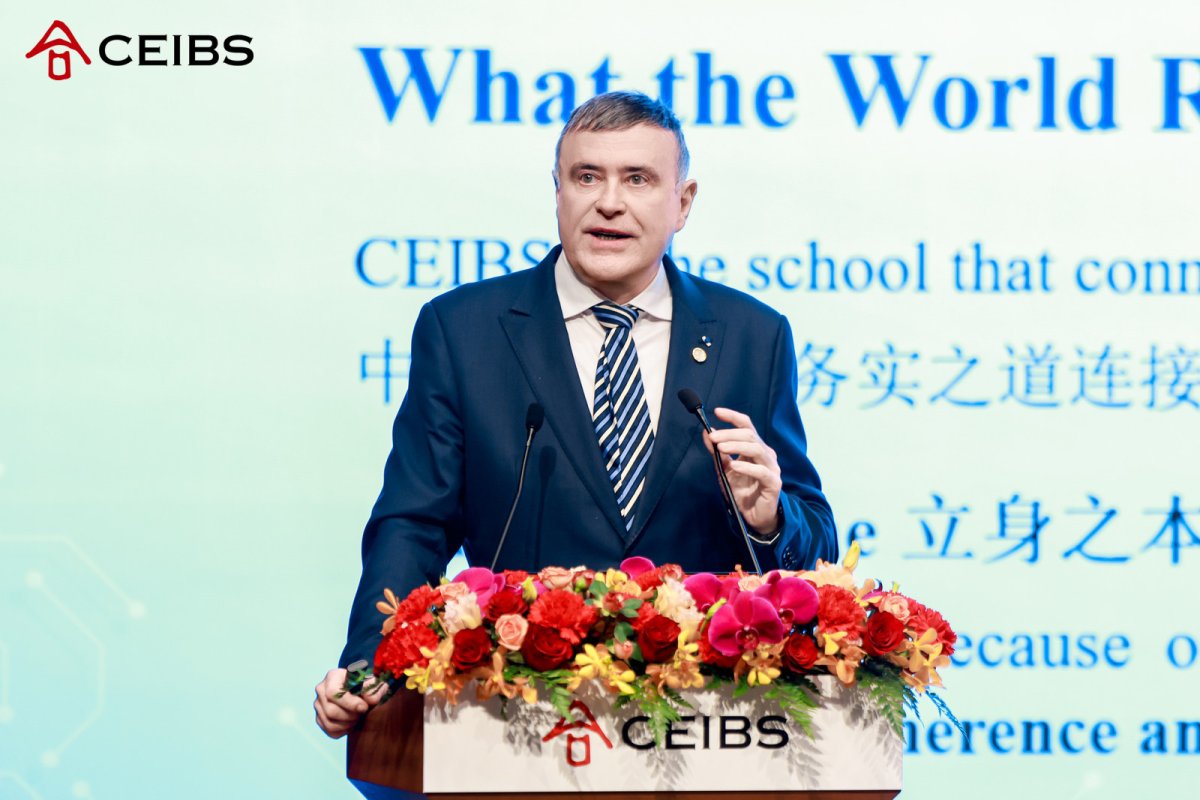
CEIBS Co-President (European) Frank Bournois then delivered an address offering further insight into the school’s strategic objectives, emphasising that “a plan is more than a document; it is a disciplined way of thinking about the future.” He noted that the CEIBS Strategic Plan (2026–2030) is not merely a vision statement, but a comprehensive execution framework, with 224 deliverables spanning 23 departments and campuses, designed to ensure both structure and adaptability.
He further elaborated on several key strategic priorities, emphasising that CEIBS’ global positioning as an international business school co-founded by the EU and the Chinese government, with China and Europe at its core, remains a key asset. Leveraging its multi-campus footprint across three continents and expanding engagement in regions such as Zurich and Africa, CEIBS aims to deepen its role as a bridge connecting China, Europe, and the wider world, he added.
Highlighting the importance of a strong academic identity grounded in the dual excellence of teaching and research, he said CEIBS will continue to integrate cutting-edge insights into the classroom while advancing high-impact research, particularly through interdisciplinary collaboration and increased contributions to top-tier academic publications.
On market presence, Prof. Bournois noted that CEIBS will adopt a more proactive, data-driven approach to brand building. By expanding global outreach through forums and events, increasing the proportion of international students in key programmes, and leveraging digital platforms, the school aims to enhance its visibility and global influence.
Organisational and AI transformation form another central pillar of the strategy. Rather than treating AI as a standalone tool, he emphasised that CEIBS will embed it across teaching, operations, and decision-making, evolving into a fully AI-enabled institution. Together, these priorities signal a clear shift from vision to execution.
He also acknowledged several challenges in implementing the strategic plan, including the complexity of managing so many deliverables without losing focus, the need for strong coordination across 23 departments and campuses, and the uncertainties of an increasingly volatile and competitive global environment.
To address these challenges, he outlined several critical success factors: maintaining a clear strategic focus on high-impact priorities; ensuring strong leadership alignment across the institution to drive execution as a cohesive system; leveraging AI as a powerful enabler for real-time monitoring, predictive decision-making, and continuous innovation; reinforcing accountability through clear ownership and measurable outcomes; and fostering a results-oriented culture grounded in discipline, reliability, and high standards.
Looking ahead, Prof. Bournois stressed that execution will be the defining factor for CEIBS’ future. With clear priorities, strong leadership alignment, and AI as a strategic lever, the school aims to deliver measurable impact and long-term value. “CEIBS will not be defined by what it plans, but by the value it delivers,” he concluded, expressing confidence that CEIBS will ultimately translate its ambitions into tangible outcomes.
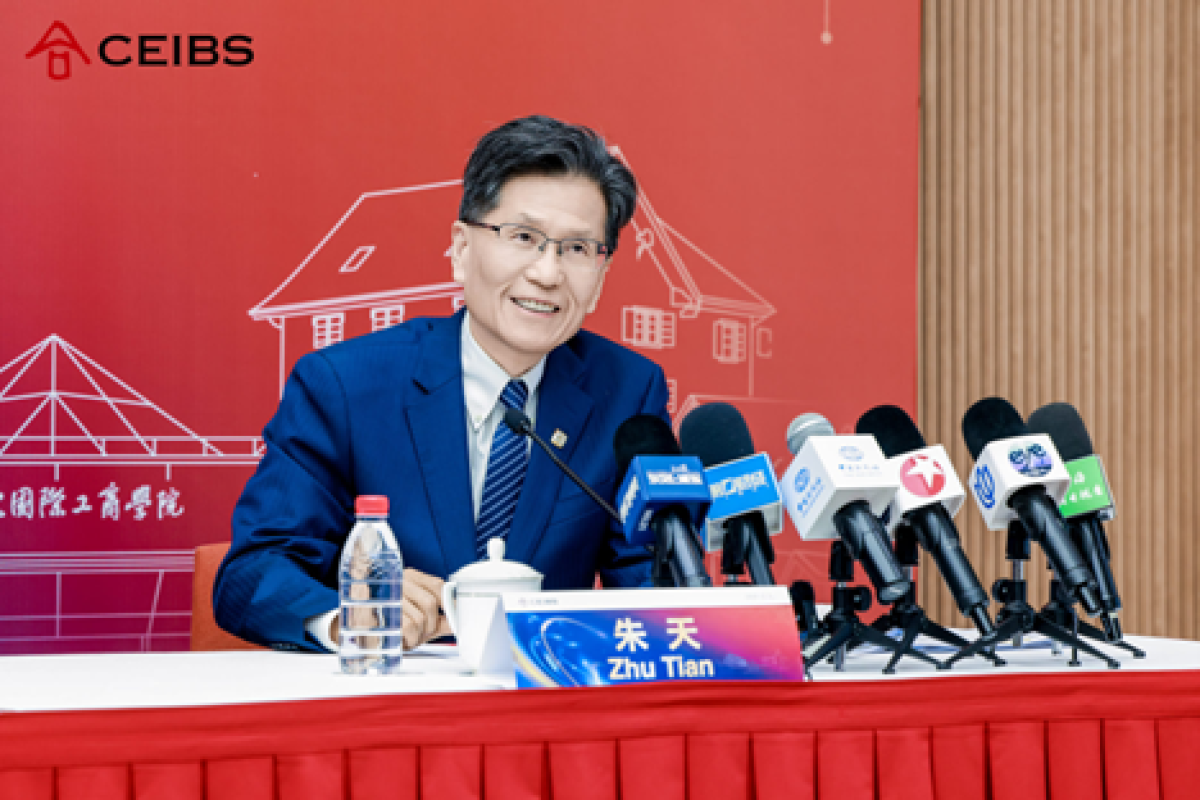
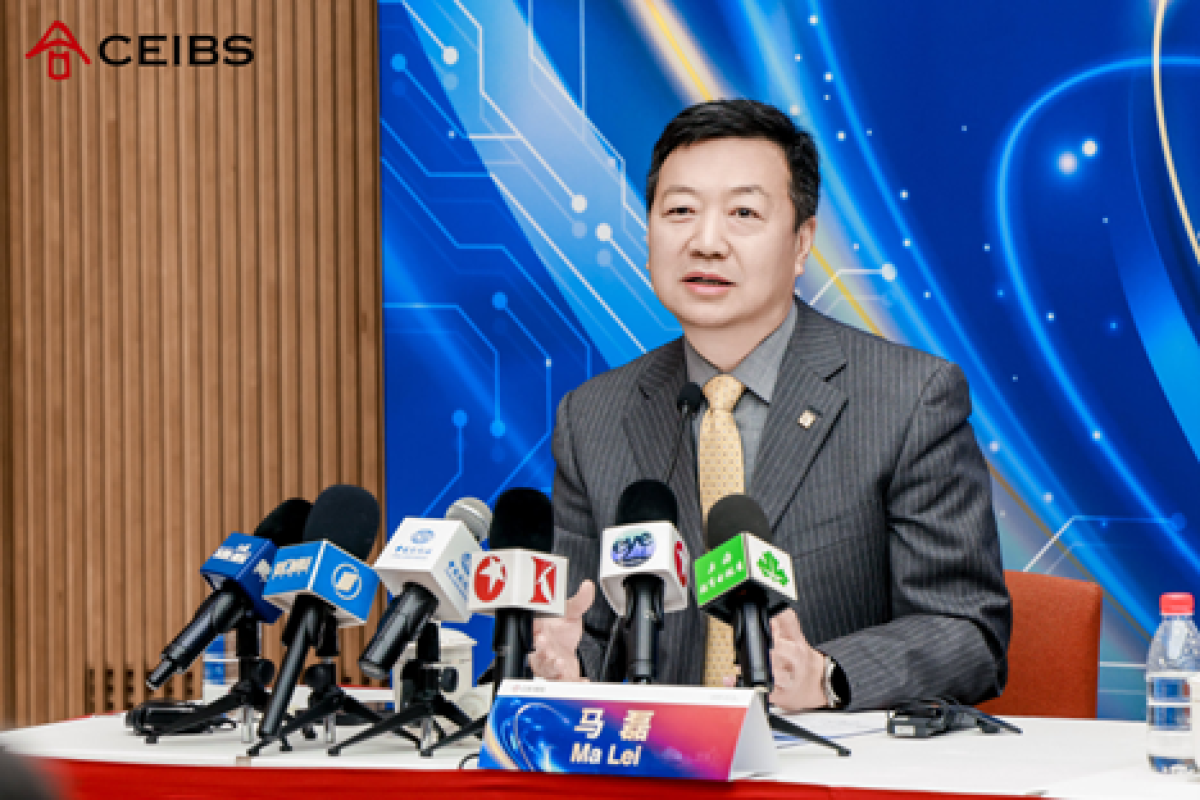
The event was followed by a media briefing, during which CEIBS President Wang Hong, Co-President (European) Frank Bournois, Vice President and Co-Dean Zhu Tian, and Secretary of CPC Committee Ma Lei shared insights on topics including CEIBS’ global competitiveness, talent recruitment, faculty development, and AI strategy with over 30 journalists.
On CEIBS’ global competitiveness, President Wang highlighted four defining strengths: its distinctive “China Depth, Global Breadth” positioning, its world-class faculty team, its student-centred educational philosophy, and its forward-looking approach to programme innovation. Looking ahead, she said, the school will continue to reinforce its positioning, deepen the integration of research and practice, accelerate its digital transformation, and implement its strategic priorities to further enhance its global competitiveness and impact.
Addressing a question on attracting international talent, Prof. Bournois acknowledged that, while geopolitical complexities present real challenges, CEIBS’ long-standing positioning as a pioneer in Europe-China engagement remains a key advantage.
He noted that, to increase the proportion of international students in the MBA and Global EMBA programmes to over 30% per programme, CEIBS is strengthening its value proposition across multiple dimensions. This includes delivering top-tier teaching and faculty quality, enhancing career development support to ensure strong employability, and expanding experiential learning opportunities through platforms such as the CEIBS InnoLab, which connects students with China’s dynamic innovation ecosystem. At the same time, the school is improving accessibility through scholarships, global exchanges, and flexible learning pathways, while offering its distinctive “China Depth, Global Breadth” experience that remains difficult to replicate globally.
Prof. Bournois also underscored that CEIBS’ role as a bridge between China and Europe is both long-term and constantly evolving. The school continues to adapt its programme portfolio, integrate emerging topics such as AI, and deepen engagement with industry through platforms like the CEIBS Corporate Advisory Board, ensuring that education remains closely aligned with real-world business needs. Through global forums, international partnerships, and cross-border exchanges, CEIBS fosters dialogue and collaboration across regions. He concluded that, while external conditions may fluctuate, the demand for globally minded leaders with cross-cultural capabilities will only grow, reinforcing CEIBS’ mission to connect Europe, China, and the wider world through management education.
Addressing faculty development, Prof. Zhu emphasised leveraging CEIBS’ differentiated strengths to attract top global talent. First, the school will reinforce its unique “China Depth, Global Breadth” positioning, enabling research on the latest global business trends, China’s economic development, and emerging markets. Second, as a leading business school in China, CEIBS will offer a globally competitive environment, including favourable working conditions, competitive compensation, and strong research support. Third, to attract top talent, the school is implementing a comprehensive set of measures, including internationally competitive compensation and benefits, robust onboarding and support systems to help young and top-tier scholars integrate quickly, and fair, transparent evaluation mechanisms. The school is also exploring the introduction of experienced industry practitioners to complement its academic faculty, he added.
Ultimately, CEIBS’ goal is not merely to attract talent, but to build a “trinity” of academia, practice, and ecosystem, enabling faculty to engage closely with China’s most dynamic entrepreneurs while achieving individual academic excellence and enhancing the school’s global reputation.
Responding to a question on the acceleration of comprehensive AI application, Secretary Ma noted that, in an era of deep integration between AI and human intelligence, CEIBS is advancing an “AI+HI” dual-driven approach to enhance its curriculum, research, and operations.
First, in terms of curriculum transformation, the school is integrating AI into talent development by introducing core modules such as AI and Business Strategy and Intelligent Decision-Making, he said, enhancing case teaching with AI, and enabling personalised learning pathways.
Second, regarding teaching and research, CEIBS is fostering a human–machine collaborative model in which AI supports data analysis and scenario simulation, allowing faculty to focus on higher-order capabilities while improving research efficiency and strengthening industry–academia collaboration through real-world business engagement.
Third, on operations, he noted that the school is advancing digital and intelligent governance by building a “Smart Campus” management system to optimise resource allocation, enhance service delivery through AI assistants, and automate routine processes—boosting efficiency and freeing resources for talent development and academic innovation.
Through these efforts, he concluded, CEIBS will continue to reinforce its “China Depth, Global Breadth” positioning and cultivate business leaders with both technological insight and human-centred leadership.
Looking ahead, CEIBS will continue to advance knowledge creation, embrace the frontiers of technology, and expand its global network—serving as a platform for those who aspire to grow, and contributing insight and leadership to economic and social development in China and beyond, as well as to shared global prosperity.