

Building with purpose – CEIBS Africa EMBA alum Akwasi Atuah on business, leadership and impact
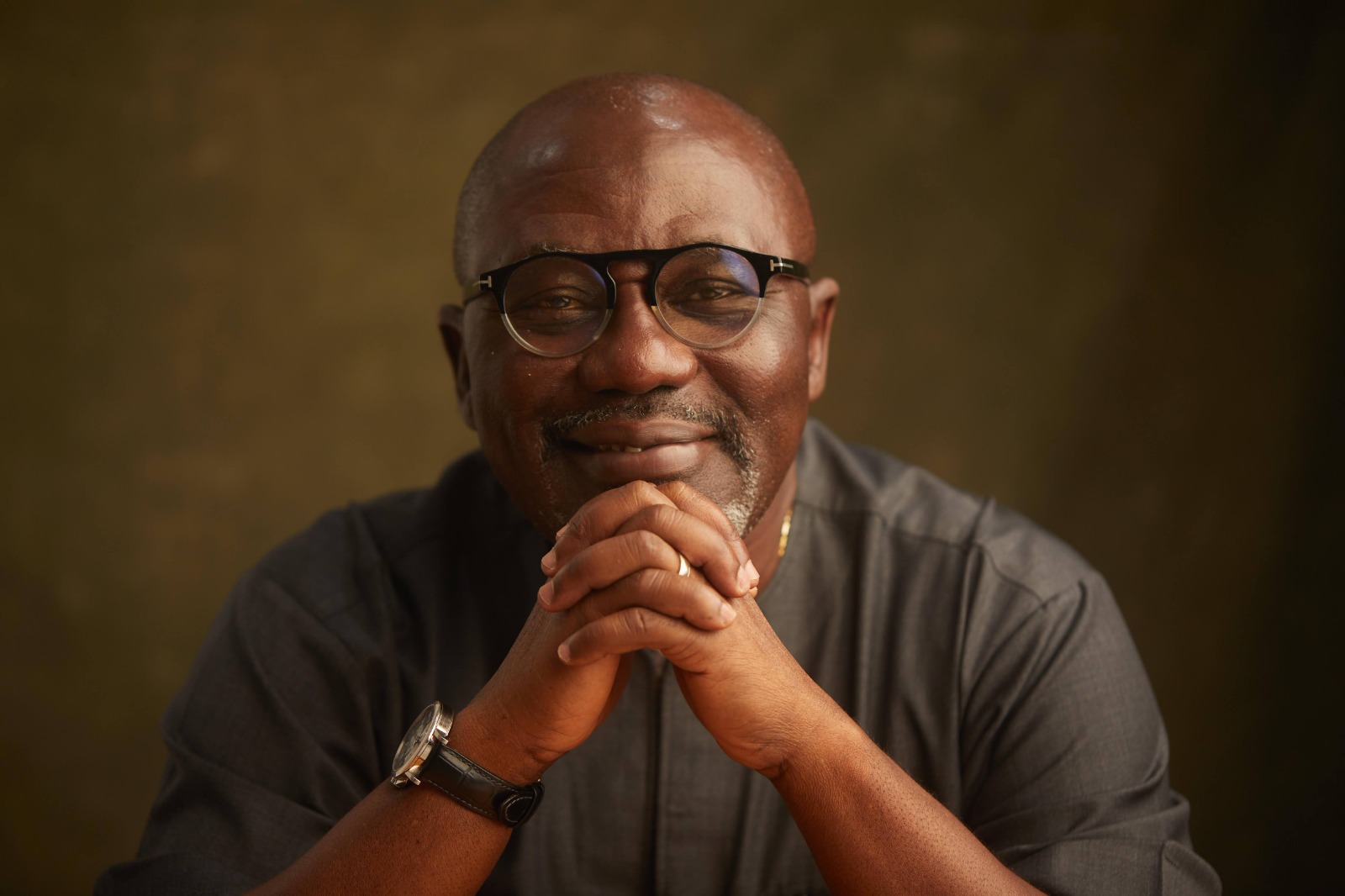
For Ghanaian entrepreneur and CEIBS Africa EMBA 2013 alumnus Akwasi Aboagye Atuah, business has never simply been about identifying where money can be made. It begins with a more fundamental question: is there a genuine need, and can you provide a meaningful solution?
Widely known as “Major”, a childhood nickname given to him by his elder brother, Akwasi is the Founder and CEO of Lifeforms Group, and has held leadership and board positions across sectors including banking, insurance, pharmaceuticals, media, infrastructure and real estate. His career has taken him from film production and television programme distribution to large-scale infrastructure projects that have supported broadcasting, electrification and development across Ghana.
Yet behind the breadth of his career lies a consistent set of principles: identify a genuine need, provide a meaningful solution, listen before making decisions, and ensure that business ultimately serves society.
“Whatever you are working on, make sure that there is a real, honest need for it before you tackle it,” he says. “It is not a question of just going to make a few bucks. Once you know that you are serving society and providing a solution, it becomes something different altogether.”
From filmmaking to bringing global television to Ghana
Akwasi’s professional journey began far from the boardroom.
Afte graduating from Ghana’s National Film and Television Institute (NAFTI), he began his career in film production, creating corporate videos and documentaries. He initially planned to continue his studies in the United States, but a conversation with the dean at the University of Southern California changed his mind.
The advice he received was simple: return home, gain real industry experience and come back later.
While in the United States, Akwasi had been exposed to popular television programmes that audiences in Ghana rarely had the opportunity to watch. That experience sparked an idea.
“I was exposed to programmes like The Cosby Show, 227 and different types of sitcoms,” he recalls. “I said to myself, ‘This might be interesting for Ghana,’ so I started doing the research.”
Navigating the international film distribution business largely by himself, Akwasi approached distributors and negotiated the rights to bring international programmes to Ghanaian television. While some people doubted that a young Ghanaian entrepreneur could successfully negotiate with major global entertainment companies, he understood that programme pricing was determined partly by the size and economic conditions of each market.
His success in television content distribution eventually enabled Lifeforms to work with companies including Warner Brothers, Columbia Pictures and Sony. More importantly, it led him to a larger challenge facing Ghana’s broadcasting sector.
Seeing opportunity in a changing industry
At the time, Ghana Broadcasting Corporation (GBC) was operating largely with analogue systems while the international television industry was rapidly moving towards digital formats.
For Akwasi, that mismatch was more than a technical inconvenience. It revealed an infrastructure need.
Through his relationship with Sony, he began developing a proposal to rehabilitate GBC’s facilities. The project ultimately upgraded three television stations and 16 radio stations across Ghana, introduced new cameras and allowed the broadcaster to work with both analogue and digital material.
Closing the deal took nine years.
For Akwasi, persistence was possible because the fundamentals remained clear.
“We were looking at the need,” he explains. “Did GBC really need a new system? Yes, that was very clear. Could we provide the solution? We could. Could we find the financing to do it? The partners were ready. Looking at those elements, we believed that one day it would happen.”
The project became a turning point for Lifeforms, helping transform the company from a media-focused business into one involved in infrastructure and project development. It also reinforced one of Akwasi’s central entrepreneurial lessons: a good opportunity should be supported by a demonstrable need, a workable solution and the ability to mobilise the right partners and financing.
Protecting your name
Among all the industries he has worked in and projects he has undertaken, Akwasi says one asset has become increasingly important over time: reputation.
“It is all about integrity and your name,” he says. “Your name is very important.”
His philosophy has also been shaped by his long involvement with the global service organization Rotary International and its Four-Way Test, a set of guiding principles used to assess whether words and actions are truthful, fair, conducive to goodwill and beneficial to all concerned.
For Akwasi, these are not abstract ideals. “They taught me a lot,” he says. “To be fair to my friends, to be honest with my friends, and to be honest in trade and in business as well.”
Learning leadership in the boardroom
Akwasi’s experience as an entrepreneur eventually led to board appointments across multiple industries. His first significant exposure to corporate governance came through Prudential Bank, where he served as a shareholder and board member.
“The position of a leader, and what a leader says or does, can be extremely powerful,” he says. “Every leader should exercise a lot of caution and patience when making a decision.”
As a board chair, Akwasi makes a point of allowing every member to speak. Where appropriate, issues are put to a vote, and proposed agreements are checked with the entire board to ensure that they accurately reflect the discussion.
His practical advice to board members is equally direct: prepare thoroughly, read the board papers and avoid speaking too quickly.
“Give people the space to speak,” he says. “Read your board pack. Do not speak too soon. Listen to others before you speak.”
He believes leaders must also recognise the consequences their words can have for other people. A rushed conclusion, an unverified allegation or a decision made without hearing the other side can damage someone’s career and life.
“Always put a human face to whatever you are doing,” he says. “Listen to the other side, solely because you as a leader, one word from you can end somebody's life.”
The same principle applies when leaders themselves feel disappointed or let down. Akwasi admits that his tendency to trust people has sometimes led to difficult experiences, but he believes leaders should avoid allowing hurt or anger to take over.
“If you’re a leader, don’t concentrate on the hurt,” he says. “Concentrate on the matter, what the issue is, and deal with it.”
For him, the lesson is not to stop trusting people, but to learn from experience, manage emotion and stay focused on resolving the problem.
“Yes, you can get angry with people, but don’t prolong it. Deal with it, and manage your anger.”
Filling the gaps through CEIBS
Despite building a successful career in media and infrastructure, Akwasi was aware that his academic training in film had not given him a complete foundation for managing a growing and increasingly complex business.
Though serving on a bank board had already given him valuable exposure to finance, CEIBS offered a more systematic grounding in business and management.
“Film studies is not a very common speciality, so in day-to-day business there were certain things I did not understand,” he says. “CEIBS came in very handy.”
The African EMBA programme proved more intensive than he had expected. Before each class session, participants were required to work through extensive case studies and reading materials, followed by assignments and preparation for the next module.
Nevertheless, the classroom experience kept him fully engaged.
“I am not somebody who can sit for a long time,” he says. “But at CEIBS, even when I needed to get up to the bathroom, I did not want to leave because the lectures were that interesting.”
Just as important was the diversity of his classmates. Studying alongside executives and entrepreneurs from Ghana, Nigeria, Côte d’Ivoire and other markets expanded his perspective, while travelling to the CEIBS Shanghai campus gave him greater exposure to China and an international business environment.
“It was an eye-opener,” he says. “I enjoyed every bit of it, and I made good friends.”
His message to other executives considering further education is unequivocal.
“Education is not negotiable. If you have the opportunity, do it. Even if you do not have the opportunity, look for it and do it.”
This article is based on an interview with Akwasi Aboagye Atuah on the RED Podcast – Real-Life Executive Diaries, a CEIBS Ghana Alumni initiative.