



Building “brand gravity” – Jacquelien Postigo Brussee on leadership and growth in China

For CEIBS Global EMBA (GEMBA) 2020 alumna Jacquelien Postigo Brussee, China has never simply been a market; it has been a source of fascination and personal transformation. Originally from the Netherlands, Jacquelien has spent the past 15 years building her life and career in Shanghai, developing a distinctive perspective on branding, leadership, and China’s evolving business culture.
A lifelong connection with China
Jacquelien’s connection with China began during childhood. In the early 1990s, she accompanied her father on business trips across the country, witnessing firsthand a nation undergoing rapid change.
“That embedded something deeply in me. I couldn't really understand the complexity at that time, as I was very young, but I could already feel that sense of China’s ambition and growth,” she recalls.
While her father visited factories, Jacquelien immersed herself in the atmosphere of the cities and countryside around her. She fondly recalls overnight train journeys filled with livestock and market traders, wandering through mountain towns, and visiting places like Guangzhou and Shenzhen long before they became the sprawling global hubs they are today.
Eventually, curiosity evolved into commitment. During a global traineeship programme with a former employer, Jacquelien actively pushed for an assignment in China, convinced that the country represented the future of business growth.
“You could just feel it. It was not only on the news and in the plans of major companies; it was happening on the streets,” she explains. “I wanted to be part of it. I said, ‘Bring me to China and I’ll make it work.’”
Leading Jibe – Branding beyond broadcasting
That decision ultimately took Jacquelien to Shanghai, where she has since crafted a career spanning branding, strategy, and consulting. Today, she is the founder and CEO of Jibe Global, a boutique branding consultancy built around what she calls “brand gravity” – the idea that in an era of constant cultural acceleration, modern brands can no longer rely on visibility alone. Instead, they must create emotional pull by building ecosystems of belonging, meaningful participation, and cultural relevance. Brand gravity is about building brands that people want to orbit around.
For Jacquelien, branding is no longer about rigid control or one-way communication. Instead, successful brands must create meaningful experiences that consumers actively want to engage with.
“We’ve moved away from the old playbooks of branding towards participation,” she says. “Less control, more collaboration. Rather than simply broadcasting their messages, these brands create spaces where audiences actively contribute, influence, and co-create the brand experience itself.”
This philosophy has shaped Jibe’s work with an eclectic mix of clients, from internationally recognised sporting IPs such as the Tour of Shanghai, Hangzhou Olympic Youth Centre and WTA Ningbo Open, to leading international and local consumer brands that pivot their brand towards growth.
Across these diverse sectors, Jacquelien sees branding as a deeply strategic growth tool. In China’s intensely competitive business environment, where categories evolve with extraordinary speed, she believes branding is increasingly important for companies looking to differentiate themselves beyond price alone. “Price is easy to replicate, “she says. “Cultural relevance isn’t.” Therefor price wars are, in her words, simply “a losing game.”
This belief is embedded in the agency’s philosophy of brand gravity, which she says enables them to work with brands building ecosystems, in which strategy, culture, experience, and community reinforce one another. Jibe continues to stand out and attract a client portfolio that you might normally expect from much larger and more established firms. This, Jacquelien believes, is emblematic of a broader shift taking place across the industry, a growing recognition that modern growth is no longer driven purely by scale or performance marketing, but by a brand’s ability to remain culturally magnetic in a fast-moving world.
Among Chinese companies over the past decade, Jacquelien has witnessed a significant shift in mindset. “There is a real hunger and ambition to build brands that are distinctly their own,” she explains. “Chinese companies are confident in their identity, their perspective, and the cultural DNA that makes them unique, and that confidence is resonating both at home and in the global market.” She believes the strongest brands are those that deepen what they already make them meaningful and distinctive. “If you want to connect with your audience, you have to stay true to your DNA and purpose” she says. “But that alone isn’t enough anymore. Brands need to activate that meaning within communities create participation around it, and give people something they genuinely want to gravitate towards and become part of it.”
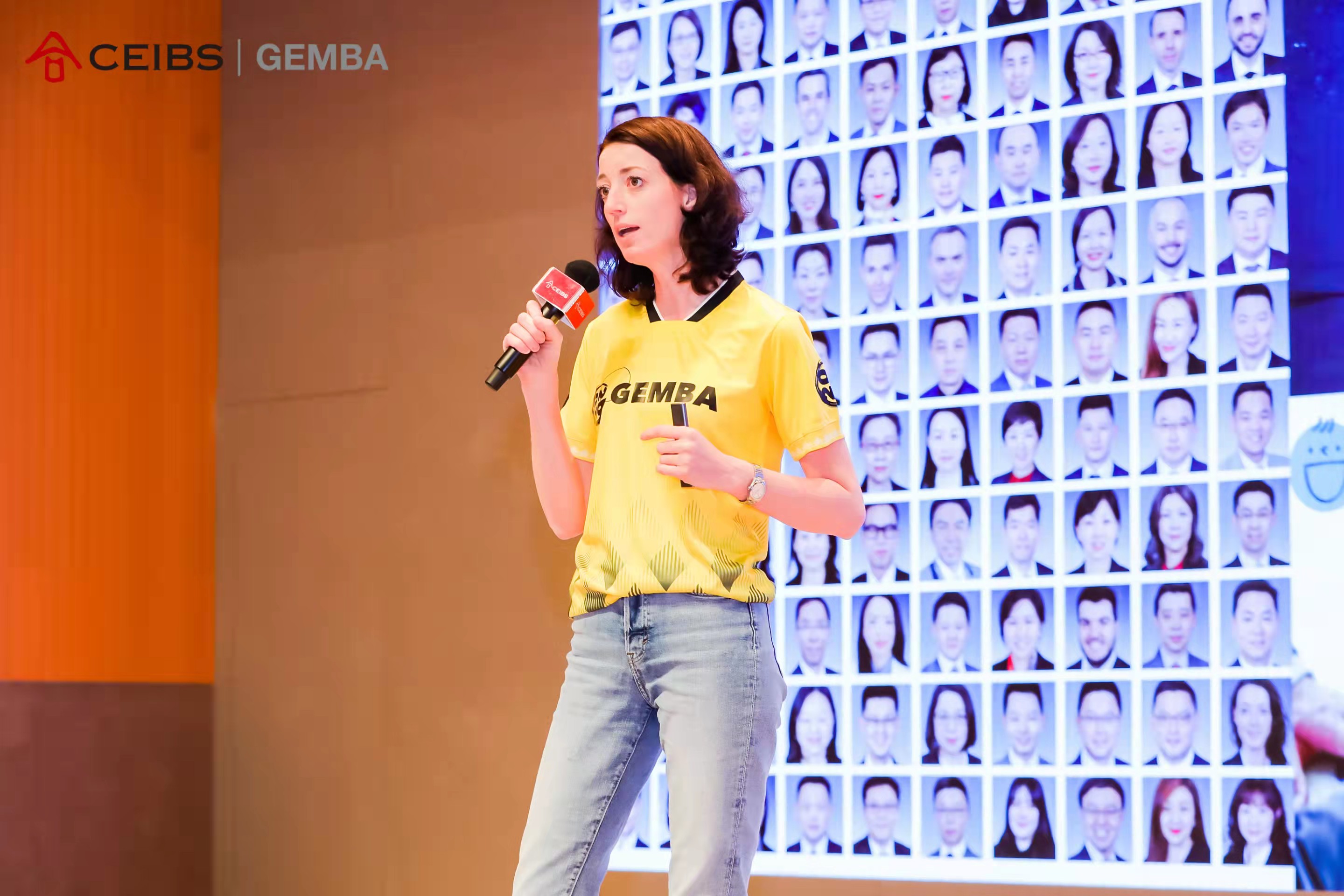
Staying human in the age of AI
If participation and collaboration are key ingredients in brand gravity, how does this approach intersect with the rise of artificial intelligence, where emerging platforms and tools can unlock almost limitless avenues of human creativity, but just as often threaten to cut it out of the creative process entirely?
Jacquelien remains realistic about the opportunities and limitations at play. While she embraces AI as a tool for efficiency and systems improvement, she believes the future of branding still depends fundamentally on human creativity, emotion, and lived experience.
“AI can imitate,” she says, “but we should never forget that the best brand insights still come from humans. Brand gravity needs the human brain, because we can think back, we have déjà vu, we have feelings, we have emotions, and I think that cannot be replicated yet with AI.”
For Jacquelien, genuine human connection remains at the heart of effective branding. In a world where modern consumers are bombarded with thousands of digital messages every day, she believes that we are all instinctively attuned to genuine connections versus fake or meaningless messages. This question of authenticity extends beyond technological concerns and impacts another crucial trend in China’s consumer landscape – KOLs (Key Opinion Leaders) and KOCs (Key Opinion Consumers).
“Participation means letting the consumer side speak – if their true voice is coming through then that’s perfect. If, however, the KOL or KOC doesn’t further that participation, then what value are they bringing beyond a short-term sales spike?” Jacquelien asks.
“For me it's all about brand loyalty, because you can have a lipstick seller, a bag seller, work for you, but then the next day they're promoting your competitor. That’s not authentic, that’s just transactional. There needs to be a natural alignment between the brand, the consumer and KOL or KOC. If the connection isn’t there, it’s not conducive to long-term brand building.”
The CEIBS factor – Building a dual operating system
Jacquelien’s reflections on growth and authenticity extend beyond clients and business strategy to the development of people within her organisation.
“I don’t want people to stagnate in my company,” she says. “I need people to grow.”
That belief in lifelong learning ultimately became one of the driving reasons behind her decision to join the GEMBA programme at CEIBS in 2020. For Jacquelien, CEIBS did not simply strengthen her technical business knowledge; it fundamentally expanded her perspective on leadership, strategy, and long-term purpose.
“I think CEIBS gave me a dual operating system,” she explains. “It deepened my understanding of Chinese business culture and my own place within it. Before, I would focus intently on the next year or even the next quarter; CEIBS pushed me to think in decades. What kind of leader will I be in ten years? What legacy do I want to leave? CEIBS encourages you to think carefully about what you bring to the world.”
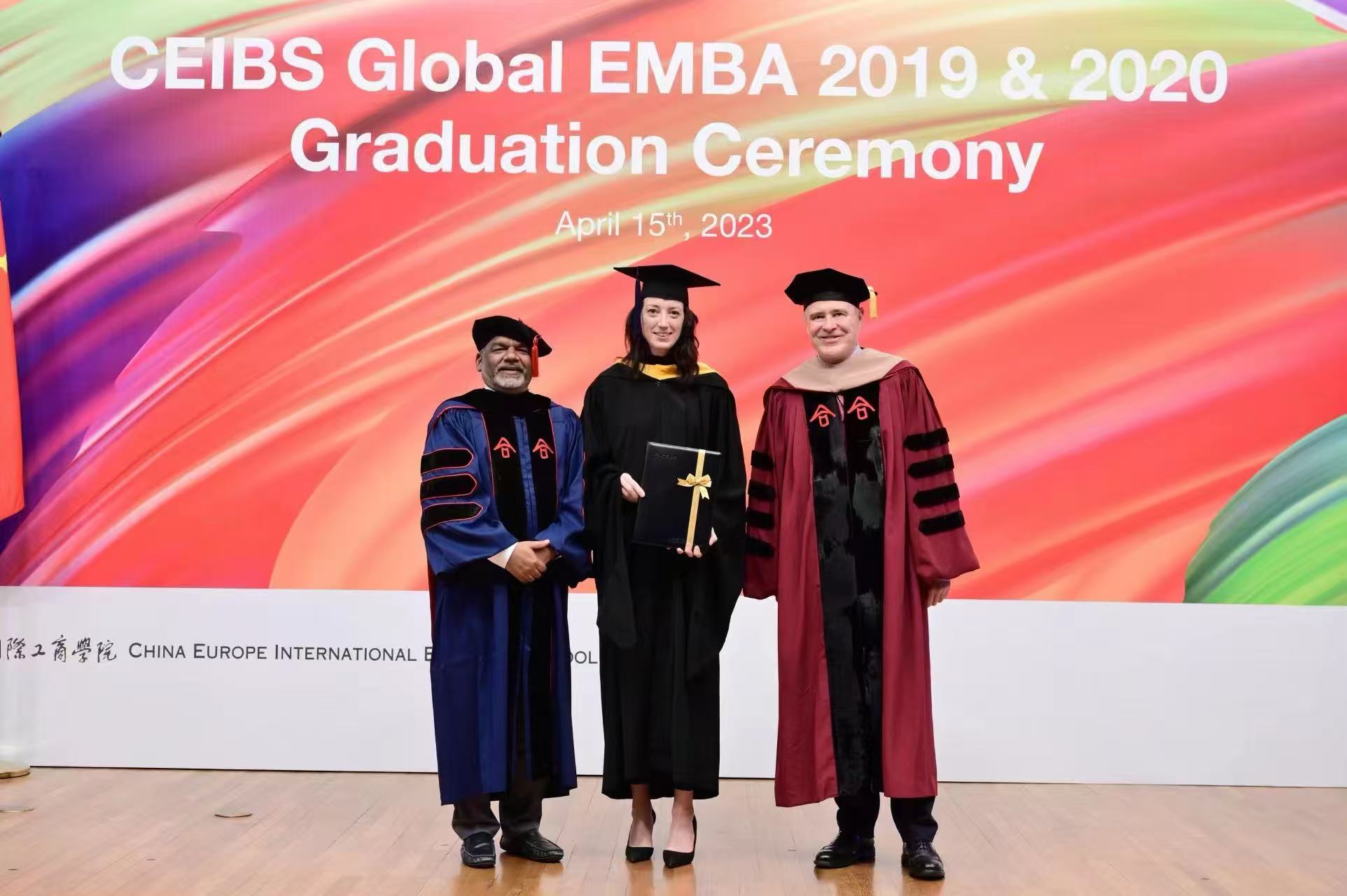
Staying curious in a fast-moving world
After 15 years in China, Jacquelien still finds inspiration in the city she now calls home. Whether walking through the tree-lined streets of Shanghai’s French Concession, discovering new restaurants with her family, or observing the ever-evolving energy of Chinese consumers and businesses, she remains deeply engaged with the culture that first captivated her decades ago.
Looking back, the advice she would give her younger self reflects the lessons she has learned during these whirlwind years of balancing business, family life and academia: focus on what truly matters.
“Learn to separate the noise from the signals,” Jacquelien advises. “There is so much noise, so don’t be tempted to listen to it all. Take a moment, determine why the market is moving the way it is. That mentality will help you focus and use your imagination effectively. So, stay curious, and always aim to dig a little deeper.”
This article is based on an interview between Jacquelien Postigo Brussee and CEIBS MBA 2009 alumnus Jeff Pi, host of CEIBS Alumni International Chapter (CAIC) podcast “Unscripted”.