



CEIBS Global EMBA hosts 5th Annual Symposium on China’s rise as a global innovation engine
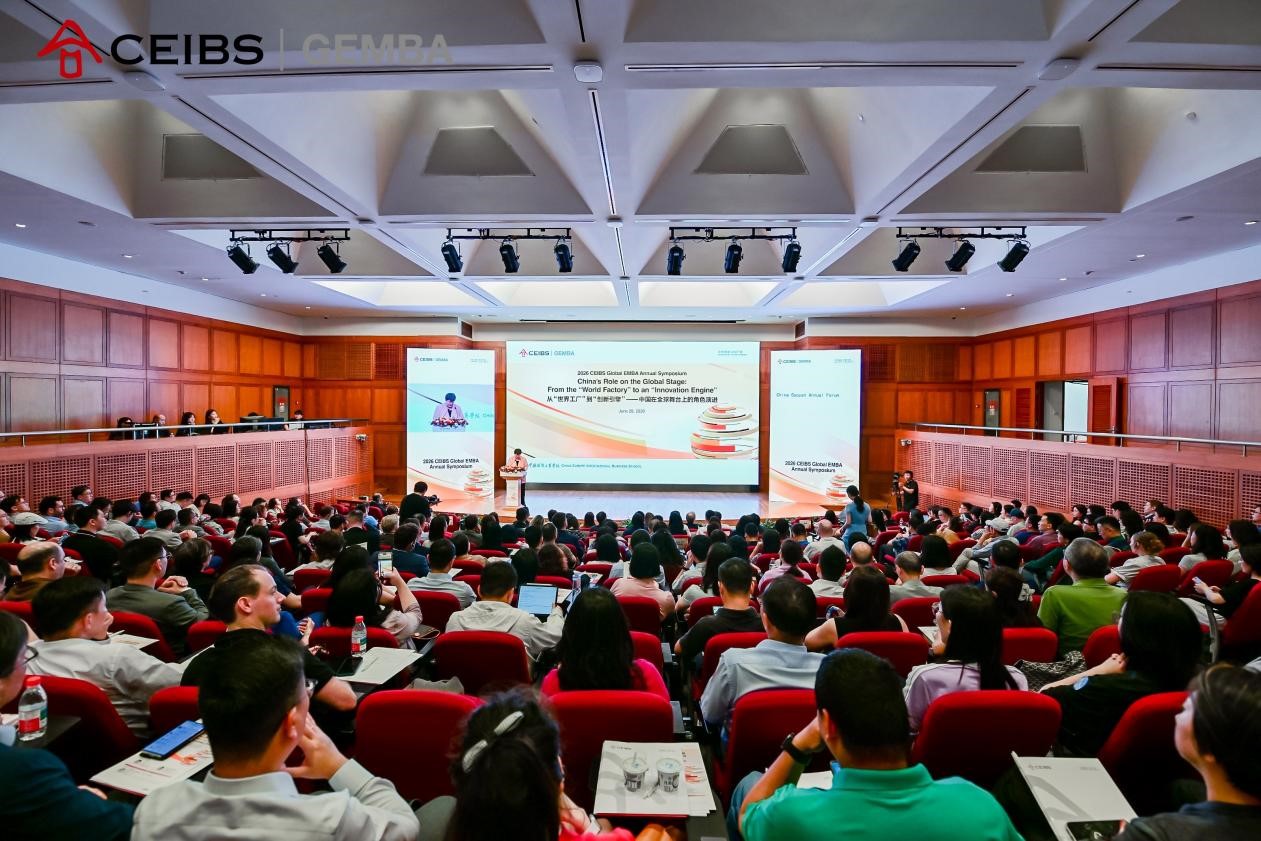
June 28, 2026. Shanghai – The fifth CEIBS Global EMBA Annual Symposium took place at the school’s Shanghai campus today, welcoming over 350 students, alumni, faculty, senior leadership and distinguished guests to examine one of the defining questions facing global business today: How is China's innovation-led transformation reshaping the global economy?
Addressing the theme of “China’s Role on the Global Stage: From the World Factory to an Innovation Engine”, this year’s event explored China's transition from growth driven by low-cost manufacturing to growth driven by innovation, and what this shift means for companies competing in an increasingly technology-led global economy.
Guided by CEIBS faculty moderators, speakers and panellists, the event examined the forces fuelling this change, from state-led investment in advanced technologies to the emergence of industry-reshaping business models, exploring what these shifts mean for both Chinese and international firms navigating this new reality.
Opening the symposium, CEIBS Professor of Economics, Associate Dean and Director of Global EMBA Programme Bala Ramasamy set the tone for the event to follow.
“For decades, China’s story in the global economy was told through one lens — scale, cost, and manufacturing capacity. It became the world’s factory, and it was an extraordinary chapter. But that chapter is now evolving. We are witnessing a China that is not only making the world’s products but increasingly shaping its ideas, technologies, and industries. The innovation engine is warming up.”
Opening Remarks – Redefining the Rules of Competition
In her opening remarks, CEIBS President Wang Hong highlighted China’s steady rise in R&D investment and patent applications — two key indicators of a nation’s capacity to drive and sustain innovation.
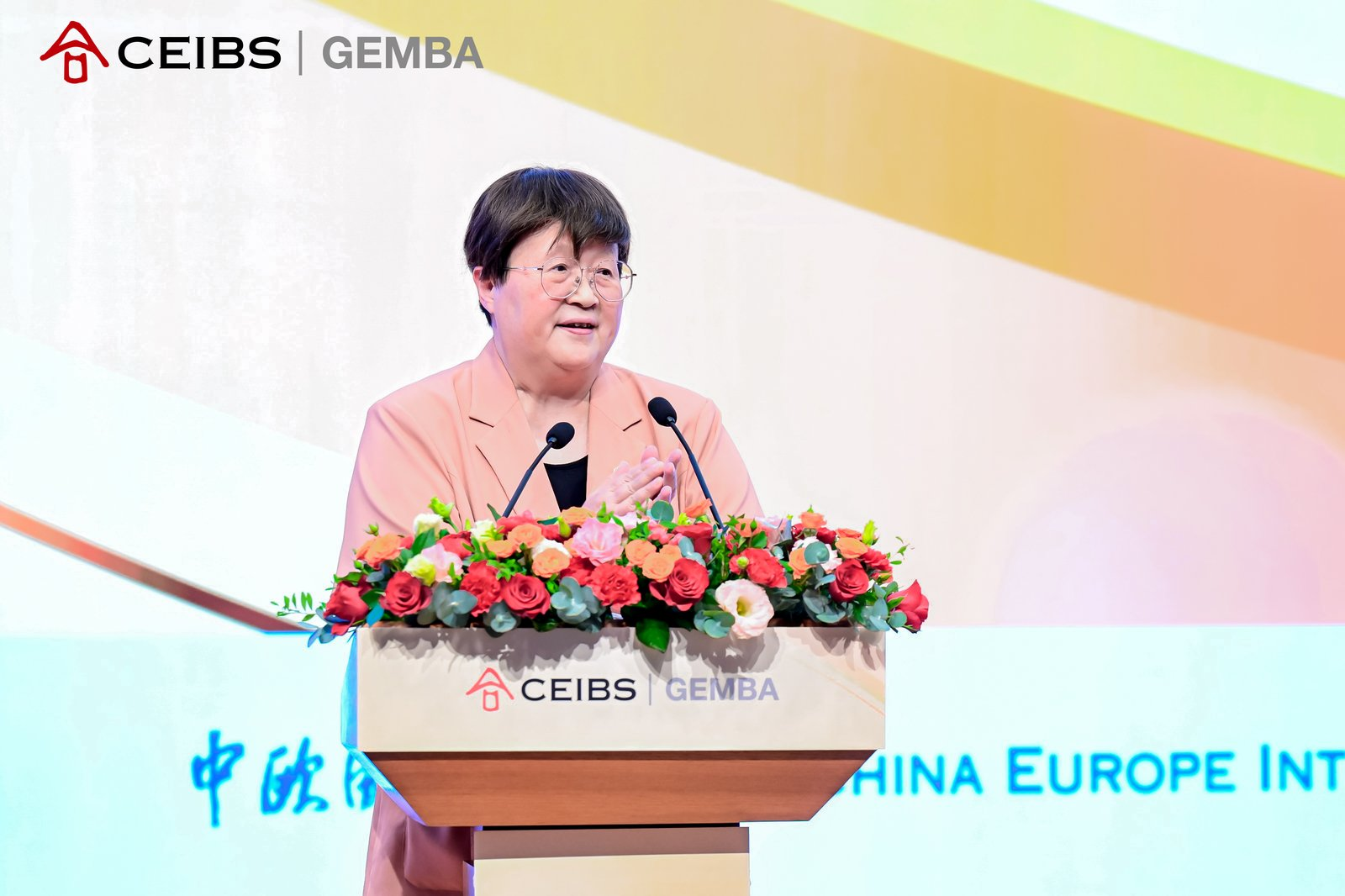
“In 2025, China’s R&D expenditure reached 3.93 trillion yuan — equivalent to 2.8% of GDP, surpassing the OECD average for the first time. The number of valid invention patents exceeded five million. Behind these figures lies a fundamental structural shift: China has moved from competing on cost in manufacturing to actively participating in — and redefining — the rules of competition in key technology sectors,” she said.
President Wang outlined how this transformation will reshape not only China’s economic trajectory but also the strategic priorities of every multinational operating in the country — demanding greater sophistication in both strategic judgment and cross-cultural leadership.
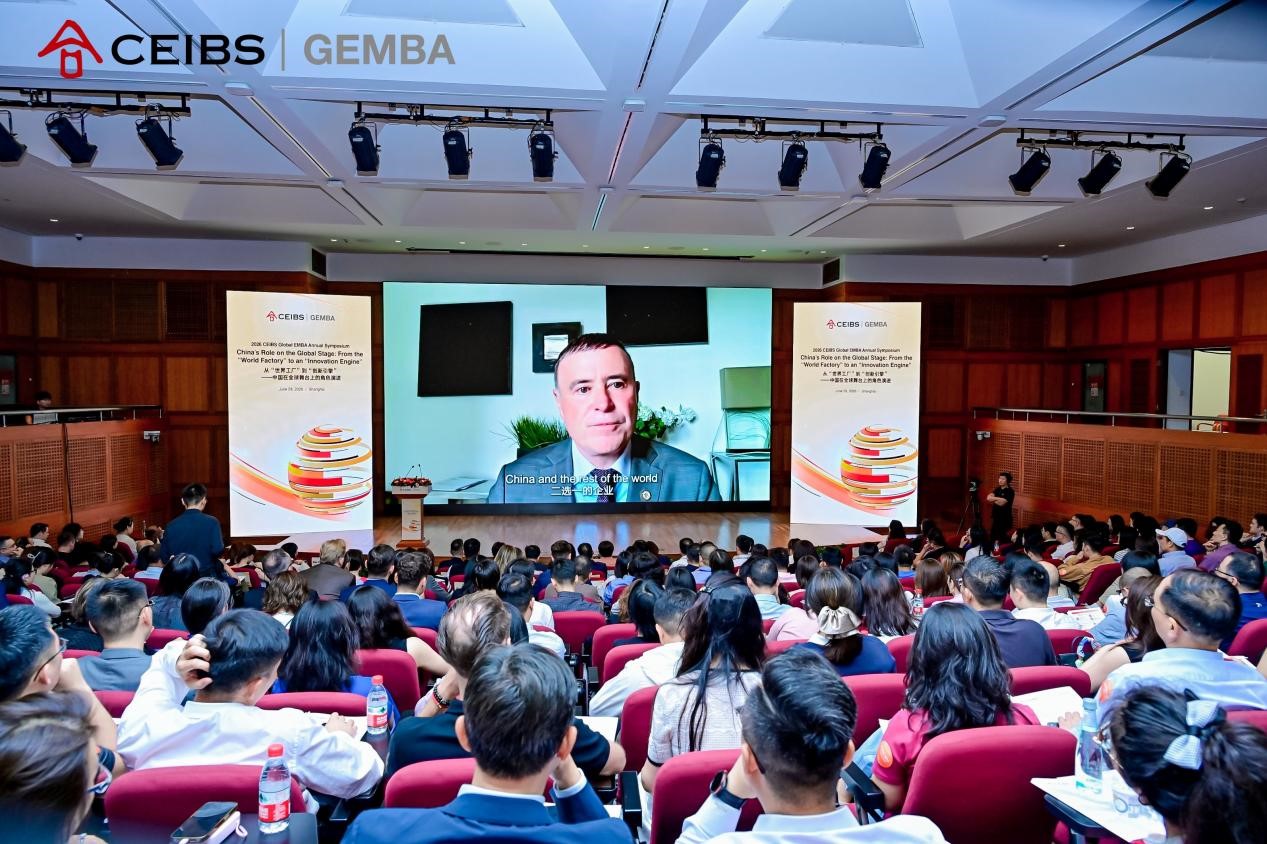
This message was echoed in a video address from CEIBS Co-President (European) Frank Bournois, who argued that the future of global business will be shaped not by rivalry between China and the rest of the world, but by leaders with the vision and skill to build bridges across cultures and markets. “It is not only about China’s role in the world — it is also about developing leaders with global vision, local understanding and the ability to connect people, organisations and ideas across differences,” he said.
Keynote Speech – China’s Leap from “World Factory” to “Innovation Engine”
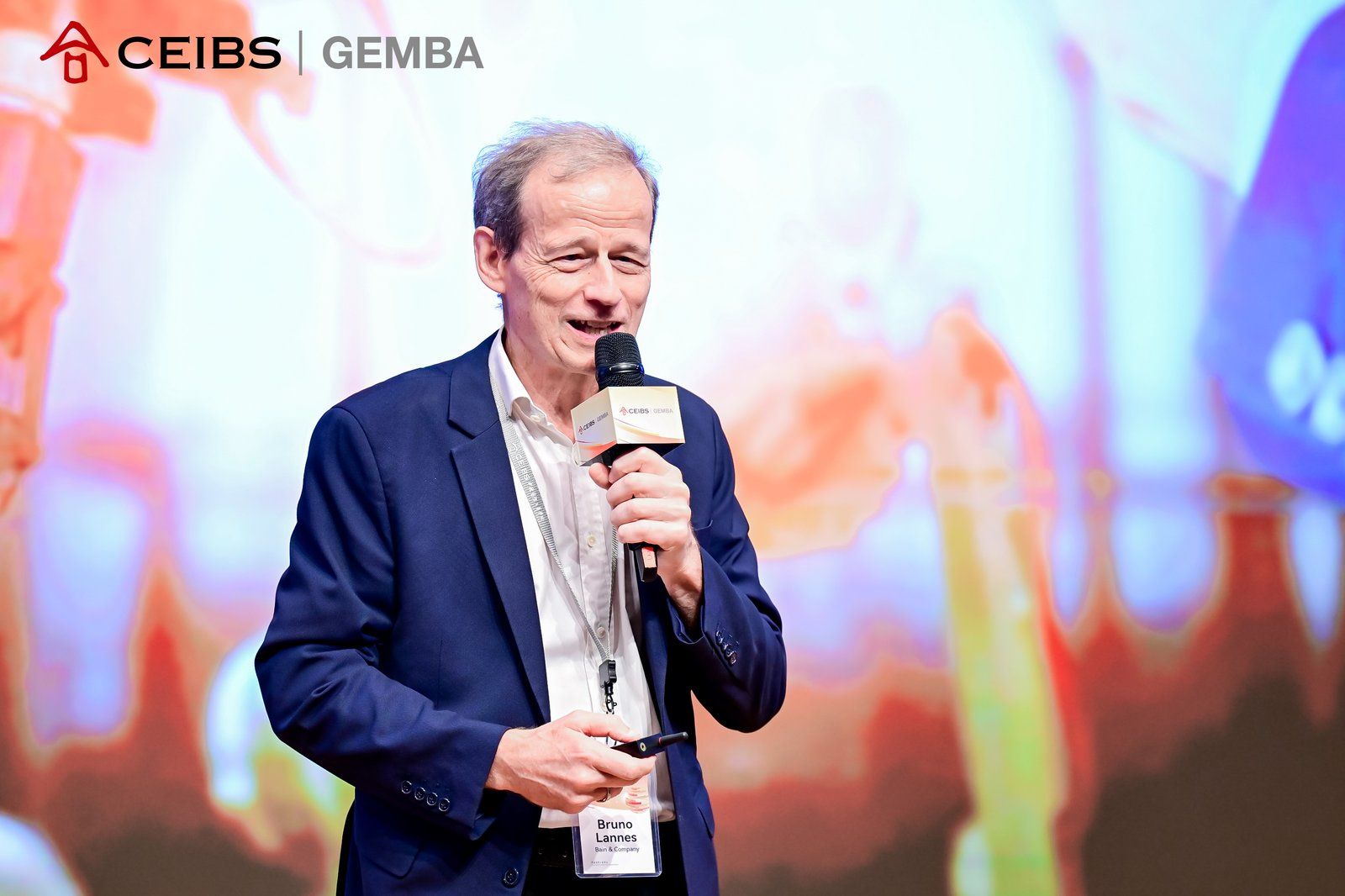
Delivering a keynote address, Bruno Lannes, Senior Partner at Bain & Company, explained how China has not simply replaced its traditional manufacturing strengths — it has built upon them to become an increasingly powerful engine of global innovation.
Mr Lannes argued that this process has been driven by China’s unique innovation “flywheel” — a self-reinforcing cycle combining LT strategic vision from the central government, local government financial and infrastructure support, manufacturing excellence, entrepreneurial competition, long-term investment and market scale. He urged multinationals and Chinese companies alike to engage seriously with this ecosystem, drawing lessons from it to build genuinely globally competitive capabilities.
"What China is demonstrating, sector after sector, is not simply the ability to innovate, but the ability to scale that innovation,” he said. “This is how China is producing transformative companies across industries from EVs to biopharma. For multinational companies, the challenge is to learn from China and bring those capabilities to the rest of the world; for Chinese companies, it is to reinforce those strengths that power the flywheel as they become global leaders."
Dialogue, Part 1 – Strategic Renewal of Multinationals in China
The symposium then moved into a series of five executive dialogues, each exploring how China's economic transformation is reshaping the strategies of multinationals operating in China and Chinese companies pursuing global expansion.
The first dialogue focused on the new roles being played by multinational corporations (MNCs) in China, both those with longstanding ties to the market and those that have only recently established their presence. With Prof. Ramasamy moderating, Dr. David Xu (President of Bosch China) and Dr. Shen Feng (Executive Vice President of NIO) offered a sharp perspective on the opportunities this economic transformation presents to both MNCs and Chinese enterprises.
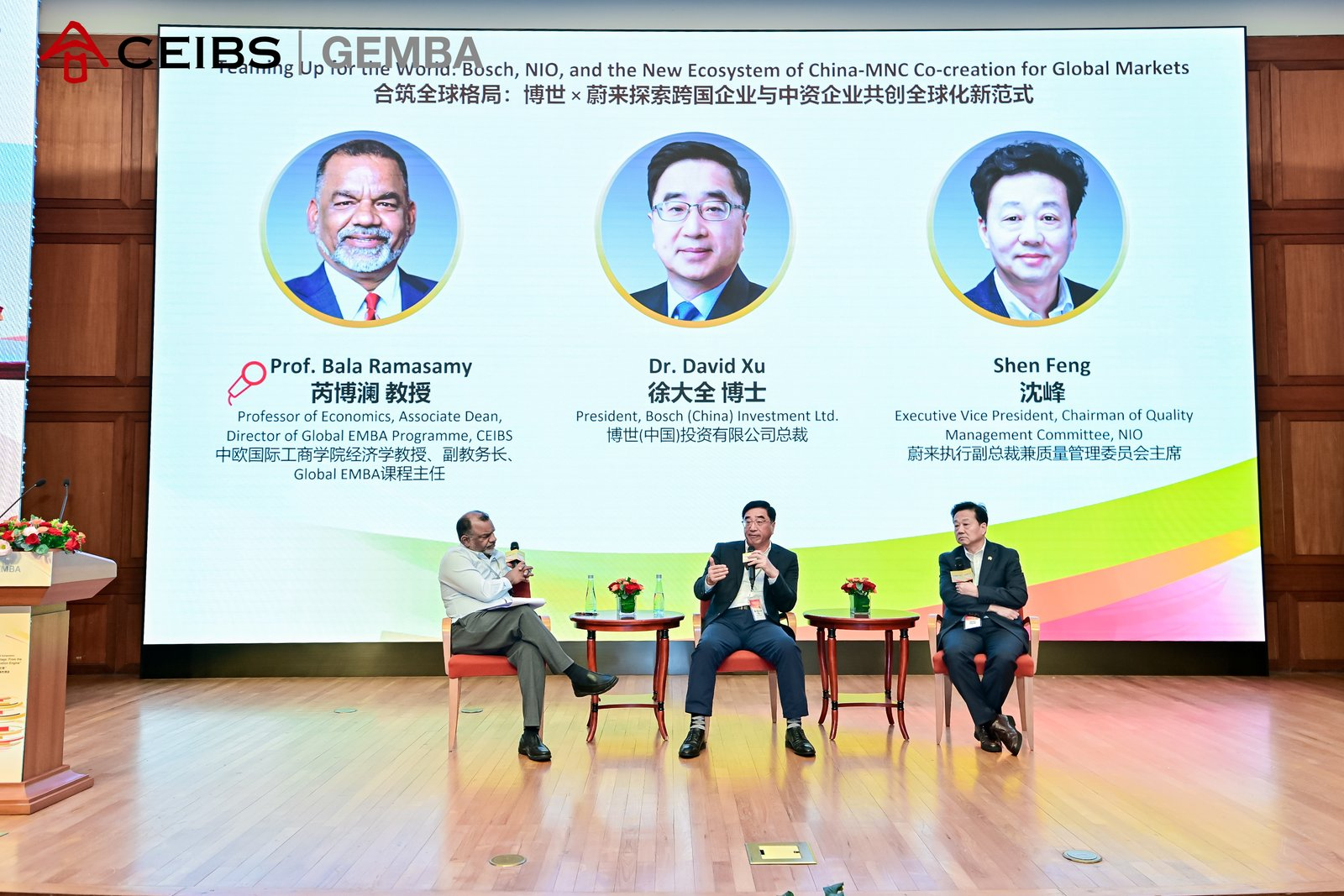
Dr. Xu explained that Bosch’s long-term success in China has been built on embracing Chinese innovation, rather than simply bringing German technology to the market. By localising its R&D talents, empowering local leadership and partnering with companies like NIO, Bosch has been learning to innovate at “China speed” — while helping to shape the next generation of automotive technologies.
“NIO stood out as a company with a completely different vision of what a car could become. Working with them allowed us to introduce our newest technologies far earlier than traditional automakers would, and it pushed us to move faster, decide faster and innovate differently. In the past, China needed Bosch — our products and manufacturing systems. Today, Bosch needs China. We need Chinese innovation; we need Chinese speed. That is how multinational companies remain relevant in this market,” Dr. Xu said.
Building on this, Dr. Shen emphasised that staying ahead in China’s rapidly evolving EV market requires companies to anticipate trends years in advance — and to work with partners that are equally committed to long-term innovation.
“From the very beginning, NIO set out to become a premium technology company, and Bosch shared that ambition — bringing breakthrough technologies to China before we had delivered a single vehicle. The automotive industry is advancing at an extraordinary pace across electrification, connectivity, AI, autonomous driving and software-defined vehicles. Innovation requires long-term conviction, but it also requires partners who grow alongside you. Our relationship with Bosch has evolved over eight years precisely because both companies have continued to invest, adapt and build capabilities together — not simply buy and sell components,” Dr. Shen added.
Prof. Ramasamy then summarised the dialogue, saying, “the future is not about multinationals versus Chinese companies, but about how companies combine different strengths, learn, adapt and innovate together to create greater value."
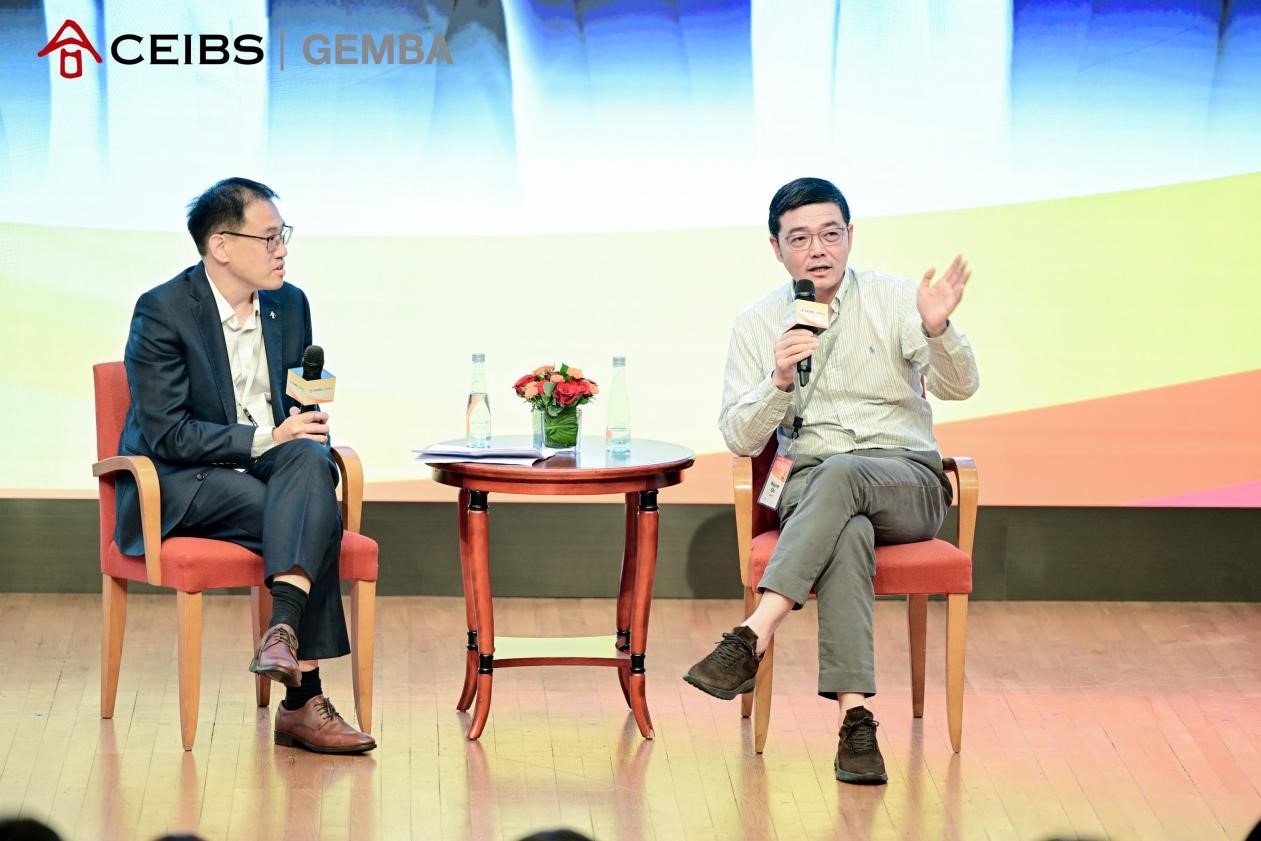
The second dialogue turned to the pharmaceutical industry, as CEIBS Associate Professor of Management Byron Lee spoke with. Wayne Shi (President of Sanofi Greater China). While the first dialogue focused on co-innovation between MNCs and Chinese firms, Mr. Shi argued that multinationals must fundamentally reinvent their role in China — moving beyond treating it as a commercial market and recognising it instead as a strategic innovation hub.
"To succeed in China, every company needs three capabilities: innovation, scale and speed. These all need to be deeply embedded in three ecosystems – R&D, manufacturing and supply chains, and digital. Always keep those two multiples of three in mind. The role of China is no longer to follow global strategy but to help create it. The future belongs to companies that understand China not as a local market, but as a global source of ideas and competitive advantage. So, if you want to succeed here, push harder and be bolder,” Mr. Shi said.
DIalogue, Part 2 – Serving the World: The Rise of China’s Global Enterprises
The symposium then moved onto three focused dialogues examining distinct dimensions of China’s innovation-led transformation.
In the third dialogue of the day, Associate Professor of Marketing, Associate Dean and Director of CEIBS MBA Programme Zhang Lingling spoke with Sun Danfeng (Vice President and Chief Digital Officer at Haier Smart Home) about Haier’s digital transformation journey and what it reveals about China’s broader shift from smart manufacturing to global innovation leadership.
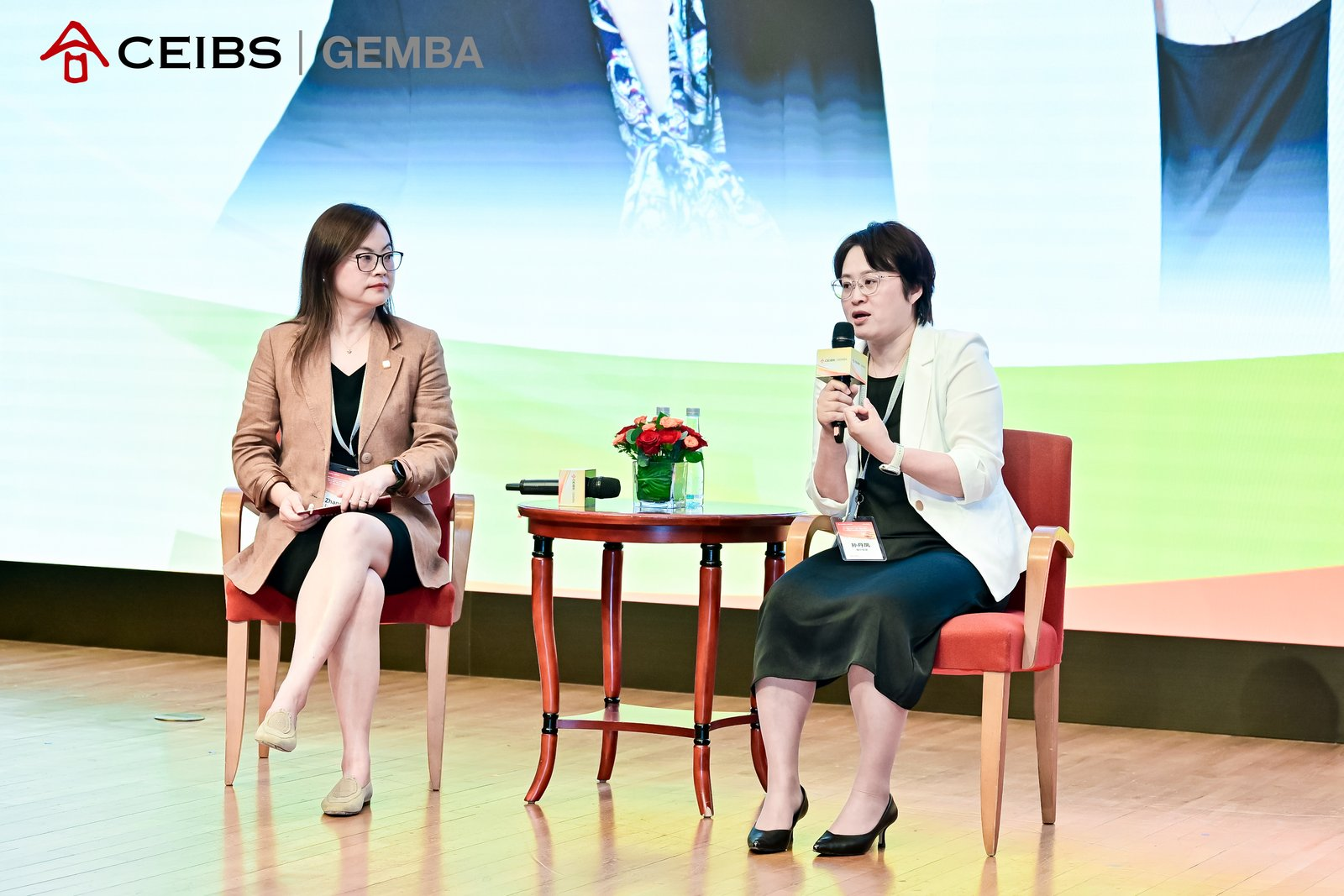
Ms. Sun described how Haier’s competitive edge stems from more than a decade of investment in digital infrastructure, data governance and organisational transformation. In her view, AI is not a shortcut to digital transformation — it is the next stage of it. Rather than treating AI purely as an automation tool, Haier has embraced it as a driver of innovation and productivity, strengthening the company’s competitive position globally.
"If you want to get rich, you first have to build roads. AI is only as powerful as the digital foundation beneath it. Haier began its digital transformation in 2014, building unified platforms, high-quality data and strong governance long before today's AI boom. With the right foundations in place, AI isn’t merely a tool for recording data or improving efficiency – it becomes an engine for better decisions and smarter products, or even new business models. But long-term success with AI depends on showing leadership and empowering employees to embrace new ways of working,” Ms. Sun said.
The next dialogue explored China’s ambitions in commercial aerospace. Huo Liang (Chairman of Deep Blue Aerospace), in conversation with CEIBS Associate Professor of Strategy and Entrepreneurship Vivian Guo, explained how commercial aerospace sits at the frontier of China’s innovation push — a field where entrepreneurs invest in transformative technologies years before commercial returns materialise.
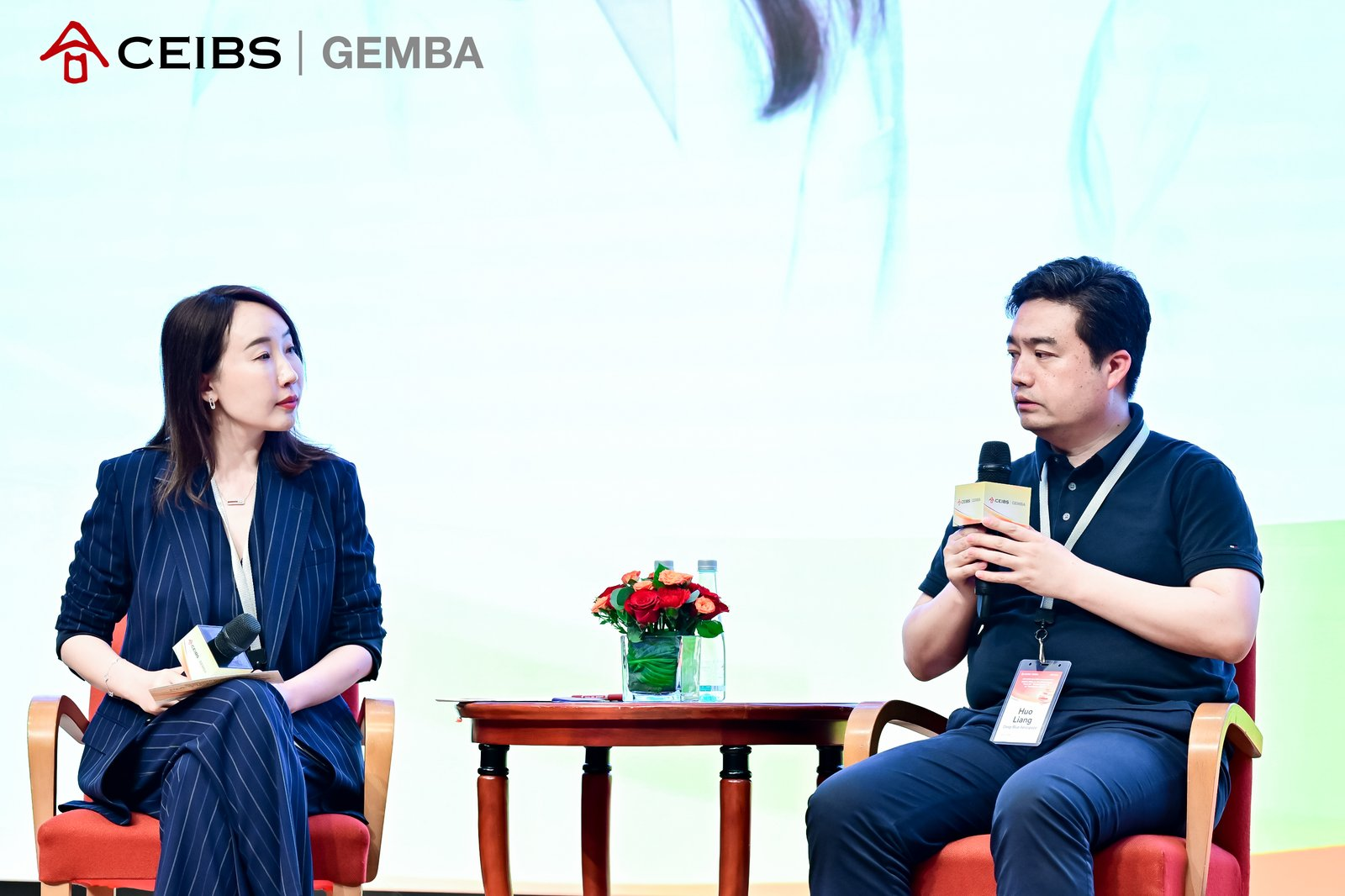
"The commercialisation of space is the third great wave driving the space industry forward. Reusable rockets will dramatically lower the cost of access to space and unlock a far broader range of commercial applications. Deep Blue Aerospace chose a harder technical path — but one with greater long-term value — insisting on in-house R&D for core technologies and vertical integration of critical capabilities. We grew from a team of five or six into an industry leader with close to 500 people," Mr. Huo said.
In the fifth and final dialogue, Professor Vivian Guo moderated a discussion between Vincent Zhan (Vice President of iFlytek) and Terry Ma (Founder & CEO of Sunseeker Robotics) on how China’s innovation frontiers are rewriting the rules of global industry.
Both speakers agreed that as AI capabilities become increasingly commoditised, sustainable competitive advantage no longer rests on having the best technology alone. What truly differentiates companies, they argued, is the ability to translate technological advances into products that solve real customer problems — built on proprietary data, domain expertise and organisational systems that cannot be easily replicated.
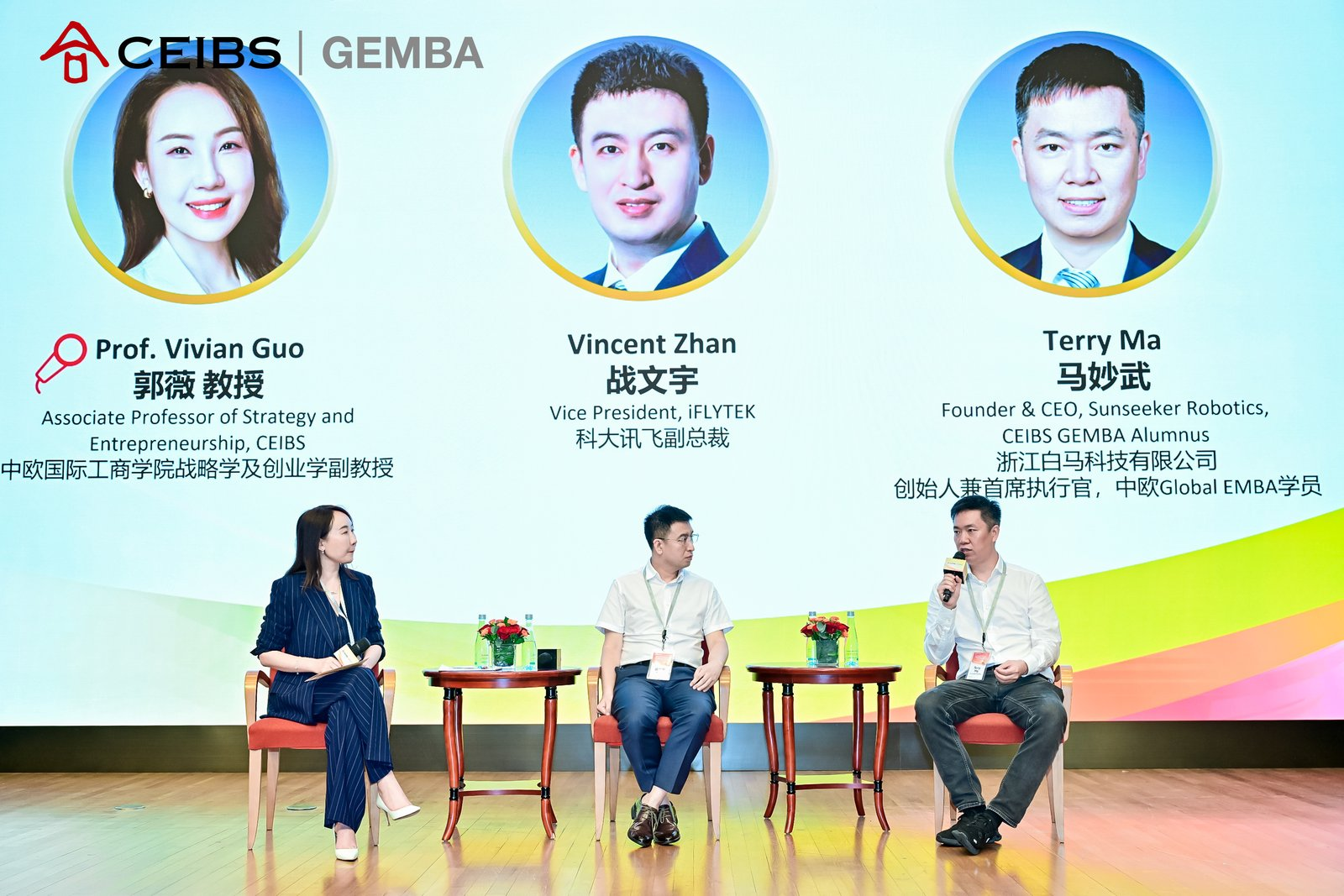
"The key to iFLYTEK's ability to navigate technology cycles lies in a continuous technological thread — from introducing deep learning into speech recognition in 2012 to making major investments in large language models in 2020, the trajectory was set early. Faced with intense competition in foundation models, iFLYTEK has chosen to anchor itself in vertical domains such as education, healthcare, and the workplace, building competitive moats through deep industry expertise and data advantages," –Mr. Zhan said.
"Our competitors might try to copy the product, but they can't copy more than 600 generations of iteration. That experience is built on millions of data points and years of continuous improvement. Time, iteration, and timing together become the ‘moat’ that defends you, as you’re delivering something that others simply cannot reproduce," Mr. Ma added.
A Bold New Era for Chinese Innovation
Across the keynote and five dialogues, one message resonated throughout the day: the success of China’s next wave of innovation will be defined not simply by technological breakthroughs, but by the ability to translate them into meaningful, scalable real-world impact.
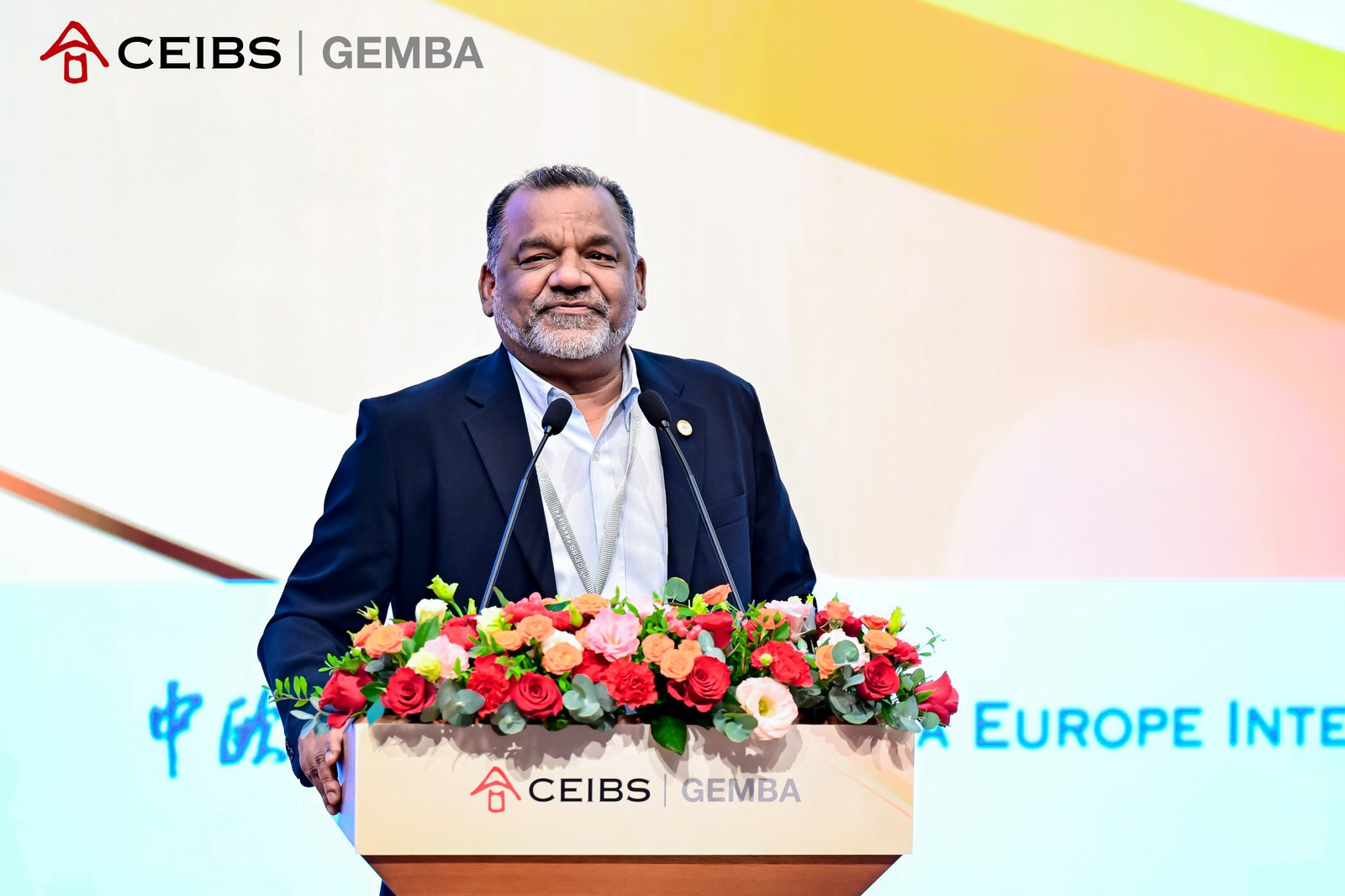
Closing the symposium, Prof. Ramasamy reflected on three observations that had emerged throughout the event:
“Three thoughts stayed with me today. First, scale remains important but increasingly, competitive advantage is being driven by innovation, technology, talent, and the ability to create entirely new forms of value.
“Second, the distinction between multinational companies and Chinese companies is becoming increasingly blurred. The most successful companies today are not defined by where they come from. They are defined by how effectively they learn, adapt, collaborate, and compete globally.
“Third, we are entering an era in which the rules of competition are being rewritten. Artificial intelligence, advanced manufacturing, robotics, commercial aerospace – these are not simply new industries. They are technologies that will reshape existing industries, redefine business models, and create opportunities many of us cannot yet fully imagine.”