


Faculty & Research

Faculty & Research
China Market Entry: Eight Marketing Trends

By Prof. Wang Gao, Professor of Marketing and Baosteel Chair in Marketing, CEIBS
Buzzwords like “industrial transformation” and “new cycle” are gaining prominence in the local business vernacular. In this fresh phase of growth, how businesses can navigate these fundamental shifts and challenges within the current marketing climate has emerged as a topic of shared concern.
In 2023, a wave of transformation swept across numerous industries in China, necessitating significant changes in thinking, brand image, and marketing tactics. Whether it was a global wave of change or shifts in how companies innovate and market, a “new quality marketing force” has emerged. Centred on new products, new brands, and innovative marketing strategies, this force has become the key driver of what we refer to as “new quality productivity.”
What a New Entrant Faces in the China Market
For businesses considering China market entry, understanding the country's changing consumer demand and competitive conditions is an important starting point. The findings below offer insight into the pressures facing companies already operating in China and the marketing priorities emerging in response.
As China’s manufacturing capabilities continue to rise, there has been a significant shift in consumer needs. However, the response from the supply side has been slow to catch up. Businesses are still primarily focused on providing an array of quality goods to Chinese consumers, leading to a high supply and production capacity. Yet, the rate of consumer demand is slowing down, and purchase decisions have become more cautious. This has resulted in a pronounced excess of supply relative to demand.
Many products are stuck in a cycle of homogeneity, competing on the same playing field. When we talk about “new quality productivity” and “new quality marketing”, we must remember that marketing should be solid, responsible, and effective. Every dollar and resource invested should deliver results for the company, create a competitive edge, and serve consumers. This is the way to ensure healthier business practices and a more balanced industry ecosystem.
Eight Marketing Trends in China
New avenues for growth often emerge from shifts in trends like these, but identifying new drivers of growth requires foresight into future trends. The 2023 edition of the CMO Survey Report in China offers us a glimpse into these pivotal shifts.
Marketing decision-makers remain confident
A wave of pessimism has washed over China’s macroeconomic climate in recent years, with optimism dipping from 52% in 2022 to just 22% in 2023. Pessimism also climbed from 15% in 2022 to 35% in 2023. Despite this, many Chinese entrepreneurs remained confident, with 60% optimistic about their businesses' growth prospects for the year ahead, according to the 2023 report.
Even in these challenging conditions, Chinese companies demonstrated resilience. In 2023, 69% of surveyed companies managed to sustain growth in sales revenue and 55% sustained growth in net profits, with 44% maintaining growth in both.
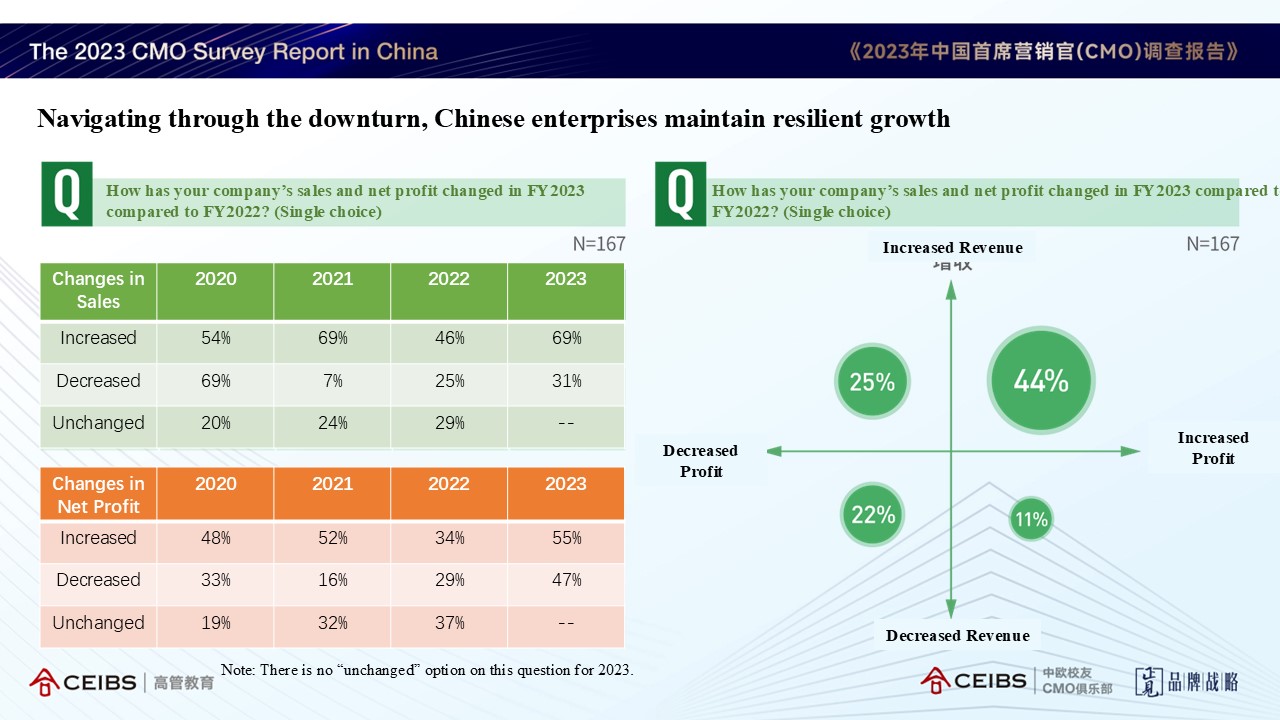
Companies expand rather than discount
China’s marketing environment is becoming increasingly competitive. This makes innovation the key to achieving sustainable, high-quality growth.
In 2023, companies that recorded a rise in both revenue and profit largely attributed their success to industry growth, their own competitive strengths, and strategies focused on generating additional growth. Conversely, companies that saw a surge in revenue but a drop in profit primarily attributed this to the need to cut prices and run promotions to stay competitive.
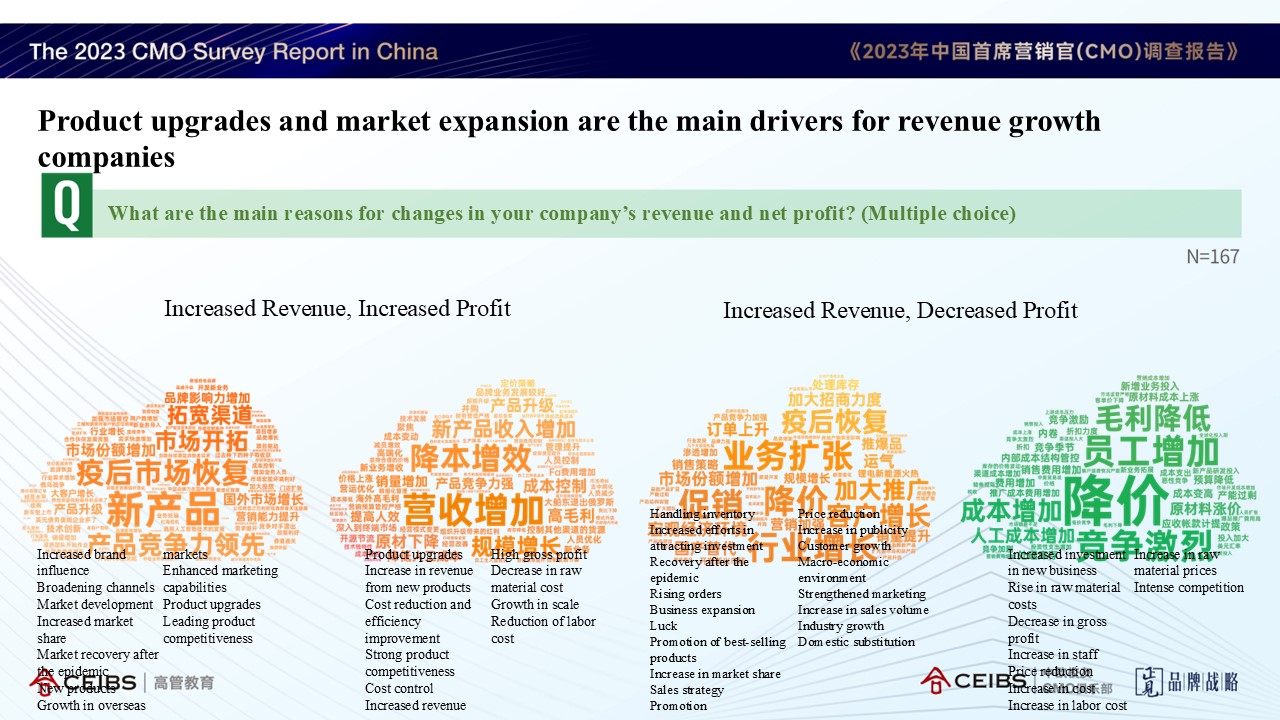
In such a highly competitive marketing environment, companies that excel at cost control can reduce their revenue while still increasing profits. However, when industry conditions worsen and market saturation leads to intensified competition and inflated costs, companies may experience a decrease in both revenue and profit.
To combat this, many companies have turned to expansion strategies to achieve growth. According to the 2023 survey, 29% of companies had reduced their investment in existing markets and existing products or services in favour of pursuing new market opportunities.
Marketing budgets have been squeezed
As pressure for growth mounted, marketing budgets were squeezed in 2023, with their share of company revenue dropping to 17%.
To adjust to this environment, companies shifted their marketing cost allocation priorities. While R&D costs for products and services increased, traditional media became a lower priority for investment, with 58% of responding companies choosing not to invest in this sector. Instead, efforts focused on public relations, advertising, and labour expenses.

At the time of the survey, companies expected to strengthen their marketing investment in 2024 to cope with increasingly fierce competition and achieve sustainable growth. Their planned resource allocation priorities included products, brand building, cost reduction, and greater efficiency, with the aim of developing competitiveness across multiple areas.
WeChat, Douyin and Xiaohongshu lead digital marketing
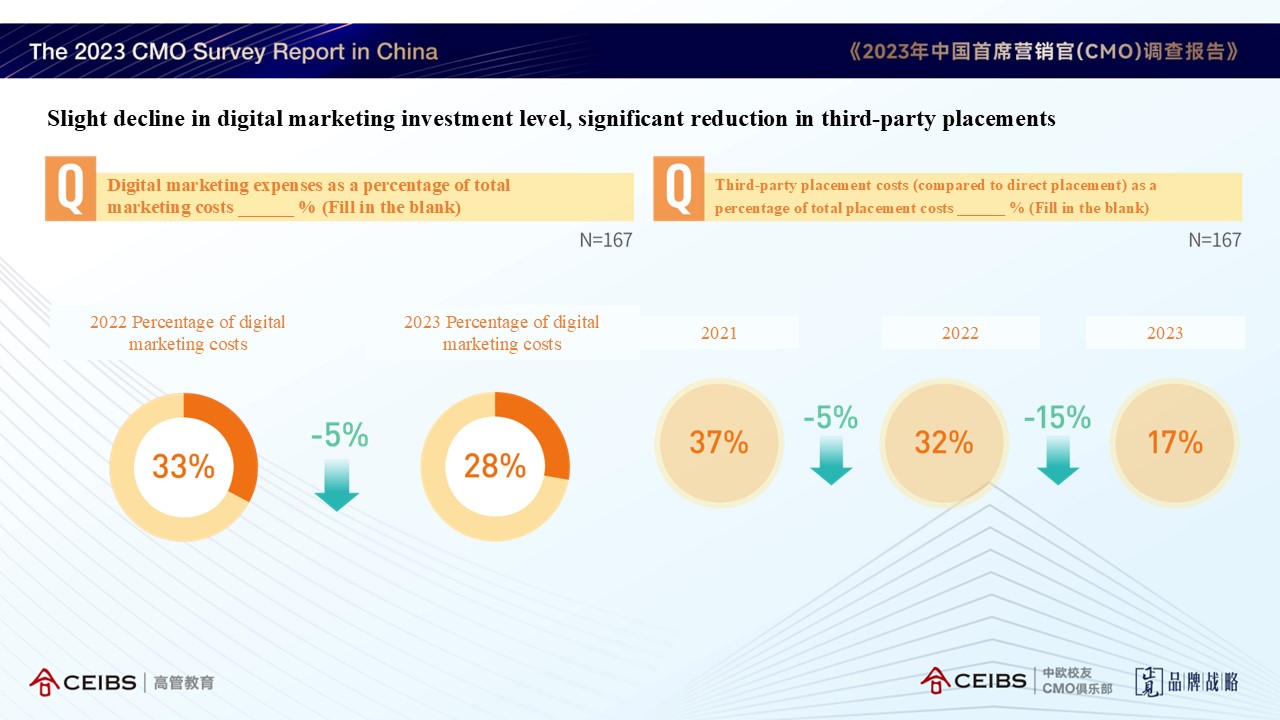
In 2023, digital marketing saw a reduction in its average budget allocation, decreasing from 33% of total marketing expenses in 2022 to 28% in 2023. The share of digital marketing spending outsourced to third parties also saw a notable drop, decreasing from 32% in 2022 to 17% in 2023.
WeChat, Douyin, and Xiaohongshu ranked as the top three platforms for digital marketing in the 2023 survey due to their high user engagement and investment levels.
Livestreaming marketing, meanwhile, experienced a decline in reach and overall resource allocation. Businesses increasingly produced their own livestream content, primarily on Douyin and Taobao, with video platforms serving as additional outlets.
AI and ESG adoption remains low
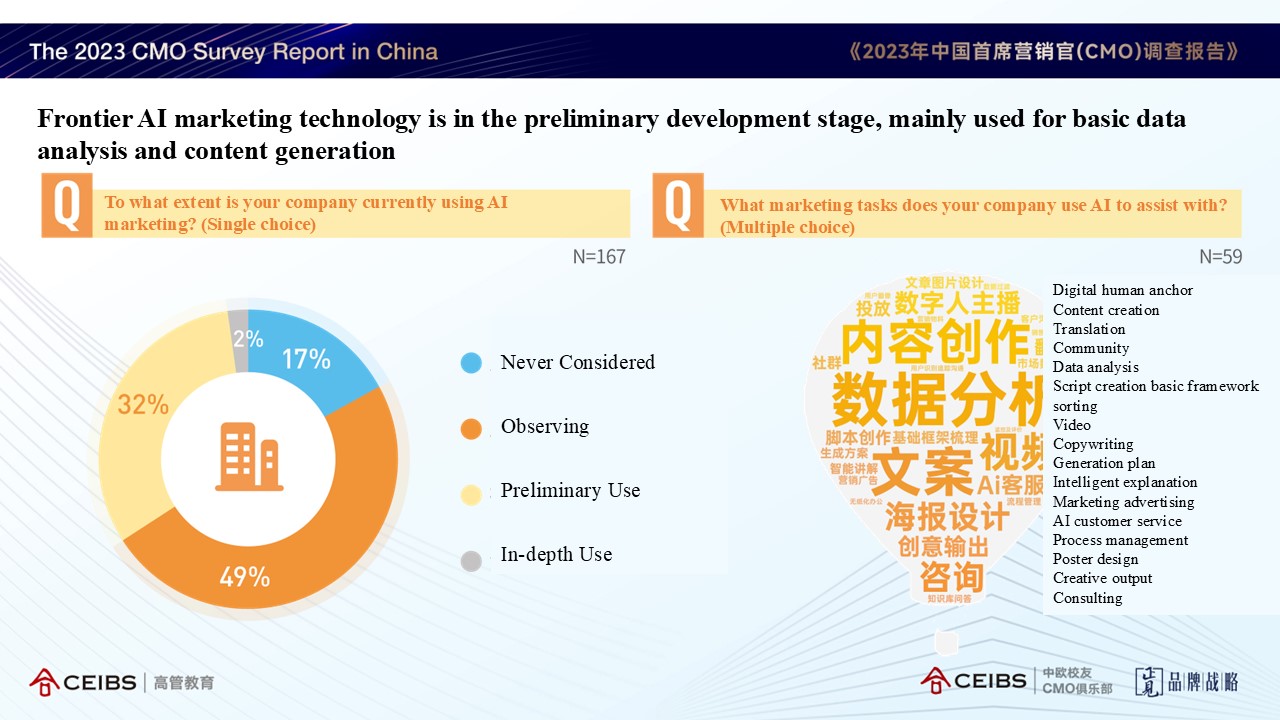
According to the 2023 report, the adoption rate of AI in marketing was relatively low, with only 34% of surveyed companies using AI marketing tools. The main applications were data analysis and content marketing.
Chinese companies were also integrating environmental, social, and governance (ESG) principles into their marketing, primarily through public welfare marketing. While the concept of ESG was widely recognised and developing rapidly, execution remained difficult, with only 23% of surveyed companies attempting to integrate ESG deeply into their marketing activities.
As companies grow and stakeholders become more influential, and with the impact of listing policies, the role of ESG in marketing is expected to increase.
Marketing is returning to brand building
The 2023 survey pointed to a return to the fundamental functions of marketing in China, with companies placing greater emphasis on brand building alongside their growth objectives.
The most widely established functions among the marketing departments surveyed included market research, communication and promotion, user research, and content marketing. B2C companies assigned a wider range of responsibilities to their marketing departments, with notable differences in areas such as new media operations, media placement, brand experience management, and live e-commerce operations.
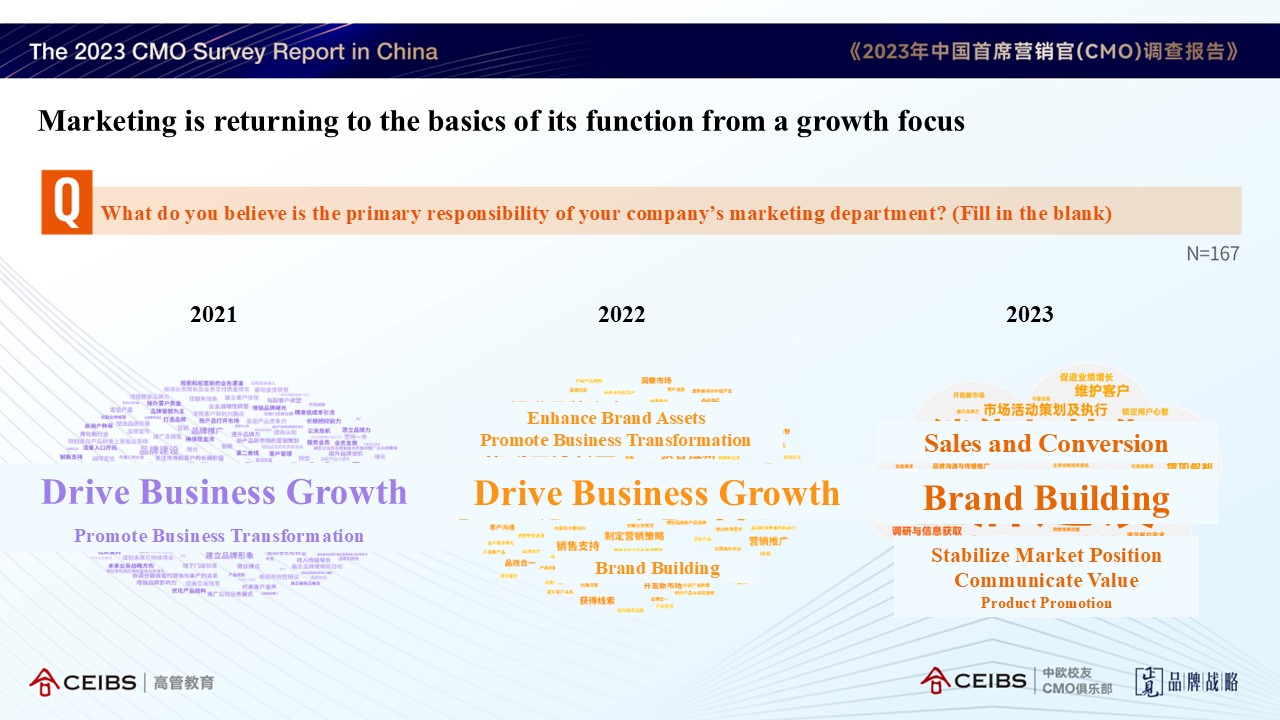
Learning ability, communication skills, and execution skills were the main requirements identified by companies when selecting future marketing talent.
Brand investment was also increasing, with 68% of surveyed companies having established brand management functions. According to the 2023 report, 90% of companies planned to maintain or strengthen their brand-building efforts over the following three years, through approximately 2026.
Improving brand recognition, conversion rates, and attractiveness were the top three measures of effectiveness, with only 5% of surveyed companies reporting that their brand-building efforts had no discernible impact.
Going global is a growth engine
Overseas expansion, also known as chuhai, has become an increasingly popular growth strategy among Chinese companies. More than half of the companies surveyed had already established a presence overseas, while only 20% had yet to consider international expansion.
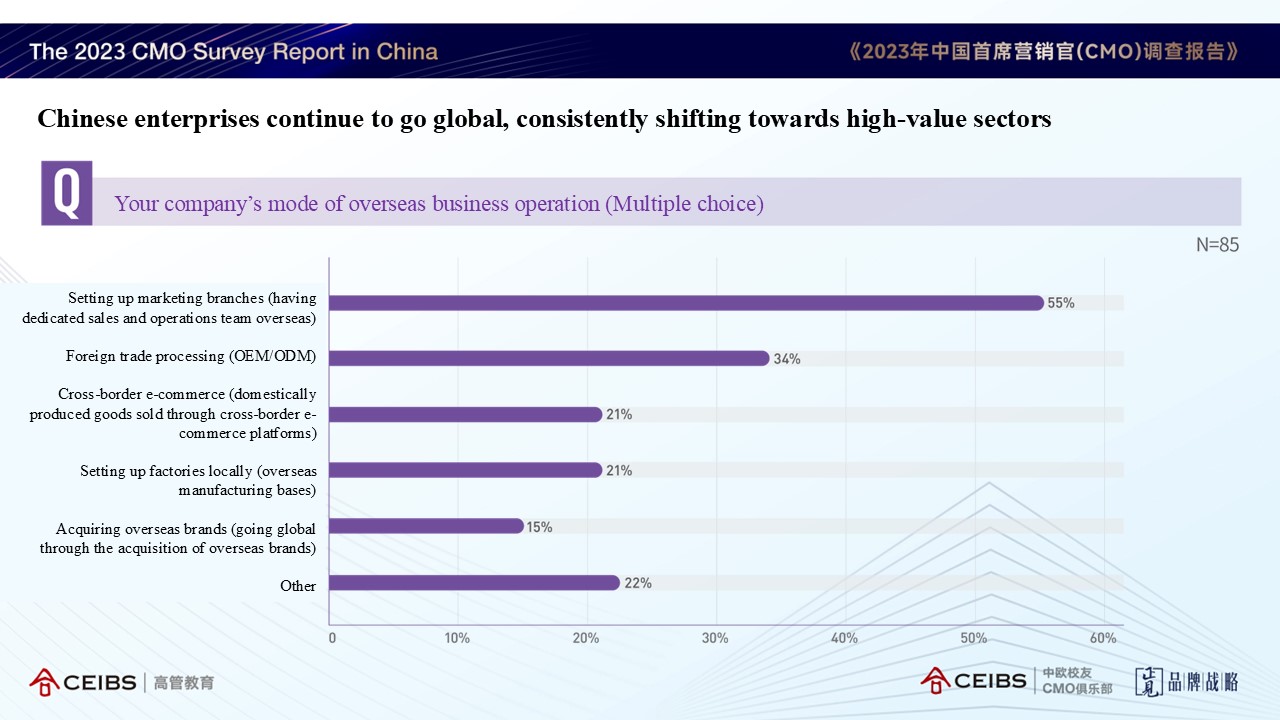
The main motivations for entering overseas markets were to explore new opportunities and increase revenue for greater profitability. Most respondents reported stable contributions from overseas operations, with the electronics and electrical industries leading international expansion.
The trend of Chinese companies going global extended beyond traditional outsourcing. According to the 2023 survey, more than 50% of companies had established overseas marketing branches, more than 20% had set up factories abroad, and approximately 15% had acquired foreign brands.
These findings concern the international expansion of Chinese businesses, offering a perspective on how companies already operating in China are pursuing growth beyond their domestic market.
Compliance is the main barrier abroad
The international presence of Chinese companies has continued to grow, with ASEAN, Europe, and North America serving as their primary overseas markets.
The main challenges facing these companies came less from competition with overseas counterparts and more from fundamental operational factors, particularly talent, cultural differences, and regulatory compliance.
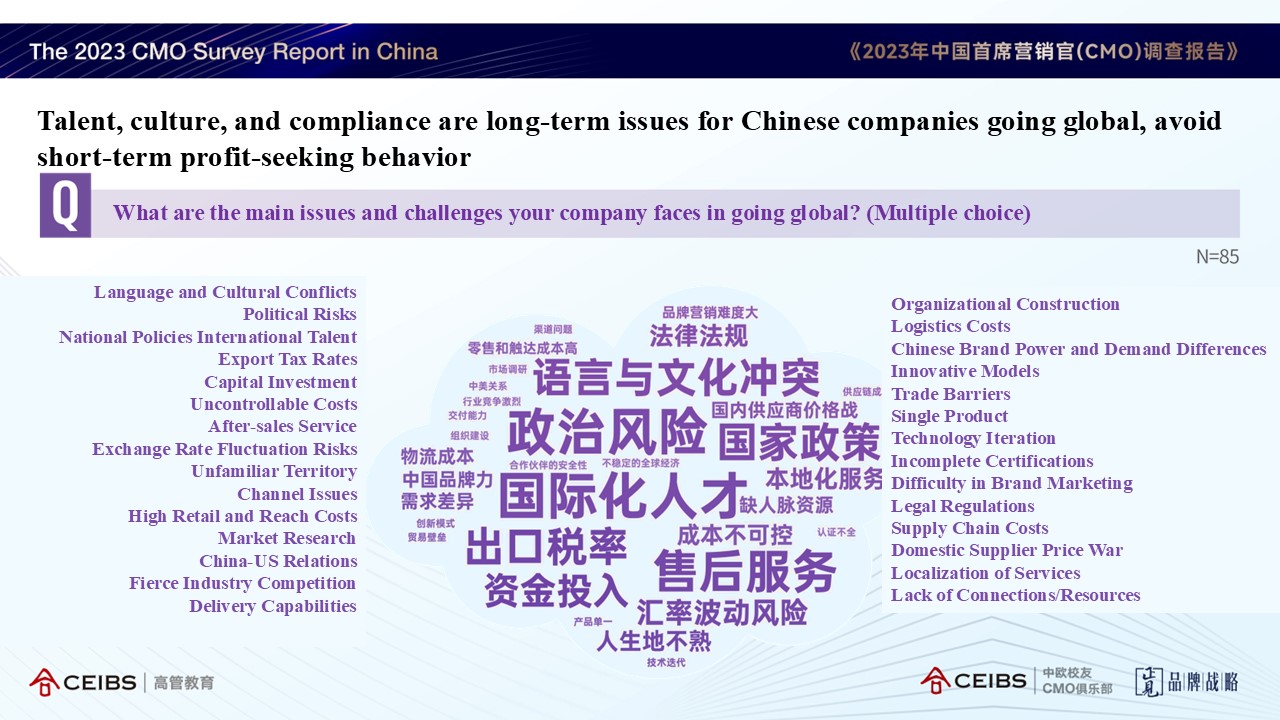
These challenges reflect both the complexity of the international trade environment and the relatively early stage of overseas development among many Chinese businesses.
How Companies Should Respond
These findings point to three priorities for businesses seeking sustainable growth: developing a more effective approach to marketing, avoiding excessive price competition, and considering the relationship between domestic and international markets.
Adopt a win-win marketing strategy
To succeed in today’s Chinese market, companies must adopt a sustainable, win-win marketing strategy focused on expanding industry success, as opposed to a mutually destructive, combative approach aimed at beating competitors. This win-win philosophy in fact extends beyond just competitors, encompassing consumers and society at large.
Avoid competing on price alone
In a market where supply outweighs demand and competition is homogenized, price can seem to be the only way to gain a quick advantage. But if every company competes on channels, traffic, and promotion, enterprises will soon find themselves in a no-win scenario in which much is spent but demand doesn’t increase, leaving no victors. Overall, the harm caused by such “involution” is not only felt by competitors: if businesses cannot gain a fair return from their operations, they will in turn lack the motivation to invest more resources into improving their products and services. Ultimately, the real victims will be consumers and the whole society.
The issue of “involution” parallels the prisoner’s dilemma, in which everyone could potentially be a victim or an offender. Therefore, it is crucial for companies to examine whether they are unintentionally bringing this scenario about.
Businesses should refocus their competitive energies on products, seeking market dominance through continual product improvement. High-quality products are desired by consumers not just in China, but globally. It is vital to have a level-headed approach to marketing costs, using marketing as a supporting tool to add value to top-tier products. When products lack uniqueness and innovation, marketing alone cannot bring about positive outcomes. Relying on short-term sales tactics based on low prices and subsidies will not cut it in the long run. Sustaining a business over time might call for some compromises, sometimes sacrificing immediate profits to avoid a short-term, quick-profit mentality.
Balance domestic and global markets
Businesses should cultivate a global perspective, giving priority to target markets that align best with their core competencies. Only if extra resources are available should expansion into less certain markets be pursued. From this perspective, having a foothold in the Chinese market can also be considered a global strategy. Chinese companies venturing abroad, must commit to long-term operations, gain a deep understanding of local market demands, and cater to them with top-tier products. Merely taking Chinese products and selling them overseas is not a sustainable strategy for the future.
About the 2023 CMO Survey Report in China
The 2023 CMO Survey Report in China is a collaborative effort between the Executive Education Programme of the China Europe International Business School, the CEIBS CMO Club, and Brandv. The purpose of the report is to monitor and reflect the marketing landscape in the Chinese market while anticipating future trends. The 2023 annual report has been subject some revisions, with the addition of modules like AI marketing and brand management, an amplified focus on business global expansion, and an optimisation of certain module structures. As a credible research output targeting China’s CMO community, the report offers a thorough and authentic reflection of the present scenario and momentum of marketing within Chinese enterprises.
WANG Gao is Professor of Marketing, Baosteel Chair in Marketing, Associate Dean and Director of Executive Education Programme, and Director of the Chief Marketing Officer (CMO) Programme at CEIBS.
Frequently Asked Questions
What makes the China market difficult to enter?
China market entry is challenging because supply often exceeds demand, consumers are becoming more cautious, and many competing products offer similar features. This creates intense price competition, making it difficult for businesses to stand out while maintaining profitability. Companies need differentiated products and a clear understanding of consumer needs to compete sustainably.
Which digital platforms matter most in China?
- WeChat, Douyin, and Xiaohongshu were the leading digital marketing platforms identified in our 2023 CMO survey. Each serves a different purpose:
- WeChat: Customer communication, brand engagement, and services within its ecosystem.
- Douyin: Short-form video, livestreaming, and product discovery.
- Xiaohongshu: Product reviews, recommendations, and consumer research.
What is involution in Chinese business
Involution describes a cycle of increasingly intense competition in which companies invest more resources without generating corresponding growth. In China, this often involves repeated price cuts and promotions that reduce profitability without increasing overall demand. Much like the prisoner's dilemma, businesses pursuing individual advantages can end up harming the entire market.
What is chuhai?
Chuhai refers to Chinese companies expanding their operations into international markets. As domestic competition intensifies, businesses increasingly look overseas for new customers and revenue opportunities. Our 2023 CMO survey identified growing investment in overseas marketing branches, manufacturing facilities, and foreign brand acquisitions, reflecting the growing importance of international expansion for Chinese enterprises.