


Faculty & Research

Faculty & Research
Building the body, teaching the brain: China’s big bet on humanoid robots
By Yang Wei
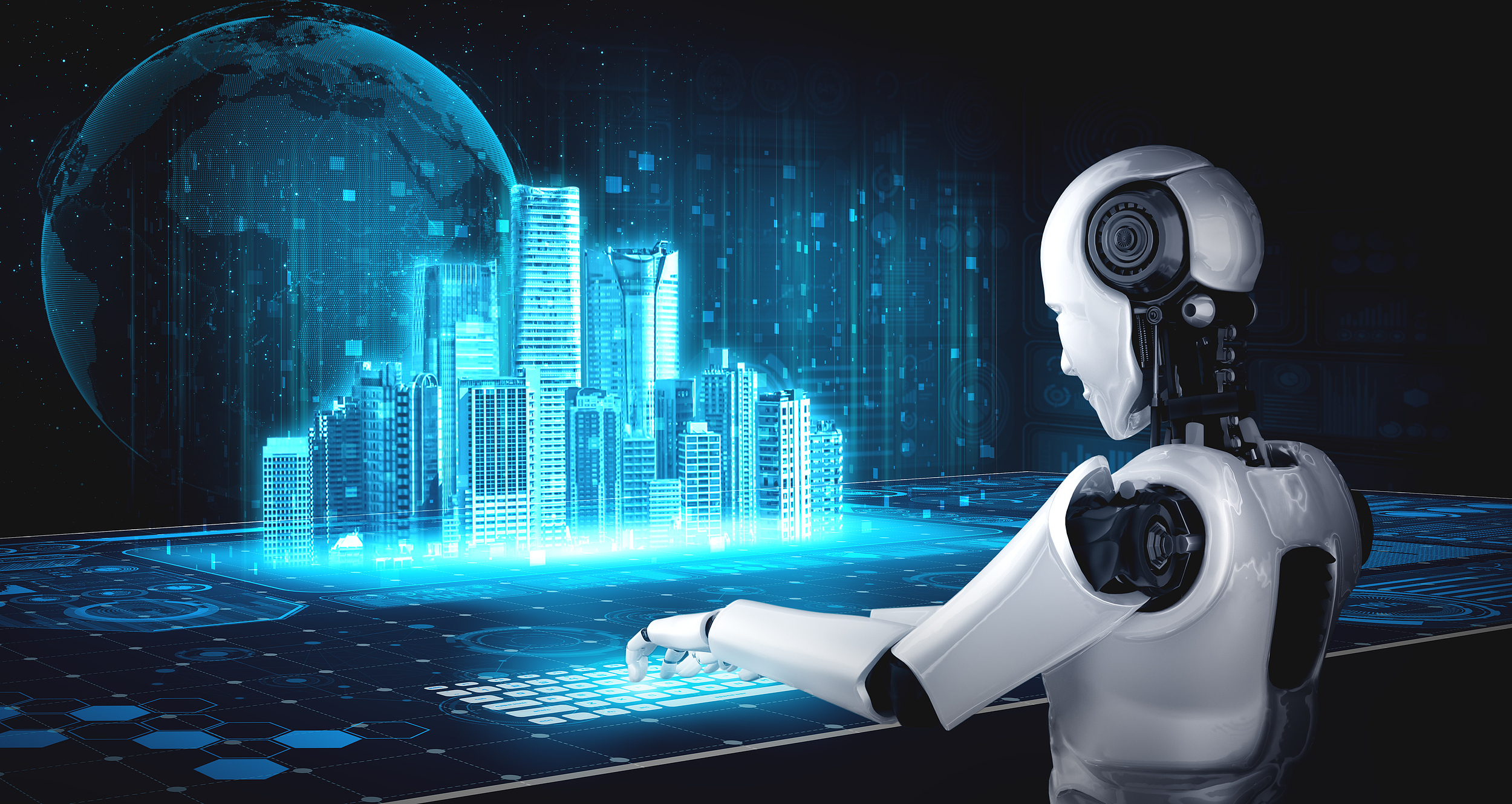
From factory floors and robotics exhibitions to government policy agendas, humanoid robots have quickly become one of the most closely watched sectors in China’s technology landscape. As artificial intelligence moves beyond the processing of information and begins to interact with the physical world, robotics and embodied AI are emerging as a potentially important new frontier.
China is investing heavily in humanoid robots. But why now? Could embodied AI become the country’s next strategic industry after electric vehicles? In this article, CEIBS Associate Professor of Strategy and Entrepreneurship Yang Wei examines China’s advantages in the sector, the industry’s key bottlenecks, and what companies should do to prepare for the rise of embodied AI.
Humanoid robots have rapidly become one of China’s most closely watched emerging industries. From factory floors and robotics exhibitions to local-government initiatives and technology start-ups, investment is accelerating across hardware, embodied-intelligence models and real-world training environments.
The significance of humanoid robots lies not only in the machines themselves, but in a broader transition in artificial intelligence: from systems that generate and process information to systems that can perceive, reason and act in the physical world.
This transition also changes the nature of AI competition. In the era of large language models, advantage has centred heavily on foundation models, advanced chips and computing power. Embodied AI introduces a wider set of variables, including motors, sensors, batteries, precision manufacturing, supply-chain coordination, engineering iteration and, crucially, access to environments in which machines can learn from the physical world.
That is where some of China’s deepest industrial strengths may once again become strategically important.
Why is China betting on humanoid robots now?
First, AI is moving from the generation of content toward understanding and acting in the physical world. Large language models have pushed general-purpose AI capabilities forward, but the next major gains in productivity may come not simply from better chatbots, but from AI entering factories, warehouses, transportation, retail and homes, where it can perceive, judge, manipulate and execute.
Embodied AI is therefore becoming an important next technological frontier for AI. China’s current push into humanoid robots is, at its core, a bet that the next stage of AI will increasingly move into the physical world.
Second, this technological trajectory makes some of China’s strongest existing capabilities strategically relevant again. In an AI race defined mainly by frontier foundation models, advanced chips and hyperscale computing, China does not possess an automatic advantage. But once AI moves into the physical world, competitive variables expand to motors, sensors, reducers, batteries, precision manufacturing, supply-chain coordination, rapid engineering iteration, cost reduction and large numbers of real deployment settings.
These are precisely the areas where China has developed deep capabilities through decades of manufacturing development.
China is investing heavily now because the next direction of AI is beginning to converge with the country’s existing manufacturing strengths.
Could embodied AI become China’s next strategic industry?
Despite this potential, I would hesitate to describe embodied AI as China’s next strategic industry, following the companies notable success in electric vehicles—at least if we are talking about an industry that is ready to mature at scale.
The more immediate opportunity may lie elsewhere: in energy and the infrastructure required to support AI.
This is not because embodied AI is unimportant, but because the two sectors are at very different stages of technological maturity. Humanoid robots are dependent on a major breakthrough in intelligence; AI’s demand for energy is already here.
China has progressed very quickly in humanoid-robot hardware, component supply chains and engineering. The bottleneck is increasingly the “brain” of the robot. Building a body that can walk, run, grasp or execute a choreographed sequence is different from building a machine that can reliably understand an open physical environment, decide what to do, recover from failures, and generalise across tasks.
Recent industry assessments in China continue to identify model capability and real-world training data as central constraints, while field reporting shows that many impressive demonstrations still do not translate into robust autonomous work in factories. In other words, China is increasingly capable of building the body, but the commercial takeoff of embodied AI still depends on when the brain will become good enough to work reliably in the real world.
Energy, by contrast, does not depend on demand from a future intelligence breakthrough. Training and inference, data-centre expansion and the broader AI infrastructure build-out are already increasing demand for electricity, storage, grid capacity, cooling and power equipment.
The International Energy Agency estimates that global data-centre electricity consumption could exceed 900 TWh by 2030, with AI a major driver of the increase. At the same time, China already occupies a central position in the global supply chains for batteries, solar equipment, energy storage and power electronics. The capabilities accumulated during the EV and renewable-energy build-out can therefore be redeployed into a new wave of AI-related infrastructure demand.
The industry that follows EVs may not, therefore be another new end product. A more plausible progression is that the electrification capabilities built during EV boom are amplified again by the next generation of AI development.
Embodied AI may become a major strategic industry later, once companies can break though the intelligence bottleneck. Until then, the pace of the industry will be determined less by how many robots China can manufacture than by when those robots actually learn how to work.
Is the real asset the robots themselves, or the data they generate? Maybe neither.
This also raises a question frequently asked about humanoid robots: Is the real asset the machine itself, or the data it generates?
At this stage, this question creates a false dichotomy. Over the long run, the strategic asset is unlikely to be the robot alone or the data alone. It is the learning system that connects deployment, real-world interaction and improvement in AI capability.
Robot hardware clearly matters, but as motors, sensors, actuators and complete systems mature, hardware is likely to become more standardised and less expensive. What is more scarce is the experience generated when robots enter the physical world. Occlusion, friction, object deformation, human interference, unexpected failures and changing conditions are difficult to cover completely in simulation. Every failure, correction and re-plan in a factory, warehouse, store or home can therefore become a learning opportunity.
Deployment is not simply about using a robot; it is also a mechanism for generating new information about where the AI still fails.
Even so, it would be premature to conclude that data is the real asset.
The technical architecture of embodied intelligence remains unsettled. Today, much of the field is organised around vision-language-action models and world models, but these may be intermediate engineering solutions rather than the final architecture. A more consequential possibility is that increasingly capable general-purpose multimodal foundation models begin to supply much of the perception, reasoning and action capability that robots need, while lower-level control remains specialised.
Recent results from Open AI’s GPT-6 Astra offer an interesting early signal. In a RoboDojo evaluation released in September 2026, researchers used a frozen general-purpose multimodal model as a robot policy without task-specific fine-tuning. Across 42 simulated manipulation tasks and 2,100 trials, Astra achieved a 22.48% average success rate and ranked above the 40 public policies used for comparison. Its performance was strongest on tasks requiring semantic understanding and generalisation, while precision, dynamic control and complex bimanual coordination remained clear weaknesses.
The result does not show that general-purpose models have solved robotics problems, but it does suggest that the boundary between a general AI “brain” and a specialised robot policy may be shifting.
If this trajectory continues, the value of data changes as well.
Advantage may not come from owning the largest stockpile of robot trajectories. Instead, it may come from having access to rich physical environments in which an increasingly general AI brain can encounter new situations, expose failure modes, receive corrections and rapidly convert those experiences into improved capability.
The real competitive asset is therefore the learning loop between a general-purpose AI brain and the physical world.
This is where China may have an unusual advantage. Factories, warehouses, logistics networks, retail environments and manufacturing supply chains should not be viewed simply as future customers for robots. They can become large-scale training environments for AI systems learning how to act in the physical world.
If general-purpose models become better at transferring experience across tasks and settings, the strategic value of China’s manufacturing base will extend beyond producing robots cheaply: it will provide the physical environments in which AI learns to act.
Implications for companies beyond the robotics sector
For companies outside robotics, the most useful question is not “When should we buy humanoid robots?” but “When, and in what form, can our operations connect to increasingly capable embodied AI?”
Manufacturing and warehouse logistics are the areas likely to feel the effects first. They combine high task frequency, relatively controlled environments, measurable performance and clear economic value from automation. Retail and general services may follow more slowly because customer behaviour, object variety, safety requirements and environmental uncertainty make the tasks less structured. Hazardous and specialised work can also become attractive early because the value of removing people from dangerous environments is unusually high.
Companies therefore do not need to rush into large-scale robot procurement. Instead, they need to become robot-ready.
That means understanding operations at the task level: which activities are frequent, costly, repetitive or hazardous; which have sufficiently clear performance criteria; where do exceptions occur; and which tasks would create economic value if an AI system could perform them reliably. Robots will rarely replace an entire job in one step. More often, they will enter through clusters of tasks whose boundaries and economics are already well understood.
Companies should also start treating their operating environments as potential learning environments.
A factory or warehouse that deploys embodied AI is not simply purchasing a finished machine. Its workflows, exceptions, failure cases and employees’ problem-solving routines can become part of the system through which the robot improves.
That creates a strategic governance question: if my operations help a robot brain become smarter, who owns the resulting capability? Firms will need clearer positions on data rights, process knowledge, model improvement, vendor access, portability and whether experience generated inside one company can subsequently improve systems sold to its competitors.
Learn early, commit late
Given the technological uncertainty, the appropriate posture, in my view, is to learn early but commit late.
Companies should run real experiments early enough to understand where embodied AI creates value and what organisational changes deployment requires, while avoiding making irreversible commitments to a particular platform or architecture before the technological bottlenecks have stabilised.
In a field where the dominant “brain” architecture, commercial model and even the importance of the humanoid form itself remain uncertain, strategic flexibility is valuable.
The broader takeaway is that companies do not need to enter every emerging technology as early as possible. They need to learn early, commit late, and retain the conviction to pursue a non-consensus position when their understanding of the bottleneck differs from the market’s.
The strategic advantage is not simply being early; it is being early enough to learn without becoming locked into the wrong technological trajectory.
Yang Wei is an Associate Professor of Strategy and Entrepreneurship at CEIBS, specialising in AI strategy, corporate AI transformation, and innovation ecosystems.
Selected sources
International Energy Agency, Energy and AI / Energy Technology Perspectives 2026; Reuters reporting on China’s humanoid-robot commercialization and industrial deployment; Ministry of Industry and Information Technology (MIIT) policy documents on embodied-intelligence real-world training; Zhang et al. (2026), “An Unexpected Robot Policy: Early Evaluations of GPT-6 Astra on RoboDojo and Beyond,” arXiv:2609.24170.