



CEIBS Executive Forum explores the global expansion strategies of Chinese companies
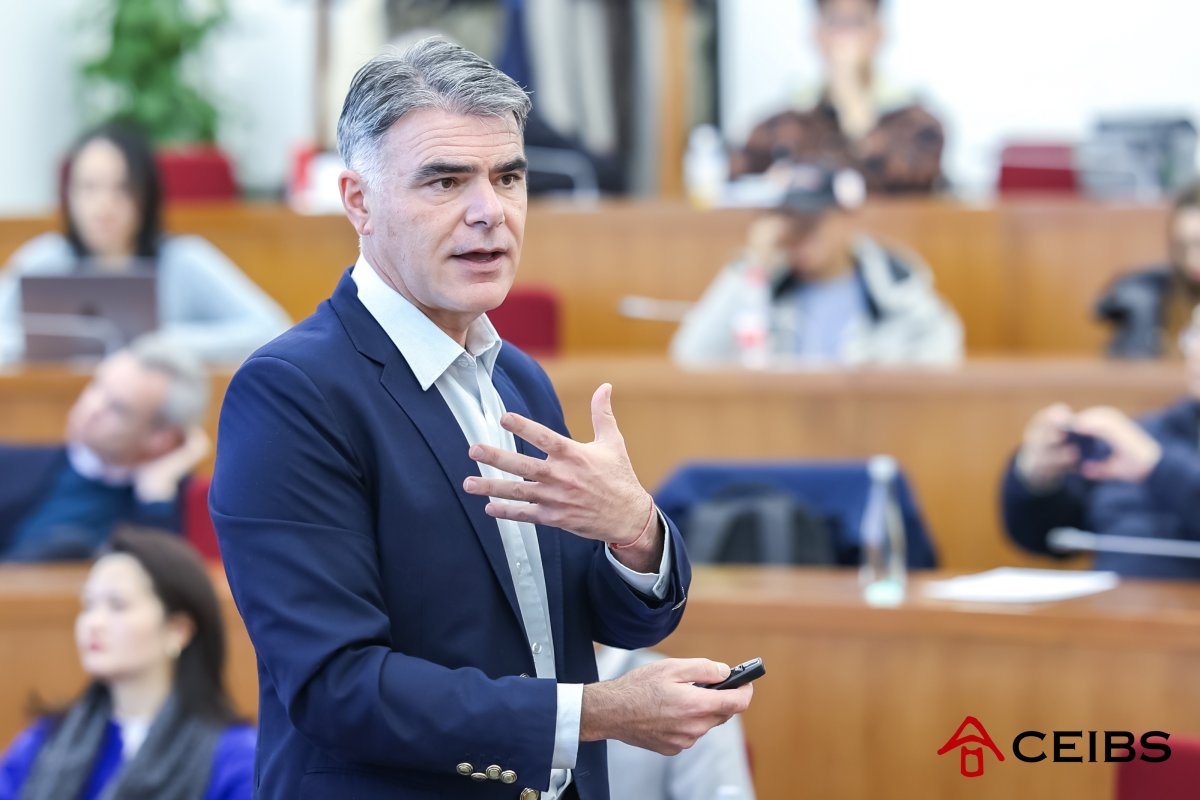
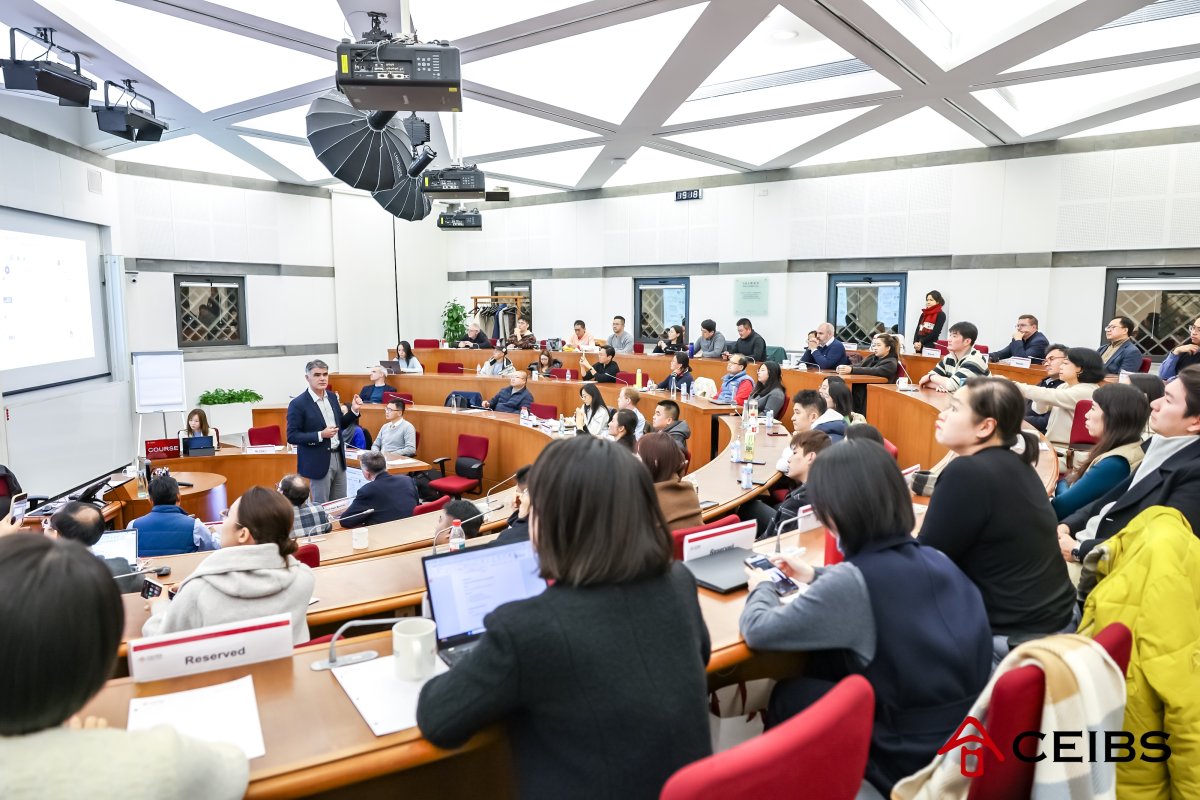


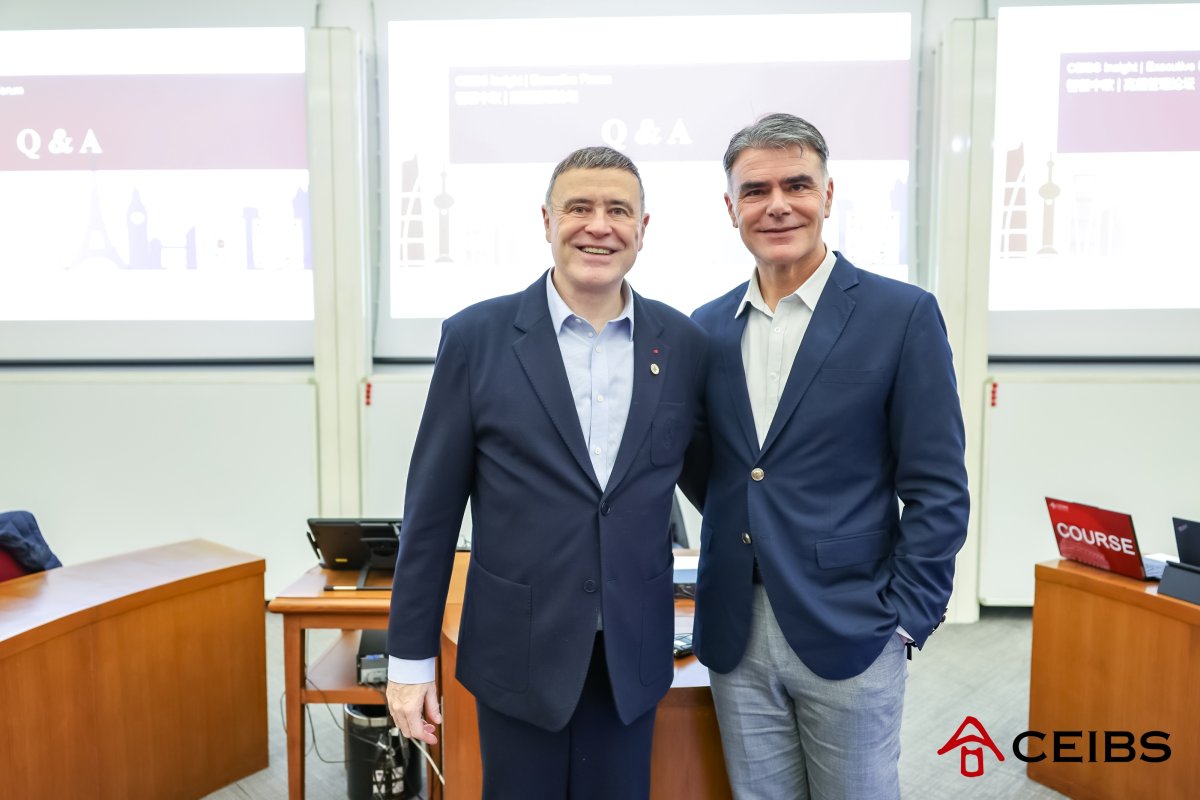
January 13, 2026. Shanghai- As Chinese companies navigate a more complex and fragmented global landscape, overseas expansion is evolving from a mere growth option into a strategic imperative, said Managing Partner of InterChina Eduardo Morcillo at a CEIBS Executive Forum on the school’s Shanghai campus today.
Themed Overseas Expansion of Chinese Companies: Challenges and Opportunities, the forum brought together a diverse group of students, alumni, senior executives and business leaders to examine how Chinese companies can pursue profitable and sustainable global expansion amid a rapidly evolving international environment.
In his opening remarks, CEIBS Co-President (European) Frank Bournois highlighted the importance of preparing both current and future leaders to operate across cultures and markets in an increasingly interconnected yet divided world.
He noted the strong alignment between CEIBS’ mission and InterChina’s long-standing role in supporting Chinese companies going global while helping international firms navigate the China market, describing this work as “building bridges between cultures,” a task that has become both more challenging and more essential in today’s environment.
Drawing on more than two decades of advisory experience in both M&A projects in China, Mr. Morcillo asserted that we’re in a new global order defined by multipolarity, rising protectionism, and the growing influence of technology, data, and standards in shaping global competition.
“We need to stop thinking of the world as a river in terms of ‘what do you sell’ and ‘what do you invest’. We’re moving into a place defined by bridges; you need to be that bridge at the crux of a world that is breaking apart,” Mr. Morcillo explained.
In discussing how to “search for blue waters” amid an increasingly competitive “red ocean,” Mr. Morcillo introduced the concept of “Two Chinas” to frame the current landscape of Chinese outbound investment.
He explained that today’s Chinese economy is characterised by the coexistence of a “traditional China”, distinguished by the disappearance of the premium segment along with lower profits and ROI, and a “new China,” which represents the next driver of growth over the coming 10 years and is driven by green energy, innovation, and high technologies.
“In this ‘new China’, the only real ‘blue ocean’ for growth is globalisation,” Mr. Morcillo explained. “Globalisation is not just exporting. Globalisation is creating your own teams to develop and structure your approach to international markets, either through investments, joint ventures, or at least a global team.”
To help Chinese corporations achieve growth, Mr. Morcillo introduced a “three-dimensional China” framework. The first dimension is “China for China”, in which companies focus on deep localisation to achieve competitive pricing, speed, and R&D. The second is “high tech, low cost”, in which Chinese firms export new innovations and standards to overseas countries. The third is ”global investment”.
“Chinese corporations that succeed in this new corporate mix will become champions. The rest will either be victims of consolidation or become part of somebody else's ecosystem,” Mr. Morcillo asserted.
Reflecting on where and how Chinese companies are expanding globally, Mr. Morcillo highlighted the rising strategic importance of the Global South, noting that emerging markets across South East Asia, the Middle East, Africa, and Latin America are becoming priority destinations for ambitious Chinese firms, particularly as these economies accelerate infrastructure development while offering comparatively greater growth potential than mature markets.
At the same time, for Chinese companies seeking scale and profitability, Mr. Morcillo pointed to Europe as a market of imminent opportunities, albeit one characterised by heightened risks and increasing protectionism.
Addressing the challenges of going global for Chinese companies, he highlighted lack of credibility and personal relations, lack of understanding of western practices and how international governance works, and inadequate banking track records as key risk areas.
Mr. Morcillo then outlined multiple pathways for the overseas expansions of Chinese companies, including establishing joint ventures, mergers and acquisitions, and strategic partnerships with multinational corporations.
Beyond strategy, Mr. Morcillo placed a strong emphasis on understanding and following international corporate protocols as key success factors, stressing that successful globalisation ultimately depends on people and integration.
“At the end of the day, it’s about people,” he said, advising companies to appoint a strong, internationally capable project leader and to build a dedicated team combining finance and operations expertise.
“Whether you like it or not, you need to follow a process. For that, you need to understand the process of globalisation. And don't be opportunistic,” he concluded.
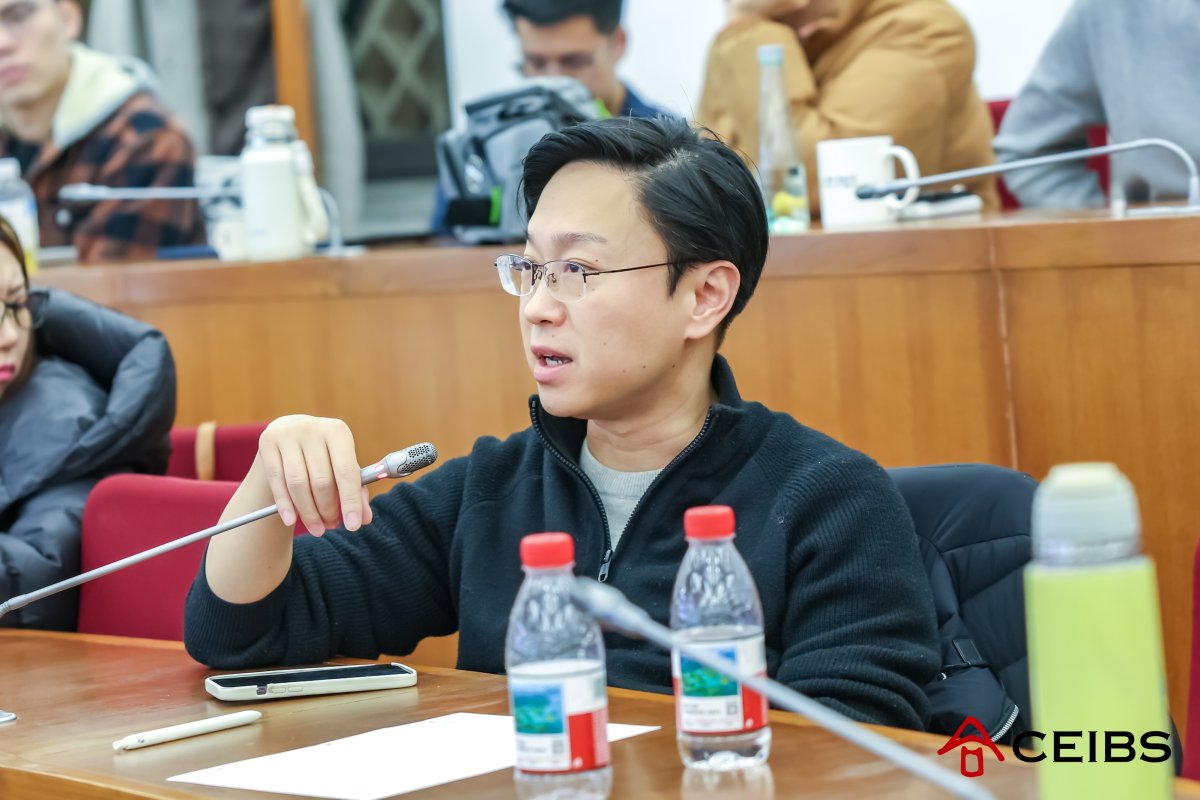
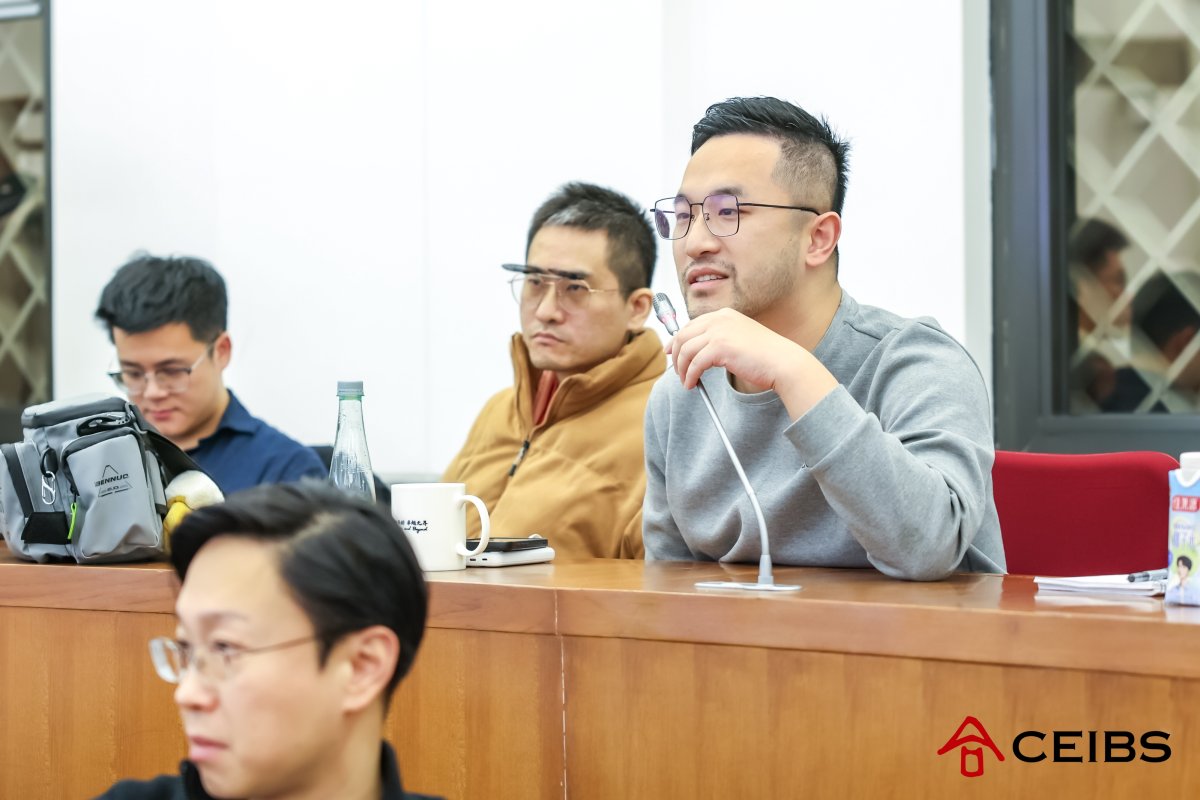
The forum wrapped up with an engaging Q&A session, during which participants exchanged views on regional priorities, sector-specific strategies, and how Chinese companies can strengthen presence in overseas market.