



7th Annual CEIBS Organisational Behaviour & Human Resource Management Symposium
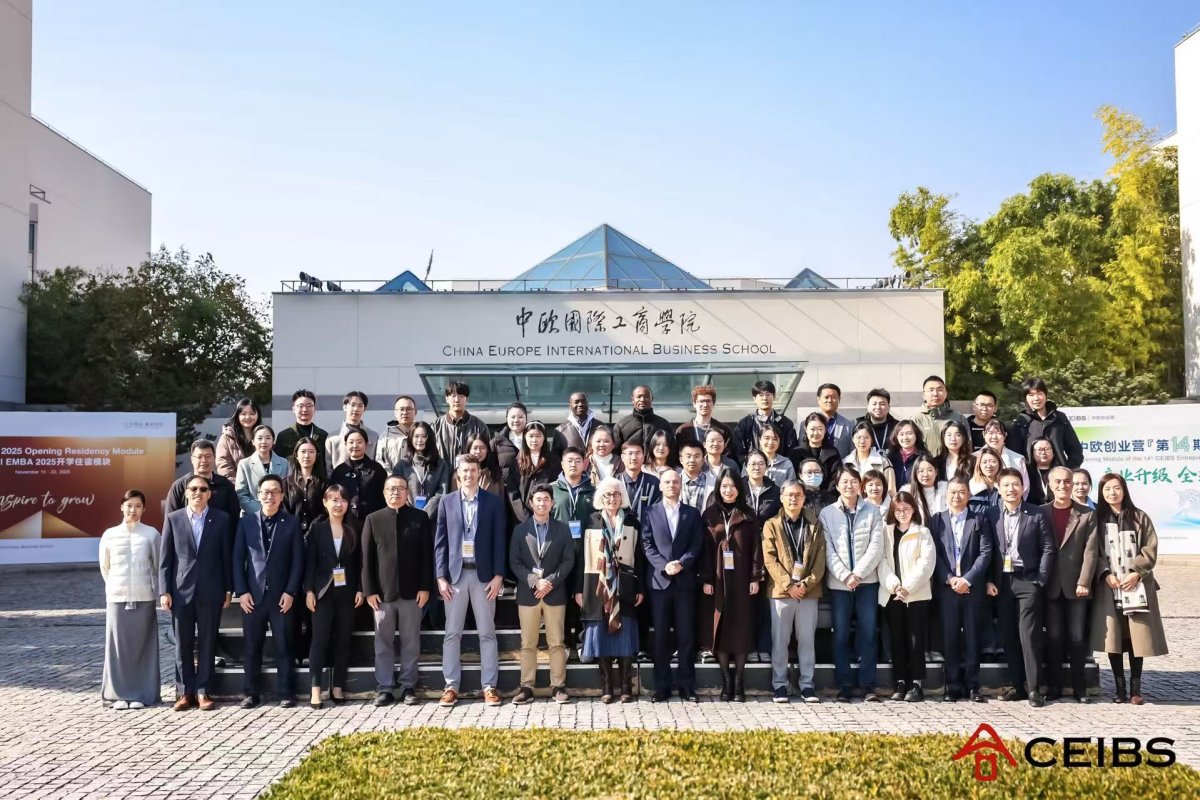
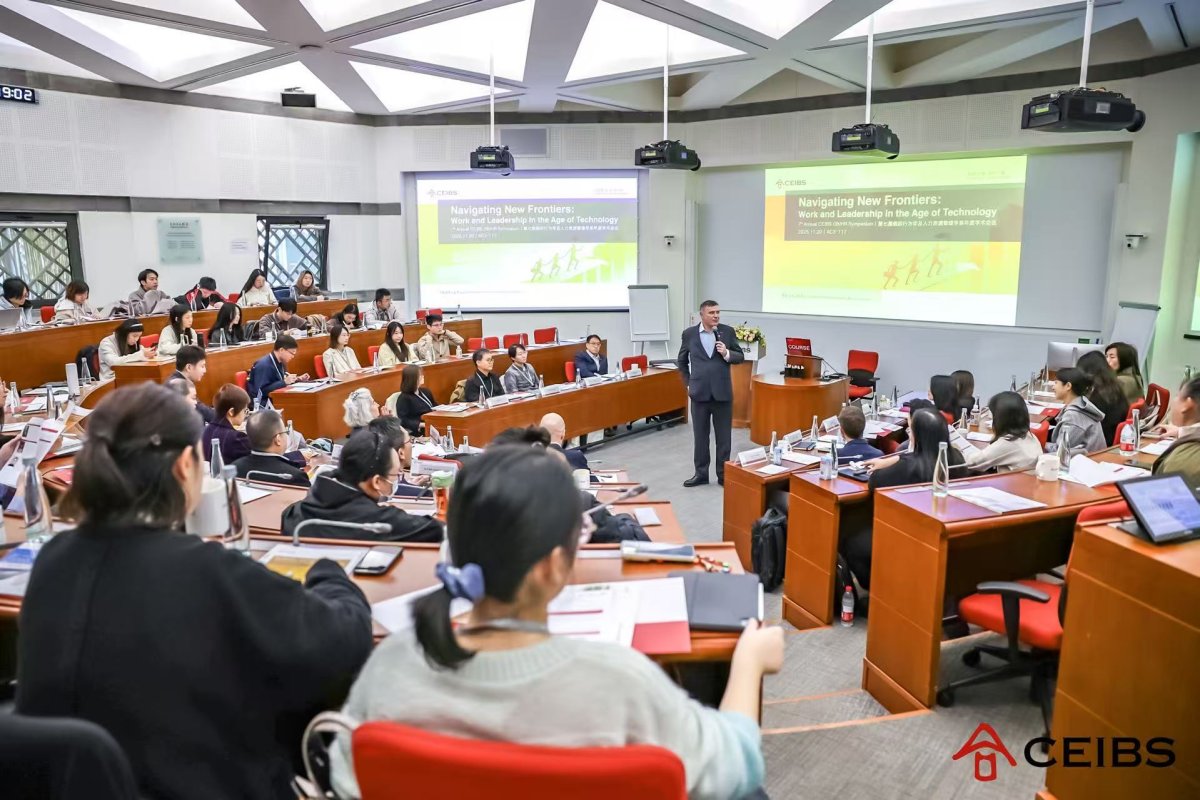
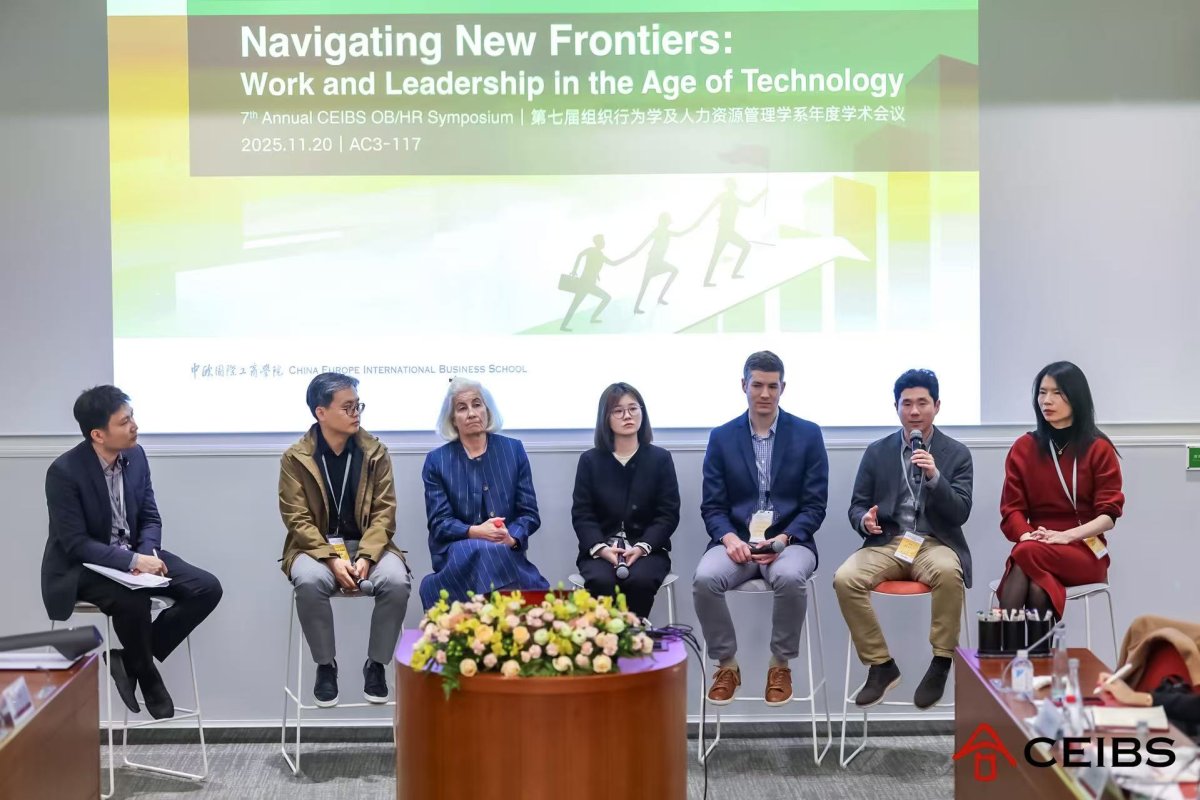
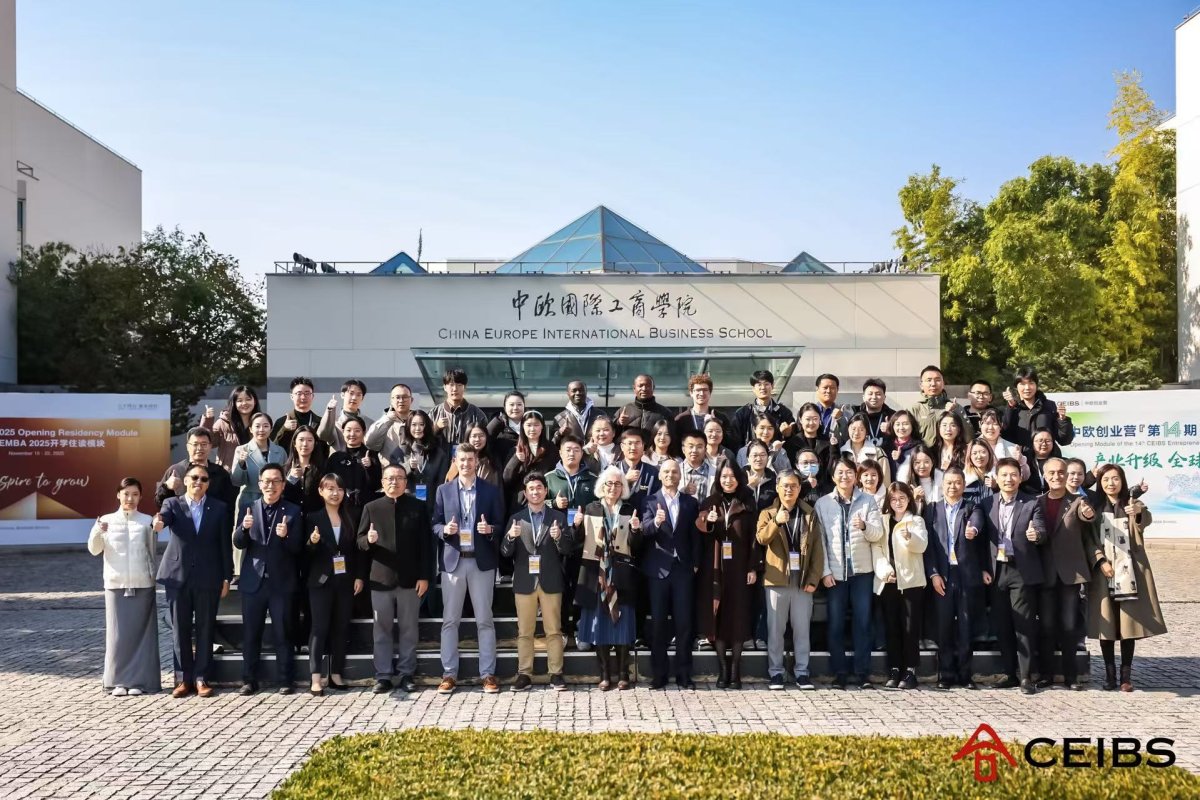
The 7th Annual CEIBS Organisational Behaviour & Human Resource Management Symposium, hosted by CEIBS’ OB/HR Department, took place at Academic Centre 3-117 on November 20, 2025. Centering on “Navigating New Frontiers: Work and Leadership in the Age of Technology”, the event gathered over 80 professors, doctoral students, and practitioners worldwide. As a key academic forum, it provided a platform for sharing cutting-edge research in OB/HR management.
The symposium included one keynote speech, two thematic panels, and a closing panel discussion. It opened with welcome remarks by CEIBS Vice President and Dean Frank Bournois, and OB/HR Department Chair Sebastian Christian Schuh. Byron Lee (CEIBS) and Michelle Zheng (CEIBS) chaired the two core panels, while Ke Mai (CEIBS) moderated the closing panel.
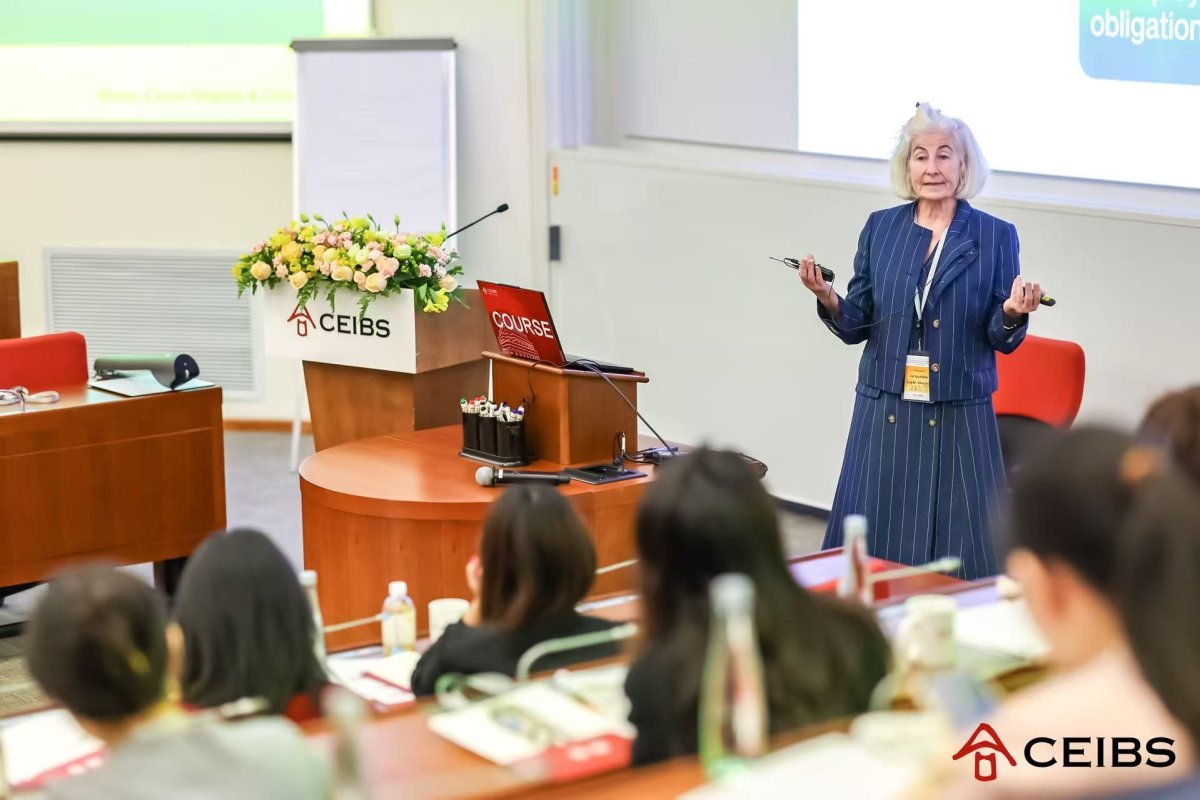
Dr. Jacqueline Coyle-Shapiro—Professor in Leadership and Organisational Behaviour at California State University San Bernardino and Emerita Professor at the London School of Economics and Political Science (LSE)—delivered the keynote speech titled “Who cares? The Employee-Organisation Relationship and Employee Health”. She opened by outlining unprecedented pressures, such as shifting workforce expectations and global market volatility, that are disrupting traditional employee-organisation relationships. Dr. Coyle-Shapiro then reviewed empirical evidence linking these relationship shifts to employee health outcomes, before exploring how organisational purpose and social impact shape both the employee-organisation bond and employee well-being. She concluded by raising critical questions for future research, such as how to balance operational efficiency with employee health in dynamic work environments.
The first panel, “The Human Factor in Modern Organisations: Employee Well-Being, Incentives, and Human-AI Collaboration” (chaired by Byron Lee), featured three insightful presentations. Dr. Helen Zhao, Associate Professor at The University of Hong Kong, discussed her research on pay-for-performance (PFP) systems. She explained that while PFP systems aim to tie rewards to performance, “entropy” (system disorder) often emerges from fragmented components, undermining their effectiveness. Through a field study at a large manufacturing facility, she showed that targeted interventions—streamlining scattered feedback pathways—boosted 1,260 frontline workers’ performance by 5%. Next, Dr. Yeun Joon Kim from the University of Cambridge introduced a new “augmented learning” theory for human-GenAI co-creation, noting that declining “Idea Co-development” (feedback-driven iteration) hinders joint creativity, but providing guidance on this process significantly improves outcomes. Closing the panel, Dr. Ning Li from Tsinghua University proposed a “conceptual triangle” to understand GenAI’s impact on organisational research, covering methodologies, institutional perceptions, and human-AI interaction dynamics.
After a lunch break and group photo, the second panel— “Thriving Amid Uncertainty and Change: Beliefs and Cognitive Flexibility” (chaired by Michelle Zheng)—focused on adaptability. Dr. Trevor Spoelma from the University of Iowa shared findings from a six-week study of 164 Chinese hybrid sales teams: increased face-to-face interaction boosted engagement and performance only for teams with low location predictability, stressing the need for consistent work arrangements. Dr. Brian Lucas from Cornell University introduced the “Insight Bias Hypothesis”—people’s tendency to undervalue persistence and overvalue sudden insight in creativity—and presented evidence of how this biases harms performance. Dr. Hong Deng from the University of Nottingham Ningbo China challenged the idea that stress responses must be controlled, showing via three studies (interviews, experiments, field surveys) that leaders using “acceptance coping” (embracing stress) gain greater cognitive flexibility, enhancing creativity and considerate leadership.
The symposium was a success, with attendees praising the relevant topics, in-depth research insights, and valuable academic exchange opportunities, further solidifying the symposium’s role in advancing OB/HR research and practice.