



Connecting Theory with Practice: Charting the Future of the Case Method
On December 15, the 2025 International Case-based Education and Research Symposium (ICERS), co organized by the Faculty of Business at the Hong Kong Polytechnic University, CEIBS, and Ivey Business School at Western University, kicked off at CEIBS Shanghai campus.
In today’s rapidly evolving business environment, the case method remains one of the most powerful approaches to connecting theory with practice, deepening managerial insights, and fostering reflective thinking among future leaders. To promote in depth dialogue and collaboration within the global business education community around case based education and research, the symposium has adopted “Bridging Theory and Practice” as its core mission. By leveraging the pedagogical innovation, global reach, and case publishing expertise of the three leading business schools, the symposium brings together exceptional scholars and educators from around the world who are devoted to advancing case teaching, research, and development. Together, they will explore the future of the case method and its potential for value innovation in a dynamic global landscape. For the first time, the 2025 agenda offers a more comprehensive and integrated program—from teaching demonstrations and case writing workshops to qualitative research sessions and international roundtables—covering the full spectrum of case-based education and research. By bridging classroom practice with academic inquiry, the symposium provides participants with diverse perspectives designed to advance the continued development and integrative innovation of the case based education ecosystem.
The opening ceremony featured welcome addresses, keynote speeches, and teaching demonstrations delivered by a distinguished group of academic leaders and experts, including:
- Professor Wang Hong, President, Professor of Management, and Hengdian Group Chair in Management, CEIBS;
- Professor Dominique V. Turpin, President (European), CEIBS;
- Professor T. C. Edwin Cheng, Dean of the Faculty of Business, The Hong Kong Polytechnic University;
- Professor Julian Birkinshaw, Dean of Ivey Business School, Western University;
- Professor Zhu Tian, Vice President and Co-Dean, CEIBS;
- Professor Chen Shimin, Associate Dean and Director of the Case Center, CEIBS;
- Professor Paul Beamish, Ivey Business School, Western University;
- Professor Matthew Grimes, Judge Business School, University of Cambridge;
- Professor Colette Southam, Bond Business School, Bond University; and
- Dr. Justin Law, Case Center Director, the Faculty of Business, The Hong Kong Polytechnic University.
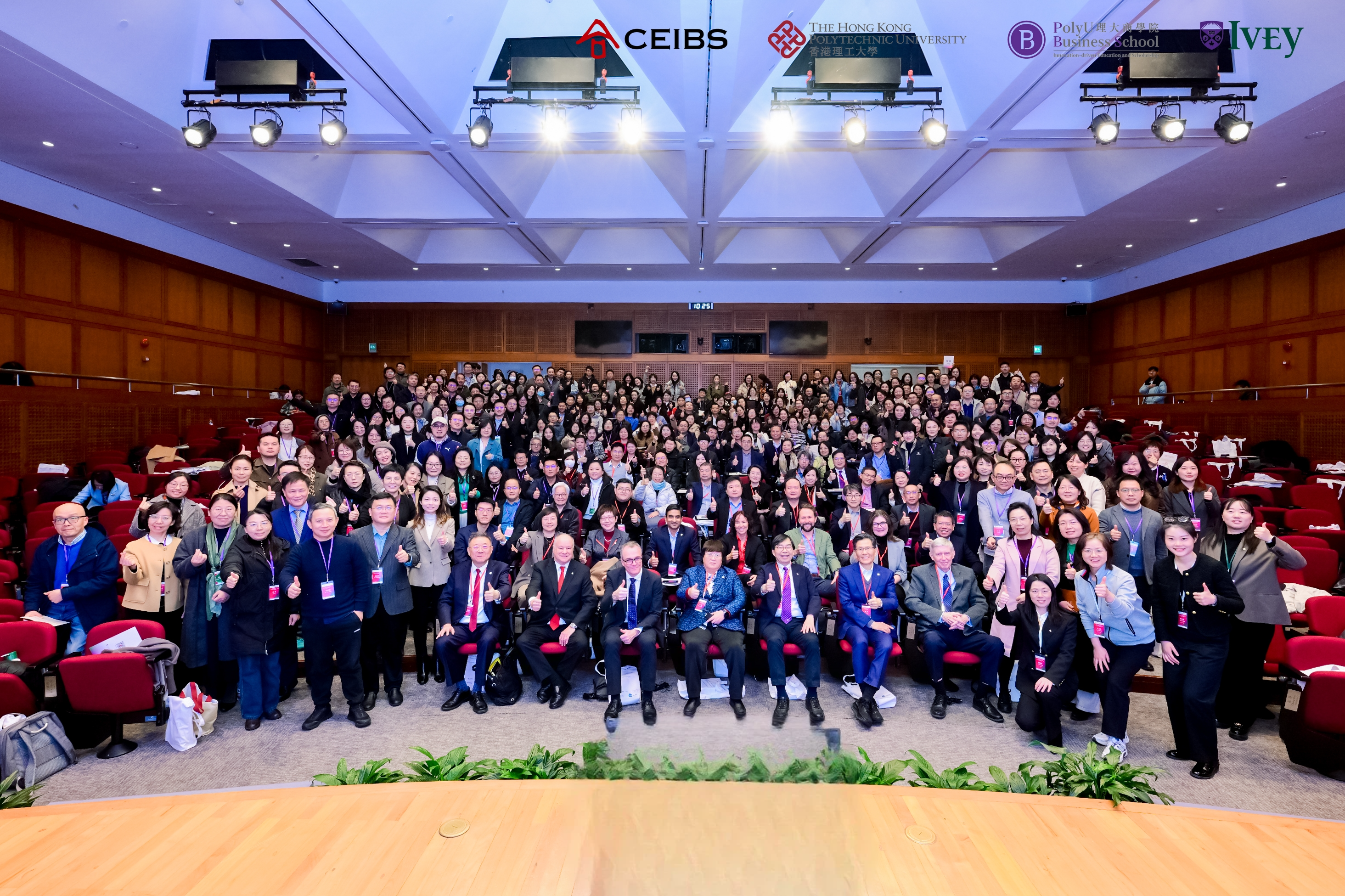
The event attracted more than 300 leaders and faculty members involved in case teaching from nearly 200 MBA-awarding institutions across the country. They engaged in thought-provoking discussions with guest speakers on issues in case-based education and research. During the three day event, discussions will center on three core elements that define the spirit of this symposium: our commitment to the case method as a bridge between theory and practice, our integration of emerging technologies such as generative AI into case teaching and development, and our dedication to fostering a truly open global dialogue. Building on these core elements, this year’s symposium introduces several new initiatives to further advance pioneering exploration and practical innovation in case-based education.
The opening ceremony was chaired by Professor Chen Shimin. He noted that what makes this event particularly meaningful is that it positions case education as a global dialogue—linking perspectives from China and the world, and building a community committed to high-quality management education.
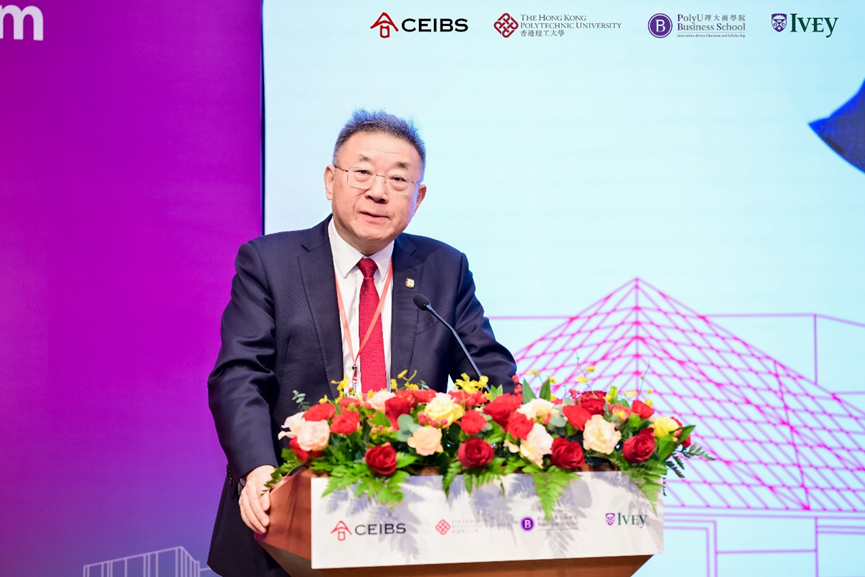
In her welcome address on behalf of CEIBS, President Wang Hong emphasized that business education needs to return to its core mission in an era defined by volatility, uncertainty, complexity, and ambiguity (VUCA). She argued that the case method is essential for bridging the gap between knowledge and practice and for preparing future-ready business leaders capable of navigating complex change. President Wang highlighted that case teaching goes beyond knowledge transfer, serving instead as a disciplined process of sharpening thinking and honing decision-making skills.
President Wang went on to explain that, guided by its positioning of “China Depth, Global Breadth”, CEIBS places case development at the heart of its strategy. Through its partnerships with renowned international case libraries, including Harvard Business Publishing-Education and Ivey Publishing, CEIBS cases have been adopted by over 1,100 institutions in more than 80 countries and regions worldwide, with cumulative usage exceeding two million copies. She also noted that CEIBS consistently ranks among the global leaders in case-related rankings by The Case Centre and the Financial Times.
Looking ahead, President Wang outlined three priorities for the evolution of case teaching: first, embracing technology to create dynamic, multimedia, and simulation-based case studies; second, promoting values-based leadership by focusing on ESG and sustainability issues; and third, upholding openness and integration by establishing a global community of case researchers to co-develop cross-cultural and interdisciplinary management cases. She concluded by encouraging all attendees to contribute their insights and efforts toward high-quality case teaching and research to help nurture business leaders who can address global challenges and drive social progress.
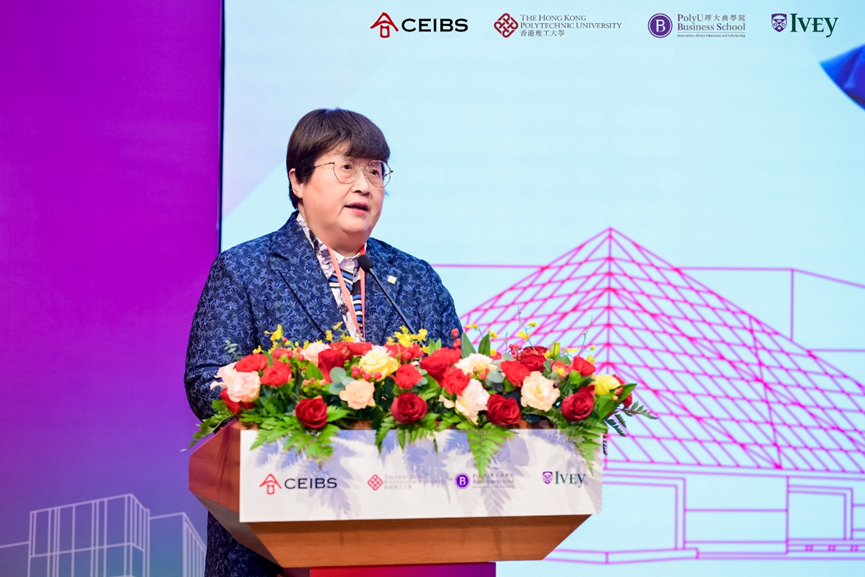
In his welcome address, Dean T. C. Edwin Cheng noted that case studies provide managers with immersive decision-making scenarios in a complex and dynamic business environment. He emphasized that, case discussions synthesize diverse viewpoints, enabling participants to weigh the pros and cons of decisions, hone their analytical and communication skills, and integrate qualitative and quantitative evidence. By doing so, he argued, the case method better prepares leaders to navigate a rapidly changing and unpredictable external landscape. Dean Cheng then outlined the Faculty of Business’s sustained investment in the case method and reaffirmed its commitment to contributing distinctive insights to global management education.
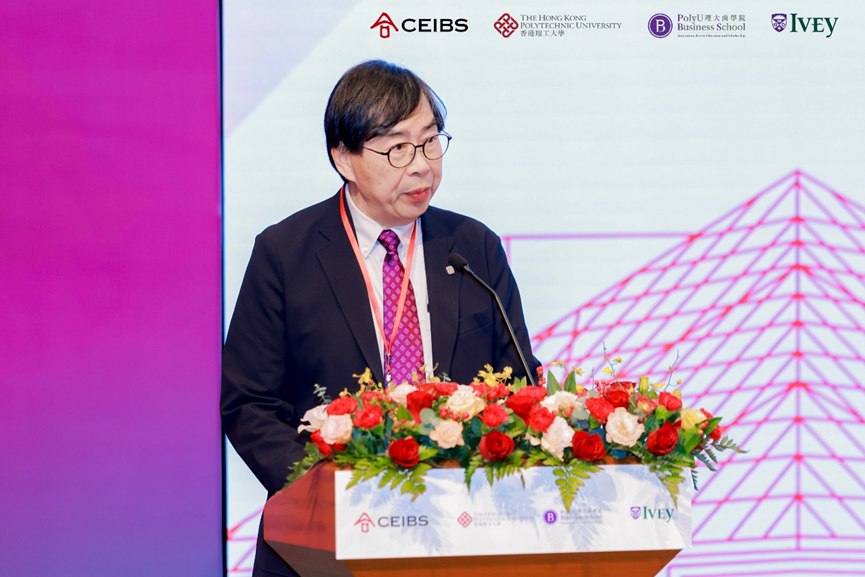
Professor Julian Birkinshaw opened the first session of the symposium with a keynote address titled “Management Education and Gen AI: Why the Case Method is More Important Than Ever”. Although Gen AI poses significant challenges to business education, he pointed out that it also highlights the irreplaceability of the case method. He noted that the “structured social learning” environment, fostered by case teaching, is uniquely effective at sharpening students’ judgment, critical thinking, and complex decision-making skills. In response to technological disruption, Professor Birkinshaw proposed proactively integrating AI throughout the entire case learning process. He advised business schools to embrace change by staying abreast of what’s new, trying things out, and keeping their feet on the ground, while firmly leveraging the unique role of the case method to develop leaders equipped to navigate real-world complexity. He concluded that, far from merely preserving tradition, the case method remains a forward-looking cornerstone of educational innovation.
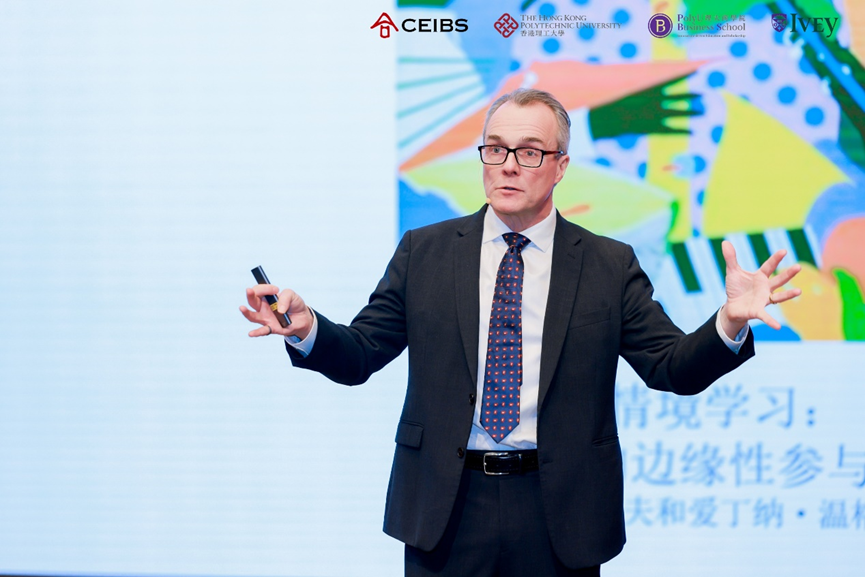
Professor Dominique Turpin delivered a keynote speech titled “Writing and Teaching Award-Winning Cases.” He summarized the core functions of outstanding teaching cases into three key aspects: engaging participants, addressing real-world issues, and vividly illustrating essential learning points.
Drawing on more than four decades of experience in case development and teaching, Professor Turpin elaborated on multiple dimensions of case pedagogy, including the selection of case topics, practical techniques for case writing, and insights from classroom teaching. He emphasized that effective cases should focus on genuine decision-making dilemmas rather than becoming corporate promotional materials. The storyline must be compelling, while teaching points should be concise and focused. In the writing process, he highlighted the importance of field-based interviews to enhance narrative tension and authenticity.
Professor Turpin further noted that in an era of unprecedented information transparency and emerging challenges brought by generative artificial intelligence and other new technologies, preserving the “freshness” of cases and the “space for discussion” has become more important than ever. He pointed to the potential of leveraging technology to enable dynamic updates of case content in response to the rapid pace of industry change.
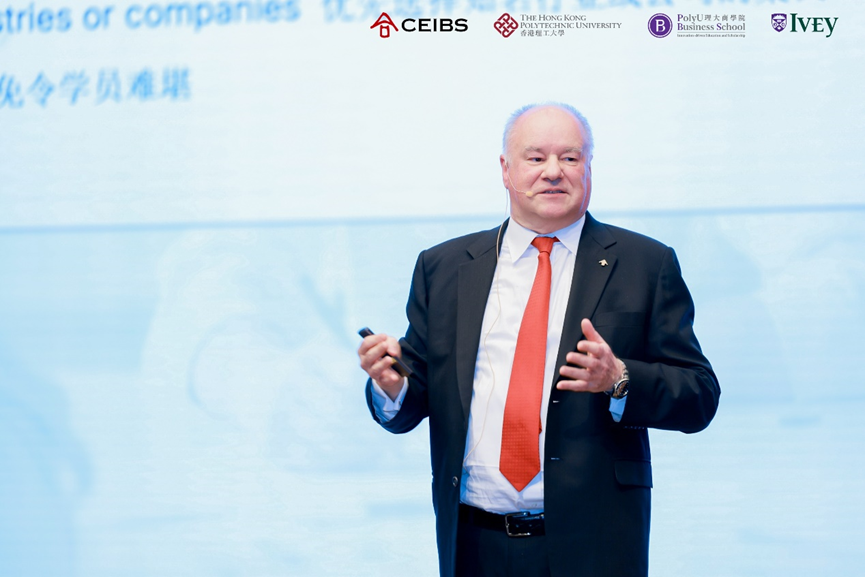
During the afternoon session, Professor Paul Beamish gave a keynote speech titled “Writing a Case Which People Will Actually Use”, addressing a common challenge for case developers. He provided an in-depth analysis of the practicalities of case writing and case distribution strategies. As one of the world’s most prolific case authors, Professor Beamish also shared global trends in case teaching and writing. With regard to what to prioritize in case writing, he highlighted seven key areas that merit particular attention, including: the implications of AI in every course taught in business school curricula; research-linked cases; leadership cases; priority topics identified by Ivey Publishing; industry notes, technical notes and exercises; cases focused on rare events/outliers; and cases addressing underrepresented countries, industries, or phenomena. Professor Beamish noted that, in an era where AI tools have significantly lowered the barriers to writing and translation, case authors should prioritize creating content with genuine pedagogical impact that reflects the diversity of business practices. He emphasized in particular that bringing neglected regions and underexplored issues into the case narrative is key to keeping case-based education fresh and relevant.
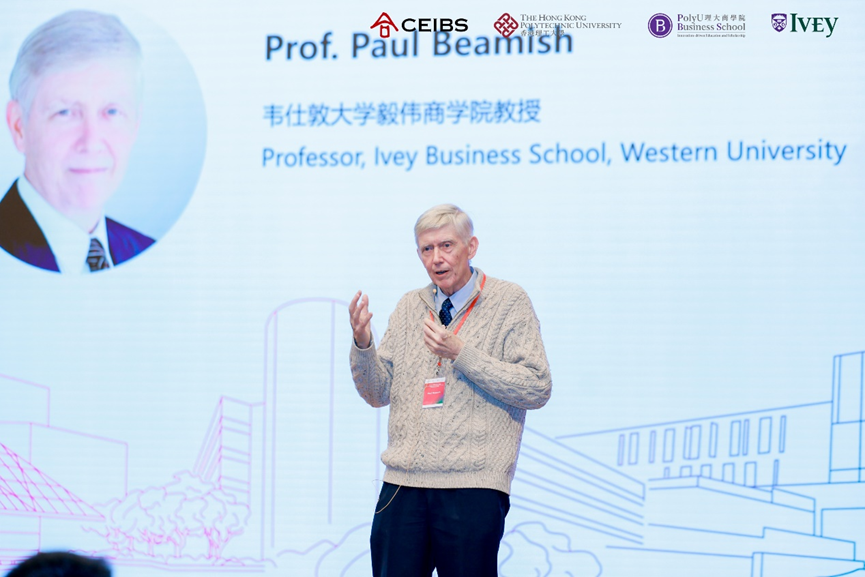
Dr. Justin Law provided a concise summary of the keynote speakers’ presentations and shared his profound insights on case teaching and writing. He pointed out that, at the core of the case method is its ability to immerse participants in real business problems and to place them in authentic decision-making scenarios through vivid, compelling narratives that spark sustained engagement with learning. Dr. Law added that, even in the age of AI, the case method is gaining renewed relevance as it fosters genuine classroom dialogue, encourages hands-on experimentation through trial and error in a supportive setting, and promotes knowledge creation through active participation. In the face of rapid technological advancement, Dr. Law emphasized the importance of returning to the fundamentals of education by continuously driving the deep integration of business education and practice through high-quality case development and pedagogical innovation.
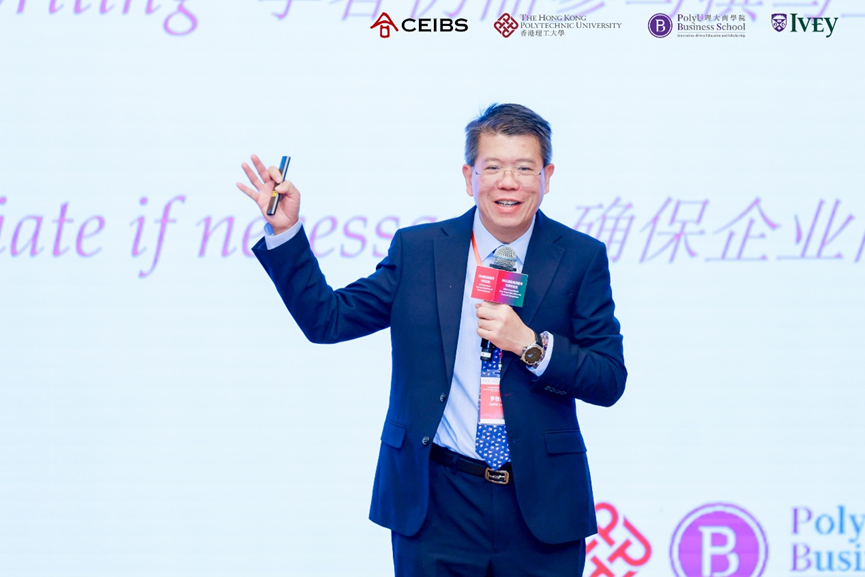
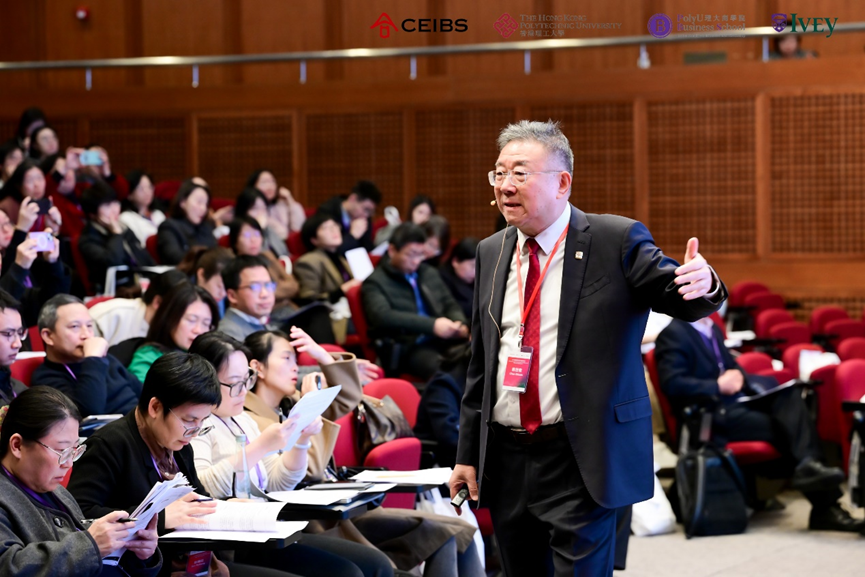
The symposium features parallel case teaching demonstrations in Chinese and English. During the Chinese session, Professor Chen Shimin presented a fully structured case teaching class based on his award-winning submission to the 2024 Global Contest for the Best China-focused Cases, titled “Frontline Fulfillment Centers: A Profitable Business Model or a Mirage”. Focusing on the frontline fulfillment center model in fresh produce e-commerce, the case study examines the real-world trajectories of companies such as MissFresh and DingdongFresh. Professor Chen guided participants from a detailed financial analysis to a deeper exploration of the business model’s underlying logic through a carefully designed A/B/C series of cases and four progressively challenging core questions. He also elaborated on how the case aligns with high-quality case review criteria.
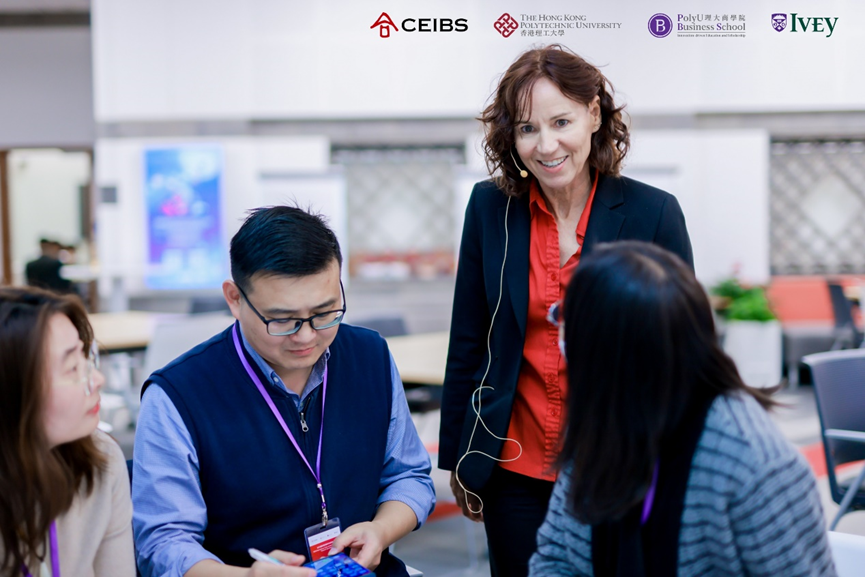
Professor Colette Southam conducted a dynamic international case teaching demonstration in English, presenting her self-developed case titled “Hayco: Moving Manufacturing to the Caribbean, Mexico, or Central America?” Professor Southam guided participants through group discussions on the central issue of which country Hayco should choose for its new plant. Through role-playing and data analysis, participants were immersed in simulating the complex trade-offs that multinational firms face when selecting a location. This highly interactive session vividly demonstrates the practical value of the case method in international business and strategic management.
Both demonstrations show how the case method sharpens students’ ability to evaluate markets, analyze risks, and make well-informed decisions, underscoring its important role in connecting management theory with real-world business scenarios.
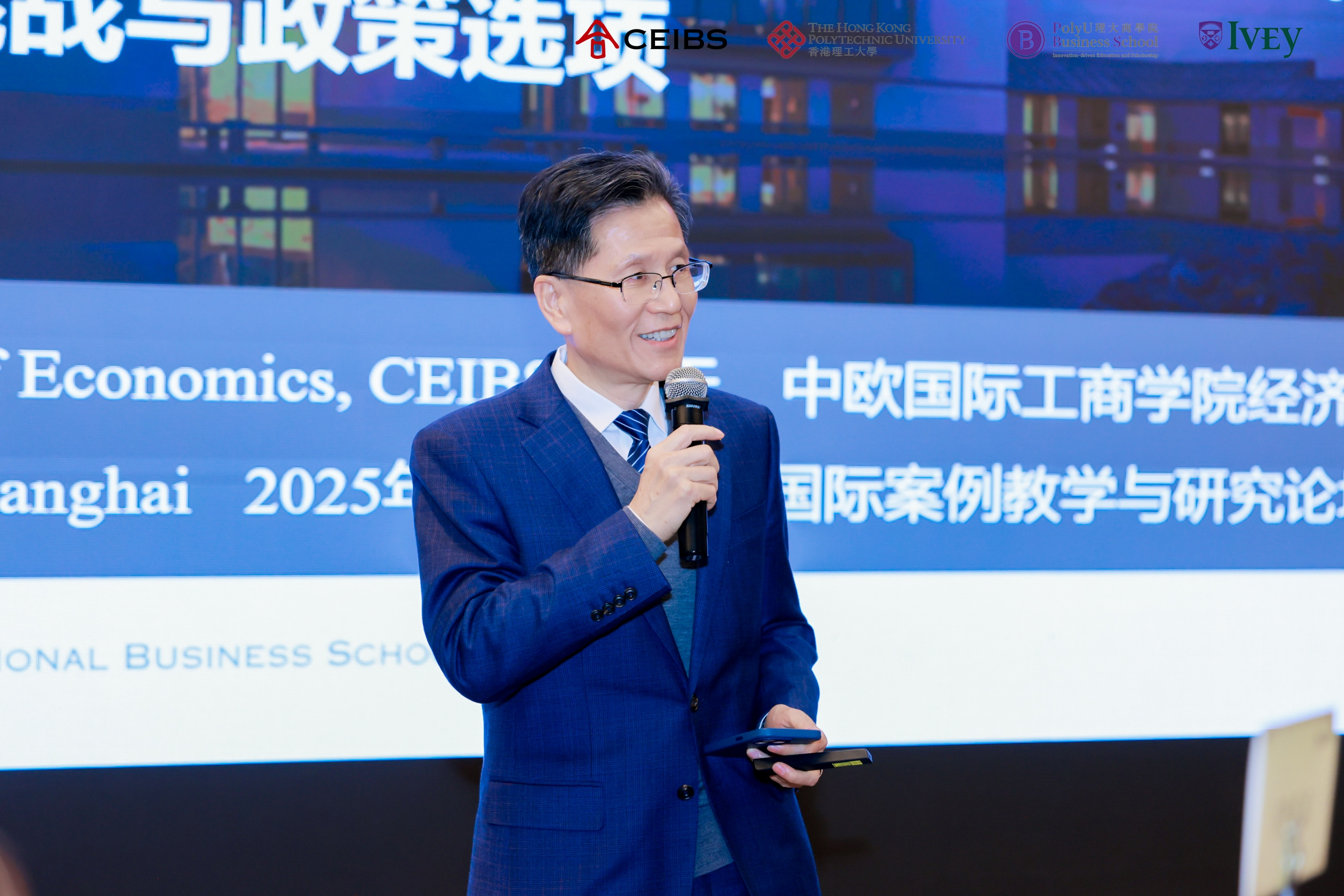
In addition to the case teaching demonstrations, the “Night Talk” session on the first day of the symposium expanded the horizons of business education. Professor Zhu Tian gave a speech titled “China’s Economic Outlook: Challenges and Policy Options”, offering a macroeconomic framework to help participants contextualize corporate operations and strategic decisions. Drawing on his analysis of China’s current economic dynamics and on the theories of economic development, fluctuation, and growth drivers, Professor Zhu Tian delved into what is behind China’s economic slowdown. He argued that the downturn in the property sector accounts for much of the current economic slowdown, characterizing the problem as one of short-term demand weakness rather than structural factors or geopolitics. Professor Zhu emphasized the importance of distinguishing between long-term economic growth and short-term economic fluctuation: long-term growth relies on supply-side reforms, such as promoting technological progress and improving the business environment, while short-term growth requires demand-side policies. These policies include directly stimulating consumption, for example by issuing large-scale, unrestricted consumption vouchers, and establishing a specialized institution to address risks in the real estate sector. Professor Zhu believes that weak demand is the central challenge given China’s ample supply capacity.
Nevertheless, he expressed confidence that, if the right policies are in place, China’s economy can fully return to an upward trajectory.
The first day of the symposium has wrapped up. Over the next two days, the forum will continue with an in-depth dialogue between scholars and experts from prestigious institutions, including Judge Business School, University of Cambridge; Antai College of Economics & Management, Shanghai Jiao Tong University; Ivey Business School, Western University; Singapore Management University; The Hong Kong University of Science and Technology; The University of Warwick; City University of Hong Kong; University of Macau; Nanyang Technological University; Sun Yat-sen University; Seoul National University; The Hong Kong Polytechnic University; Ivey Publishing; The Case Centre; The North American Case Research Association; and the International Case Research Association (listed in order of presentation).
The symposium will also include presentations and roundtable discussions on frontier topics, including qualitative research, case teaching practice, and global case publishing. In addition, a session dedicated to teaching case presentations and The Case Centre awards ceremony will be held to promote international dialogue and cooperation in case studies.