


A delicate rebalancing act: CEIBS Global EMBA programmes hosts China Economic Outlook 2026
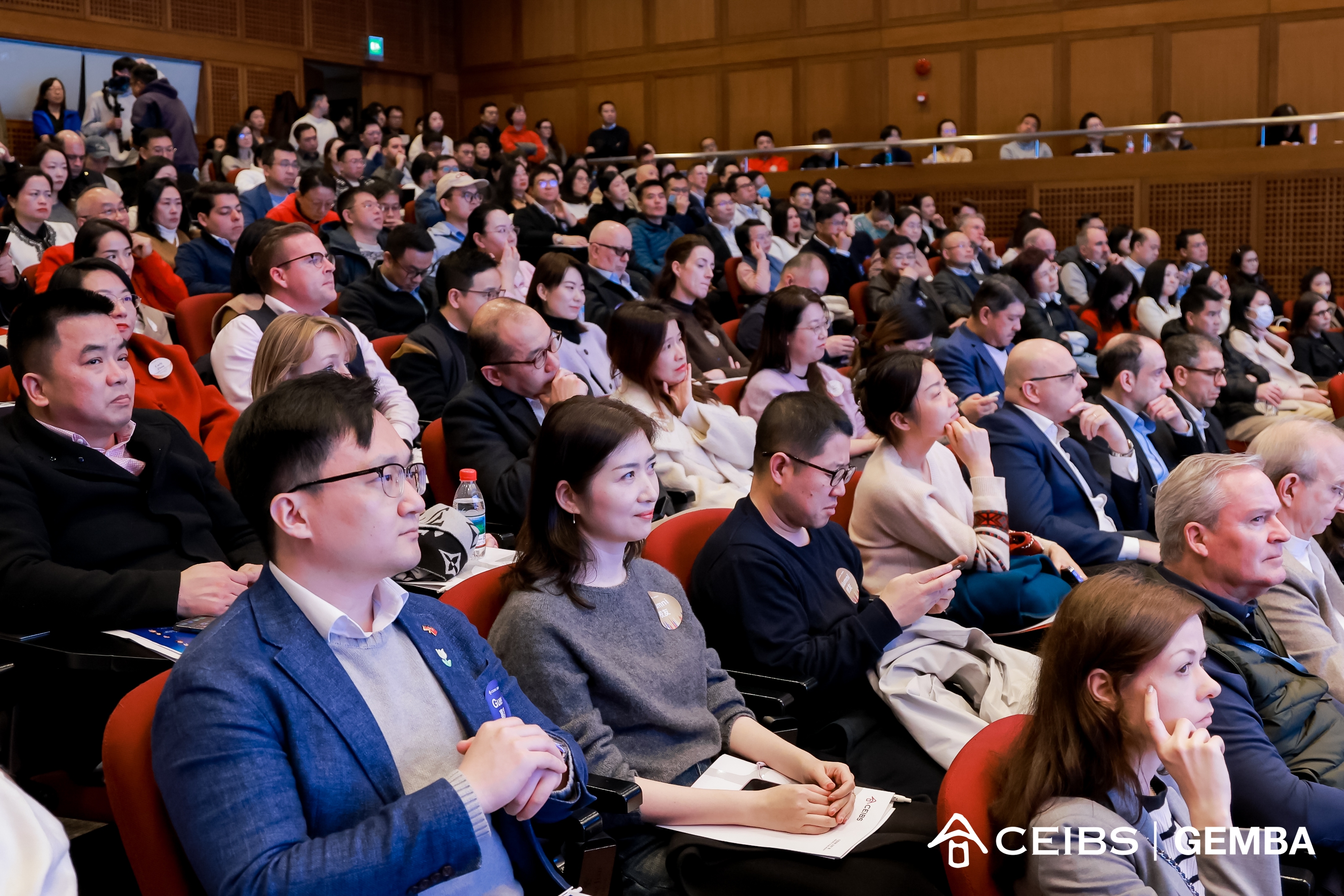
January 17, 2026. Shanghai- The CEIBS Global EMBA (GEMBA) programme welcomed a capacity crowd of over 350 attendees to its signature event, China Economic Outlook, today. Hosted on CEIBS’ Shanghai campus, this forum gathered professors, economists and global business leaders to map out the most meaningful trends likely to shape the Chinese economy in the coming year. The event was hosted by CEIBS Professor of International Business and Strategy and Associate Dean (Africa) Shameen Prashantham.
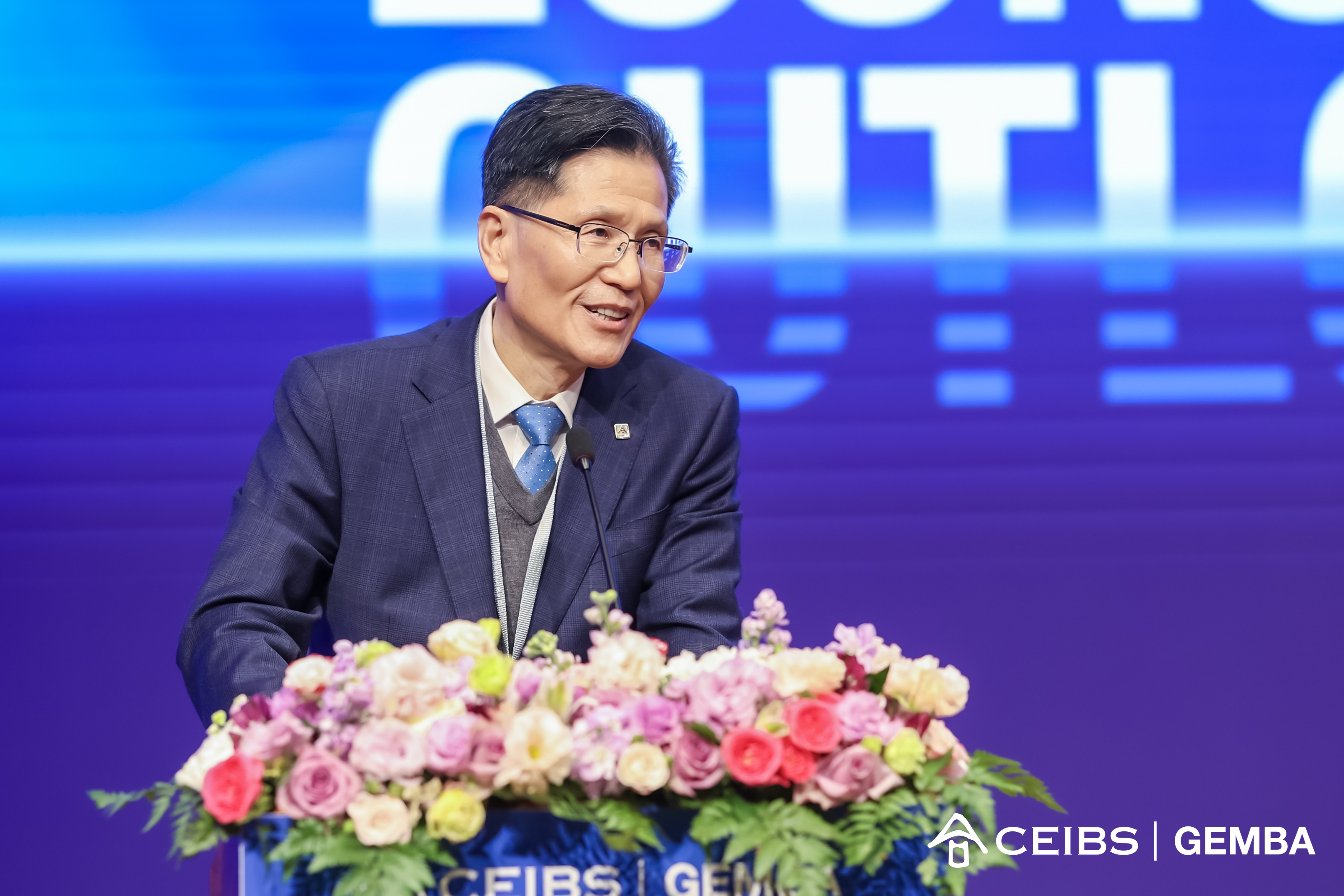
In his opening remarks, CEIBS Vice President and Co-Dean Zhu Tian stated: “There’s an old joke: What is an economist? An economist is merely professional trend analyst who is paid to make incorrect guesses about the economy.’ Still, no matter how often we economists get our predictions wrong, this process of using past performance to anticipate future outcomes is still essential. Think of us more as doctors: they diagnose people, we diagnose the economy.”
Prof. Zhu then advised that to navigate China’s changing economy successfully, leaders should not adopt a position of unbending certainty, but rather a strong sense of adaptability and the long-term vision to see and seize opportunities as they present themselves.
Keynote 1: China’s economic transformation and rebalancing
During the first keynote speech of the day, CEIBS Professor of Economics and Finance Xu Bin explained how China has shifted into an entirely new economic phase, one that will require fresh solutions to overcome both the ingrained institutional challenges it faces and the difficulties of growing its international presence in a time of global uncertainty and instability.
“Since 2010, China can no longer rely so heavily on some of its core traditional strengths,” explained Prof. Xu. “For the past 15 years, China’s demographic dividend, the ratio of working to non-working citizens, has been falling, as has its investment momentum. The ‘high productivity but low value’ growth period is over; supporting a new era of qualitative growth means rebalancing the Chinese economy to play to its emerging strengths.”
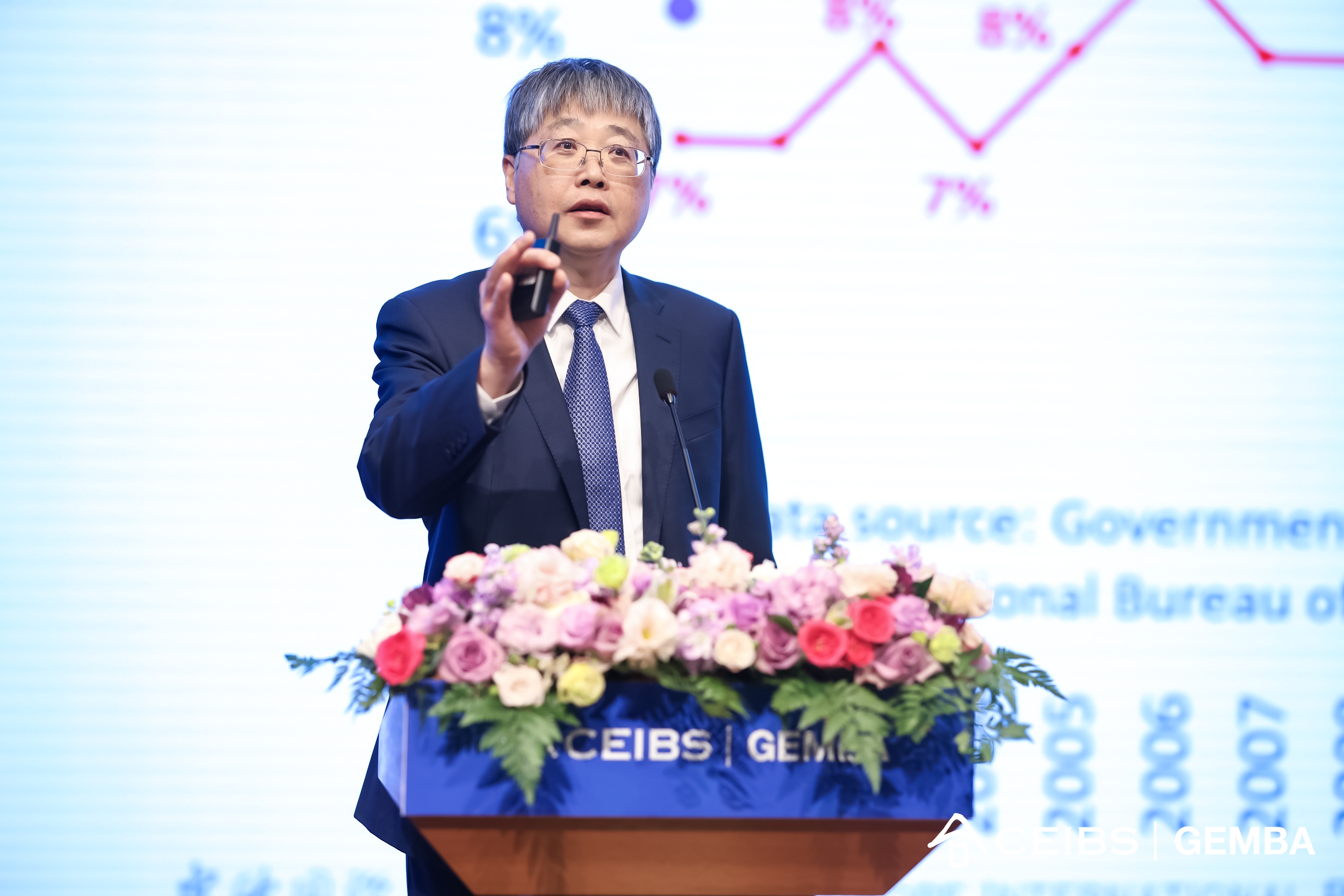
Prof. Xu outlined three critical actions that could address the current imbalances that have consistently plagued the Chinese economy in recent years:
1: Enabling greater governmental support for the private sector.
2: Raising the share of household gross disposable income.
3: Building international economic relations based on mutual respect and win-win cooperative outcomes.
These three measures, the professor argued, are essential to boosting the high quality, innovation-based economic growth that China wishes to attain. With more flexible regulations and less stringent taxation, the Chinese economy could enjoy both healthy domestic consumption and more balanced global trade flows, he said.
Regarding the “third rebalancing”, Prof. Xu asserted that, just like CEIBS, China should aim to promote international cooperation and understanding wherever possible: “China should play a stronger global leadership role characterised by respect, restraint and responsibility. The aim is not to replace the United States, but now is the ideal time for an economically and militarily powerful country to act as a stabilising force for global institutions, the international rule of law, and, consequently, global enterprise.”
Keynote 2: China’s economic forecast with complicated geopolitical risks
The second keynote of the day was delivered by Dr. Wang Dan, China Director of the Eurasia Group. Her presentation started with a disclaimer: 2022 was the year that “broke” most economic prediction models, particularly in the case of China.
“China’s housing downturn is the best example of how wrongfooted we, the economists, were. We all predicted that in 2023 there would be a complete reversal of housing policy, but it never happened, and it is now clear that housing has been abandoned entirely as a growth driver for the Chinese economy,” Dr Wang explained.
Rapid economic changes have, however, led to the development of new models and new predictions. Turning specifically towards new growth drivers, Dr Wang highlighted her belief that China will become the world’s first “electrostate” as it forges ahead with the industrial upscaling of next-generation EVs, batteries and AI solutions, while rapidly outpacing the US in terms of electricity generation thanks to its surging green energy investments.
While supporting these high-potential areas of future economic strength, China must also navigate an increasingly volatile geopolitical landscape, she cautioned. From intervention in Venezuela to the increasing pressure exerted on Greenland, a more militarily aggressive US presents complex difficulties as well as opportunities for China.
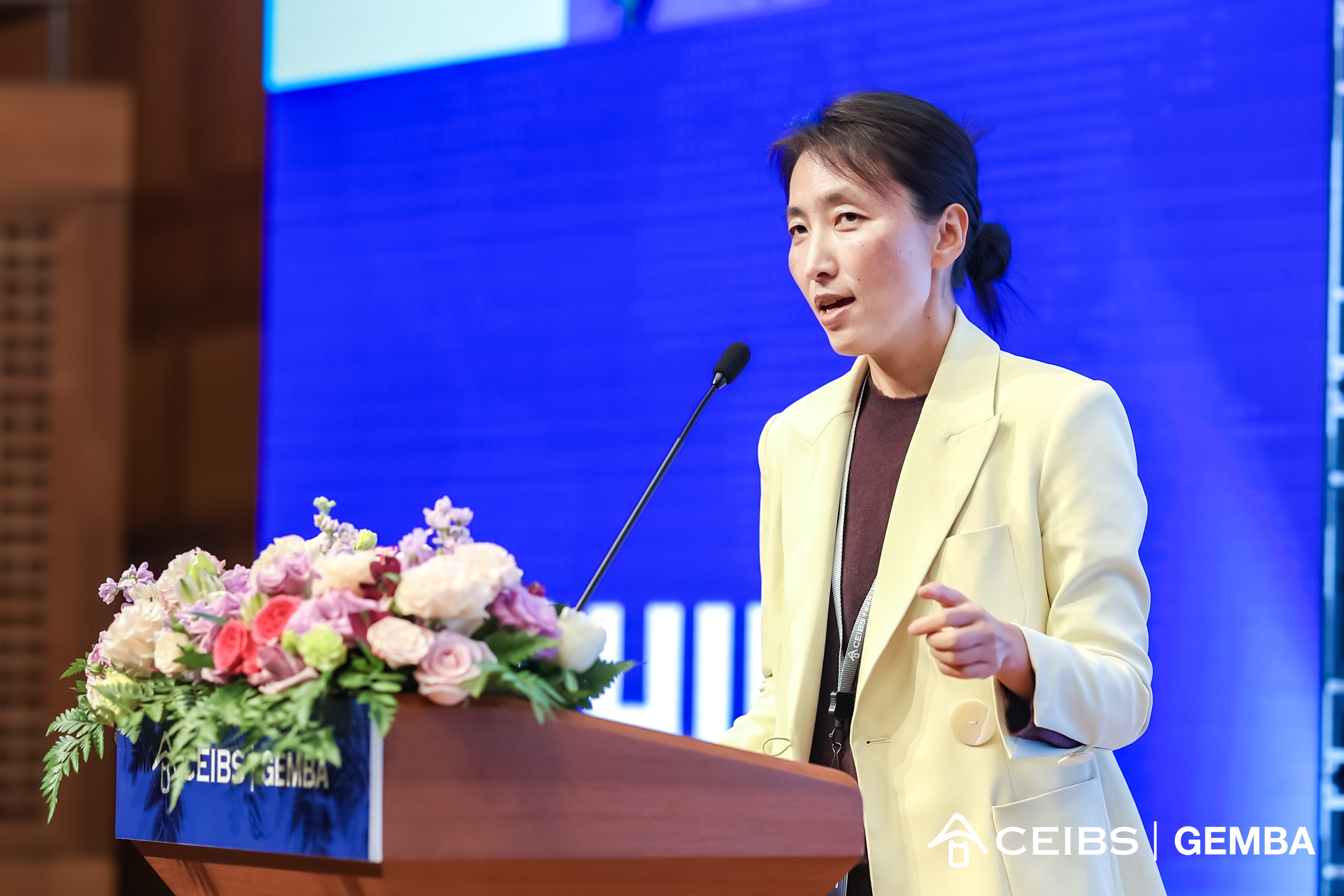
“Our group believes that the US-China relationship will remain stable this year overall, though it will be marked by lots of mini crises, such as tariff escalation,” Dr Wang said. “If the US continues to alienate its NATO allies, that could lead to increased militarisation worldwide, but also a realignment of global alliances, giving China plenty of options to reframe its relations with key countries.”
Panel Discussion: How businesses should deal with the challenges of 2026
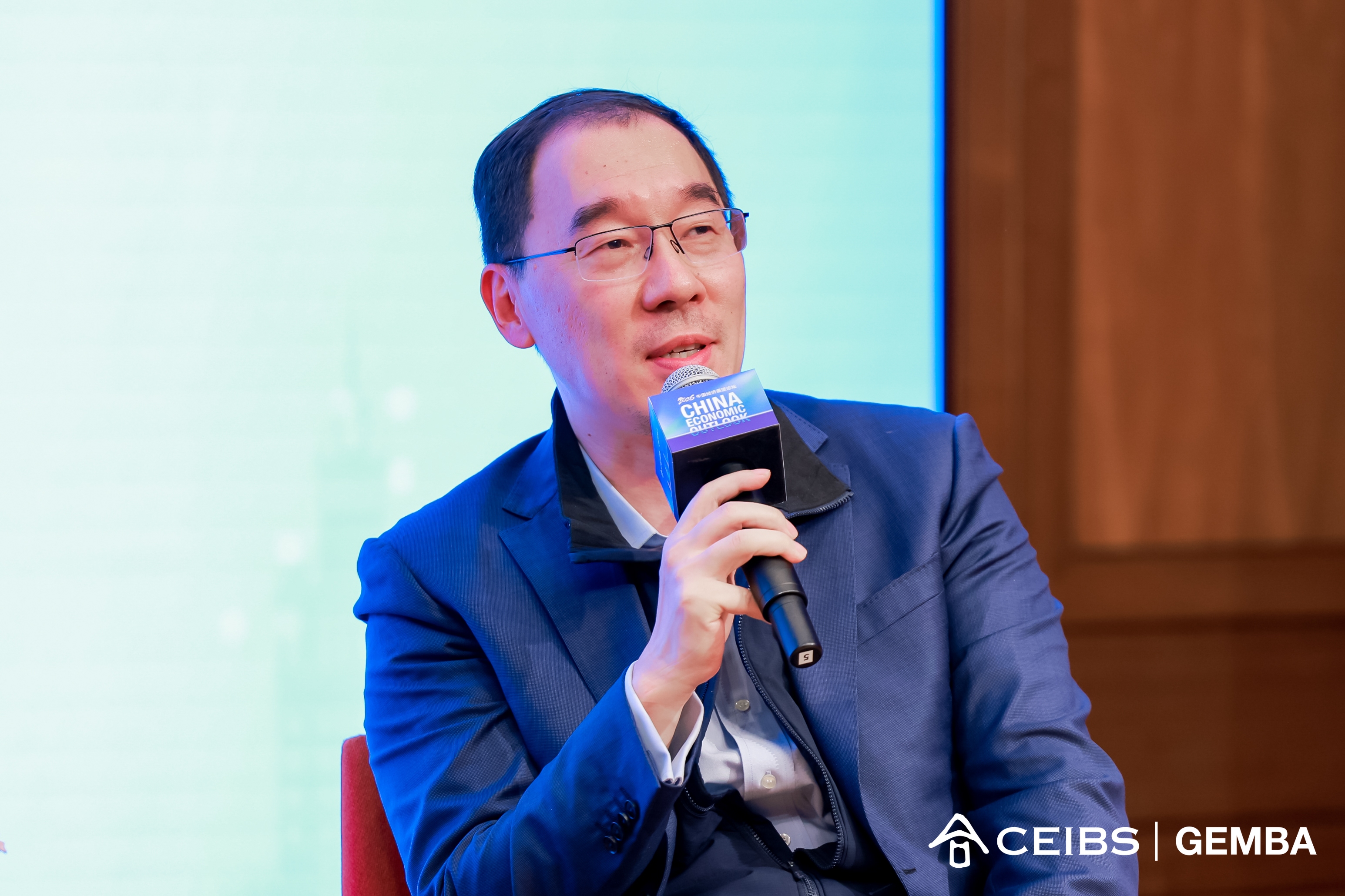
The final segment of this year’s China Economic Outlook featured a panel discussion moderated by Prof. Prashantham. Over the course of an hour, he invited four panellists to share their industry-specific insights and broader perspectives to help businesses prepare for the challenges ahead. Each provided their own expert insights:
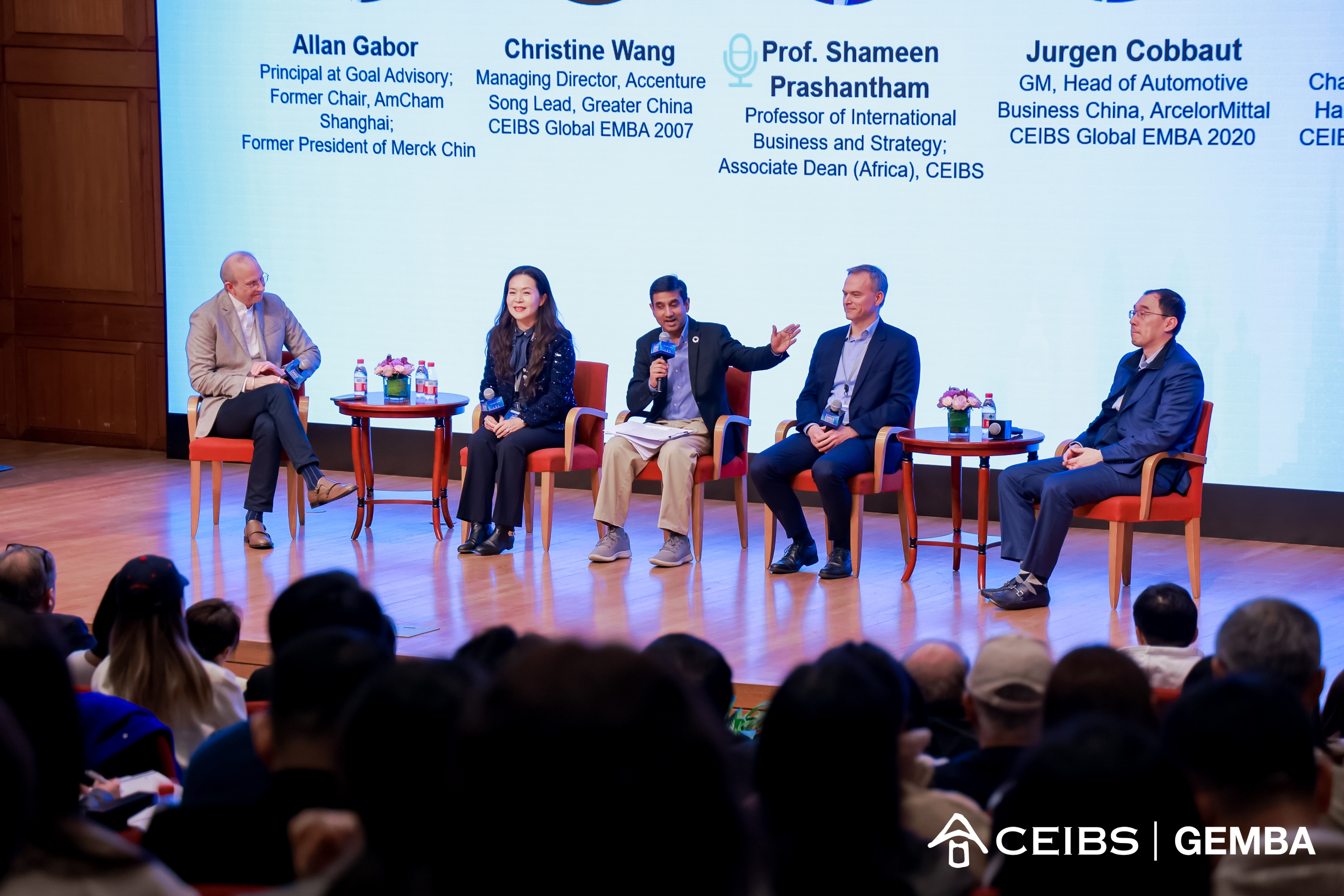
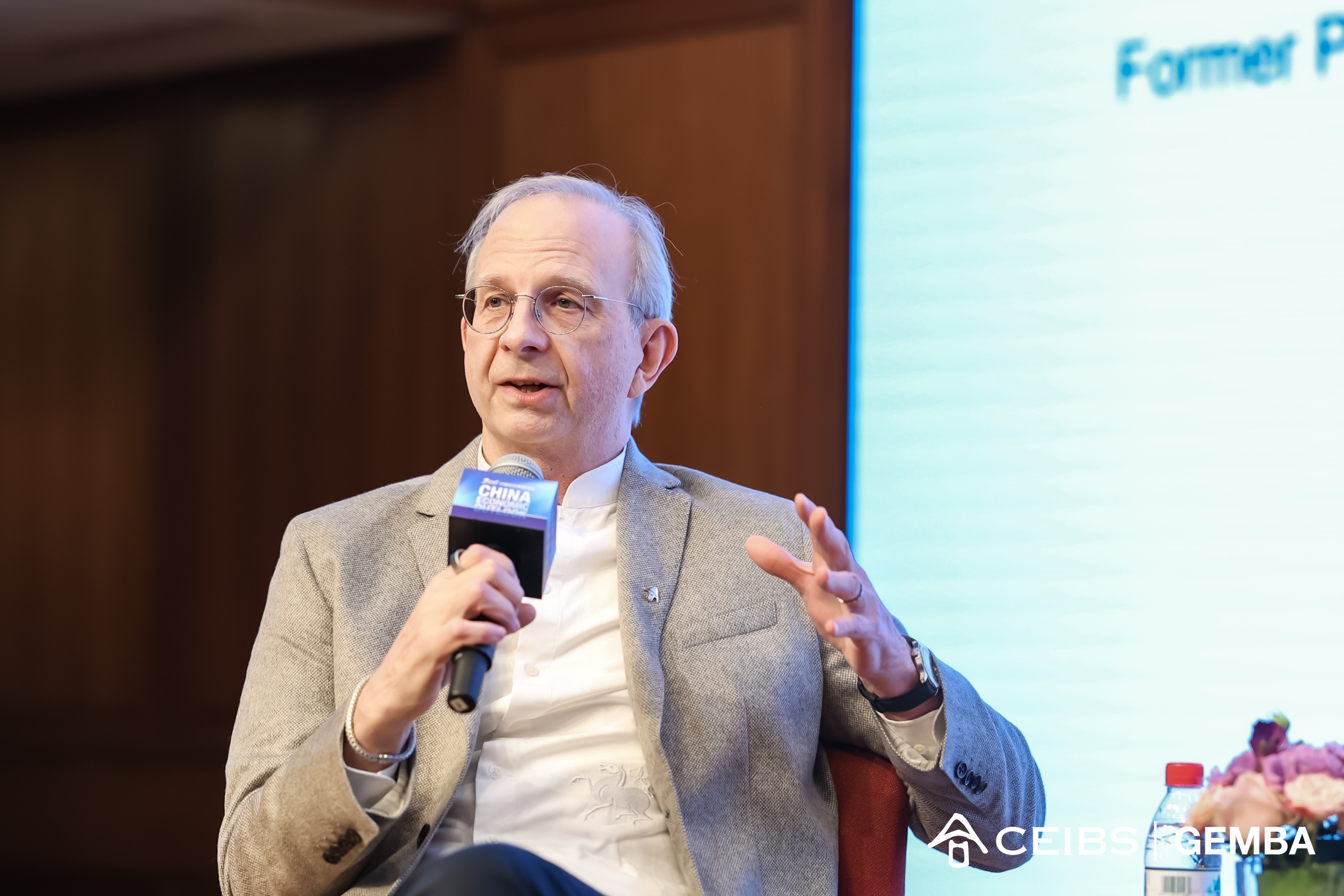
“Most companies will have to redefine where China fits into their global strategy. The double-digit growth and profit years may be over, but there are still exceptional opportunities to tap into. Articulating this to HQ is essential; they need to understand that ‘where China fits’ is best designed by people on the ground who understand China’s strengths and how they can be leveraged.” – Allan Gabor, Principal at Goal Advisory
“If you are a Chinese firm preparing for ‘chuhai’ (expanding overseas), ensure that you have a genuinely globalised vision; don’t just look to grab easy profits abroad. Develop a strong brand that’s intuitively relevant to your target markets. Set up a global business service mindset, but leave enough freedom for regional and country level adaptation.” – Christine Wang, Managing Director-Accenture Song Lead, Greater China
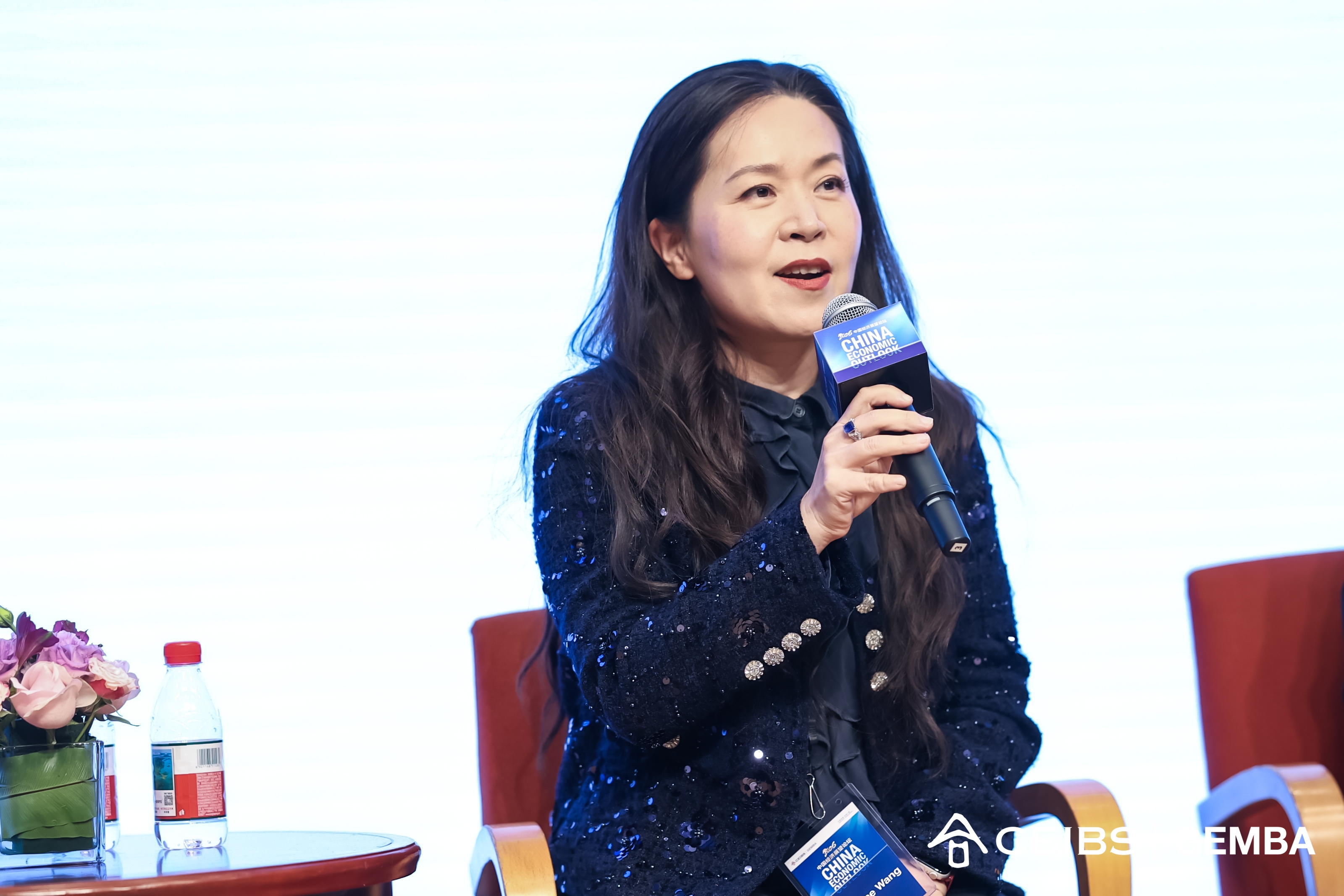
“China offers companies a huge opportunity to purse innovation-based growth. It’s not just about cutting costs and pushing out cheaper products; it’s about reimaging whole industrial processes. A car that takes five years to develop elsewhere only takes two years in China, which is a substantial advantage.” – Jurgen Cobbaut, GM, Head of Automotive Business China at ArcelorMittal

“Today, when you go overseas, it’s better to start with a smaller team of key people, because things move very fast these days. So be patient, listen to your local partners, understand the complexities involved and get a solid sense of what is happening on the ground before you ramp up headcount.” – David Teng, Chairman and President at Hainan Mining Co.